PROJECT

Irbene Radiotelescope Complex Modernization – Phase 4
Project name: Irbene Radiotelescope Complex Modernization – Phase 4


Project no. 1.1.1.2/1/25/I/005


Project acronym: RKM2


Project implementation period: 01.11.2025. - 31.01.2027


Funding sources: European Regional Development Fund (85%), State budget funding (15%)


Project funding: Total EUR 422,673, ERDF funding: EUR359,272.05, State budget funding: EUR 63,400.9


The aim of the project: The purpose of the project is to support the creation, improvement and development of the research infrastructure of the Ventspils University of Applied Sciences Institute of Engineering "Ventspils International Radio Astronomy Center" (VSRC), promoting the development of the center of excellence in three areas of Latvia's Smart Specialization Strategy (RIS3) - Knowledge-intensive bioeconomy, Biomedicine, Photonics and smart materials, Smart energy and mobility, Information and communication technologies (ICT). The implementation of this project is a continuation of previous EU structural funds and state investments, strengthening VSRC as a center of excellence of national importance with a modern and sustainable scientific infrastructure.


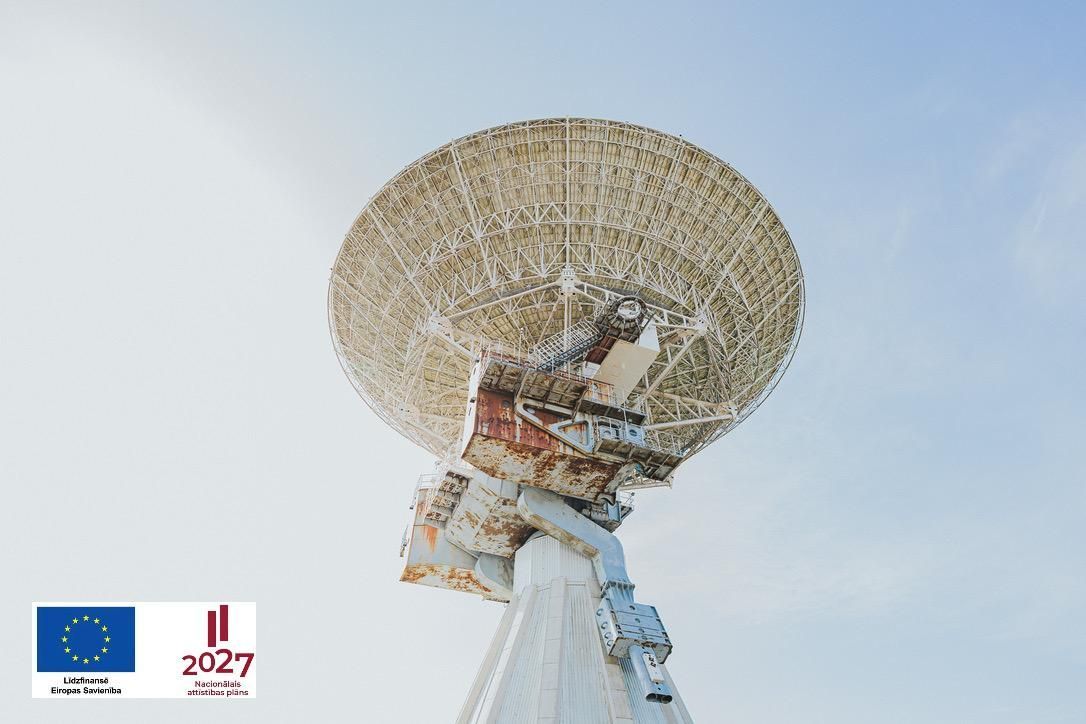
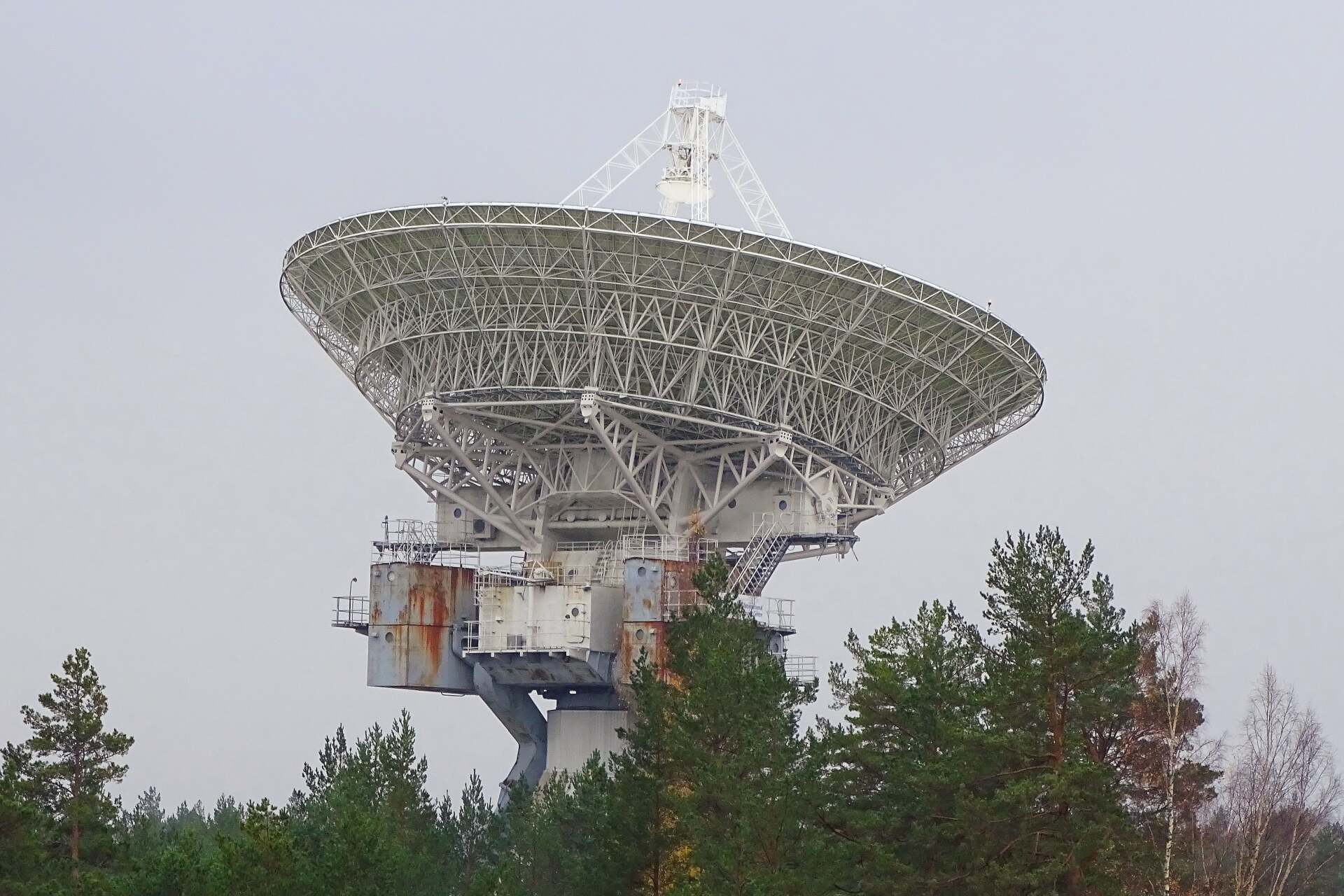
Main activities: The project envisages the modernization of the radio telescope complex, expanding its research capabilities, improving safety and compliance with international scientific requirements.


The project will purchase and install modern equipment, including new receivers and data processing technologies (GPU cards, servers), as well as expand the high-performance computing cluster (HPC). Data streaming and formatting will be improved to meet the increasing demands of VLBI observations and CERN Tier-2 data centers. Thus, the project will provide an opportunity for VSRC to strengthen its participation in international research and attract highly qualified researchers.


Project results: The main problems addressed by the project are the low reception efficiency of the RT-32 radio telescope, insufficient data processing capacity, outdated receiver equipment and limited opportunities for international cooperation with leading networks such as EVN and JIV-ERIC. Modernization measures will make it possible to increase the reception efficiency from ~35% to 50-60%, expand the frequency range to 22 GHz, provide anti-corrosion protection, as well as improve work safety by building safety traps.


Contacts: Project manager – Baiba Reimane, baiba.reimane@venta.lv


The project "Irbene radio telescope complex modernization – Phase 4", No. 1.1.1.2/1/25/I/005, is implemented in SAMP 1.1.1.2. within the framework of "RIS3 research and innovation centers" and is financed by the European Regional Development Fund and the state budget.

Project News

By Rota Žagare March 30, 2026
Ventspils University of Applied Sciences (VUAS) has been awarded EU funding to carry out the fourth modernization phase of the Radio Telescope Complex in Irbene, strengthening Latvia's capacity for cutting-edge scientific research and international collaboration. The project " Irbene Radiotelescope Complex Modernization – Phase 4 " (Project No. 1.1.1.2/1/25/I/005), is financed through the European Regional Development Fund (ERDF) with a total eligible budget of €422,673 EUR. Of this, €359,272.05 (85%) comes from ERDF funding and €63,400.95 (15%) from state co-financing. The project will be implemented over 27 months, from November 2025 till and of the year 2027. Upgrading a National Scientific Landmark The Irbene Radio Telescope Complex, operated by VUAS's Engineering Institute – the Ventspils International Radio Astronomy Centre (VIRAC) – is a unique scientific facility of national, Baltic, and international significance. Located in Ance Parish, Ventspils County, the complex houses the RT-32 radio telescope, one of the most powerful instruments of its kind in Northern Europe. Despite previous modernization phases, the RT-32 telescope currently operates at approximately 35% reception efficiency – a performance level that limits its competitiveness within the European VLBI Network (EVN). Outdated receiver equipment, limited data processing capacity, and infrastructure wear further constrain its scientific potential. The fourth modernization phase directly addresses these challenges through targeted investments in: RT-32 antenna surface calibration to raise reception efficiency to 50–60% and expand the frequency range up to 22 GHz L/S-band cryogenic receiver system acquisition High-Performance Computing (HPC) cluster expansion with new server nodes and GPU cards to support VLBI observations and CERN Tier-2 data processing Computer hardware and workstation upgrades for scientific staff Hard disk (HDD) server storage expansion Waveguide component kit for RF equipment development and testing He compressor system and dry air generator for receiver maintenance Six-wheel ATV for mobile antenna testing in off-road conditions MIG/MAG semi-automatic welding system for infrastructure maintenance Surface sensing of RT-32 radio telescope Expanding Latvia's Role in European Science The modernization will allow VIRAC to fully participate as a competitive partner in leading international research networks, including: European VLBI Network (EVN) – a pan-European network of 20+ radio telescopes Joint Institute for VLBI ERIC (JIV-ERIC) – the European research infrastructure consortium coordinating continent-wide VLBI projects LOFAR ERIC – a next-generation low-frequency radio astronomy network CERN Tier-2 Data Centre – a global particle physics data computing grid This project is a continuation of our long-term commitment to positioning Latvia as a meaningful partner in European research. Modernizing the telescope complex ensures that our scientists can work with world-class tools, attract international talent, and contribute to breakthrough discoveries. Strategic Importance for Latvia's Smart Specialisation The project directly supports Latvia's Smart Specialisation Strategy (RIS3), contributing to multiple priority areas: Information and Communication Technologies (ICT): HPC expansion, GPU-based machine learning infrastructure, and data streaming improvements Photonics and Smart Technologies: Waveguide component development and RF equipment testing Knowledge-Intensive Bioeconomy: Space-based remote sensing for precision agriculture and forest inventory Smart Energy and Mobility: Satellite-to-ground communication technology testing The telescope complex also contributes to civil protection and crisis management through its radio frequency sensing and satellite communication capabilities. The project "Irbene radio telescope complex modernization round 4", No. 1.1.1.2/1/25/I/005, is implemented in SAMP 1.1.1.2. within the framework of "RIS3 research and innovation centers" and is financed by the European Regional Development Fund and the state budget. Prepared by project manager: Baiba Reimane