Ventspils University of Applied Sciences starts project “Multi-material Dust Astrochemistry (DACE)”
As of January 2026, the Fundamental and Applied Research Programme of the Latvian Council of Science project No. lzp-2025/1-0065 “Multi-material Dust Astrochemistry (DACE)” has commenced. The research is being carried out by staff of the Astronomy and Astrophysics Department at the Engineering Research Institute “Ventspils International Radio Astronomy Centre” (VIRAC) of Ventspils University of Applied Sciences.
The scientific significance of DACE lies in its novelty. It has long been known that within the Solar System and in the wider cosmic space of our Galaxy and beyond there exist tiny solid grains – interstellar dust. They have a varied chemical composition, albeit two classes of materials dominate: silicate minerals (rock) and carbon (soot). This diversity of dust is taken into account in several subfields of astrophysics, such as physics of the interstellar medium physics and cosmochemistry (the science of the origin of the compounds and elements that formed the Solar System). However, in astrochemistry – which studies molecular transformations in the interstellar medium – the varied composition of dust has so far been largely ignored. Nevertheless, it may be significant, as many important chemical transformations in space occur on dust grain surfaces. Within DACE, we will investigate how differences in interstellar dust materials – including temperature, surface adsorption (molecular sticking) properties, and other parameters – affect the chemical composition of interstellar nebulae.
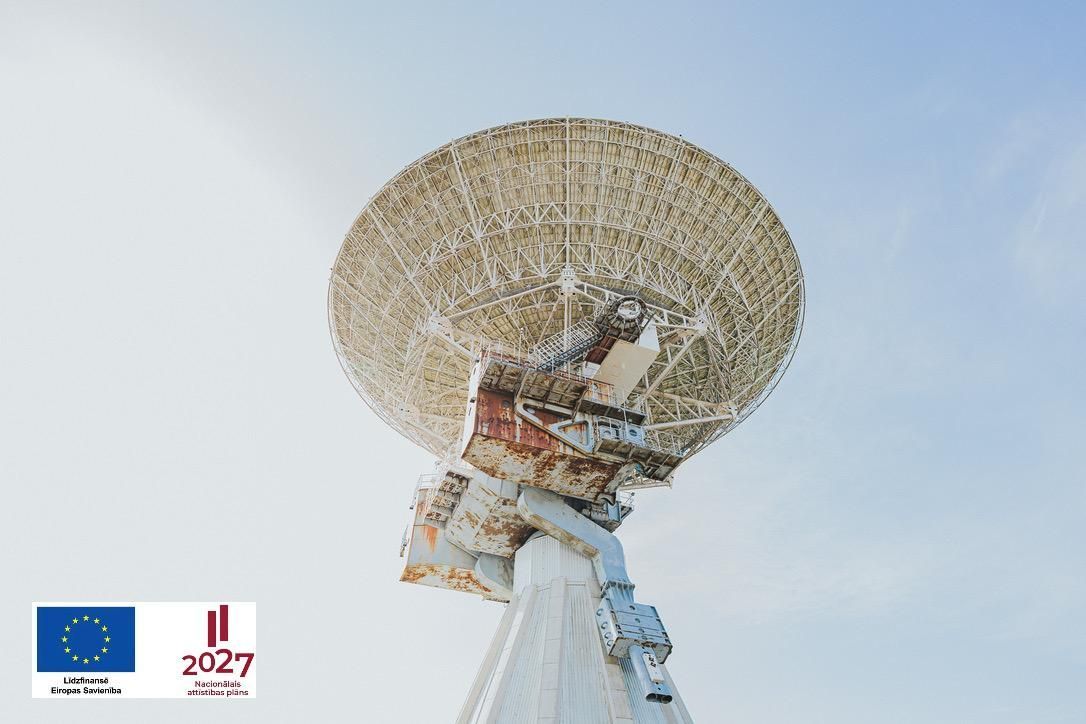
Starting in January, leading researchers J. Kalvāns and J. Freimanis began work on the DACE project, conducting preliminary studies as well as initial scientific and administrative planning and preparation. Full, coordinated, and active research began in February with the formal involvement of students. On February 18, the project’s opening seminar was held, during which two key research directions were defined: calculating temperatures for dust grains in interstellar clouds embedded in cosmic radiation fields, and adapting a new reaction database for astrochemical calculations. After the seminar, project participants visited VIRAC radio telescope complex in Irbene (see photo).
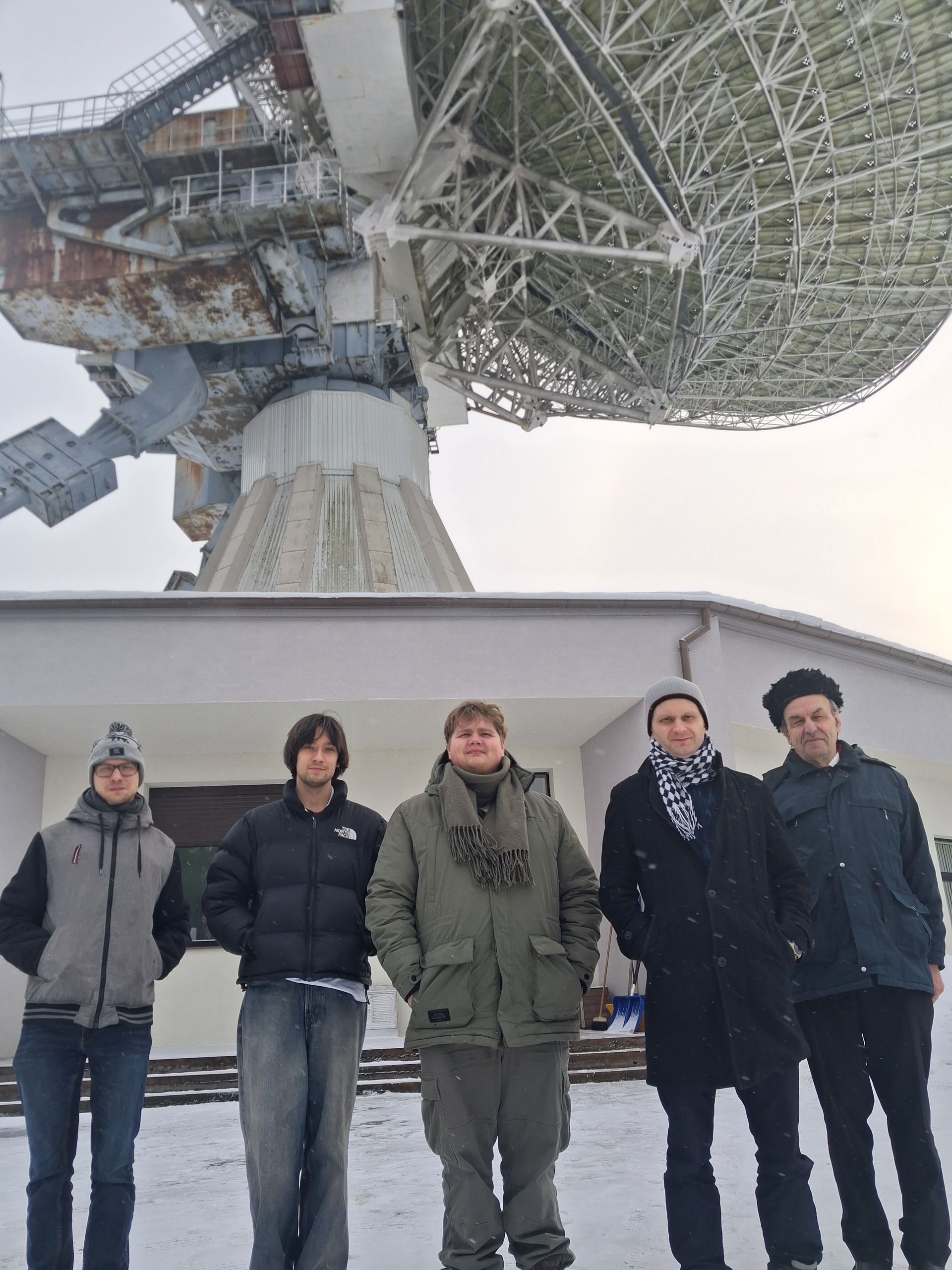
Project DACE participants: Kristaps Veitners, Nikita Muhaņko, Deivis Brakšs, Juris Kalvāns, and Juris Freimanis.
Share on other platforms
Other news