Language Cafe Brings Together International and Local Students

October 16, 2025

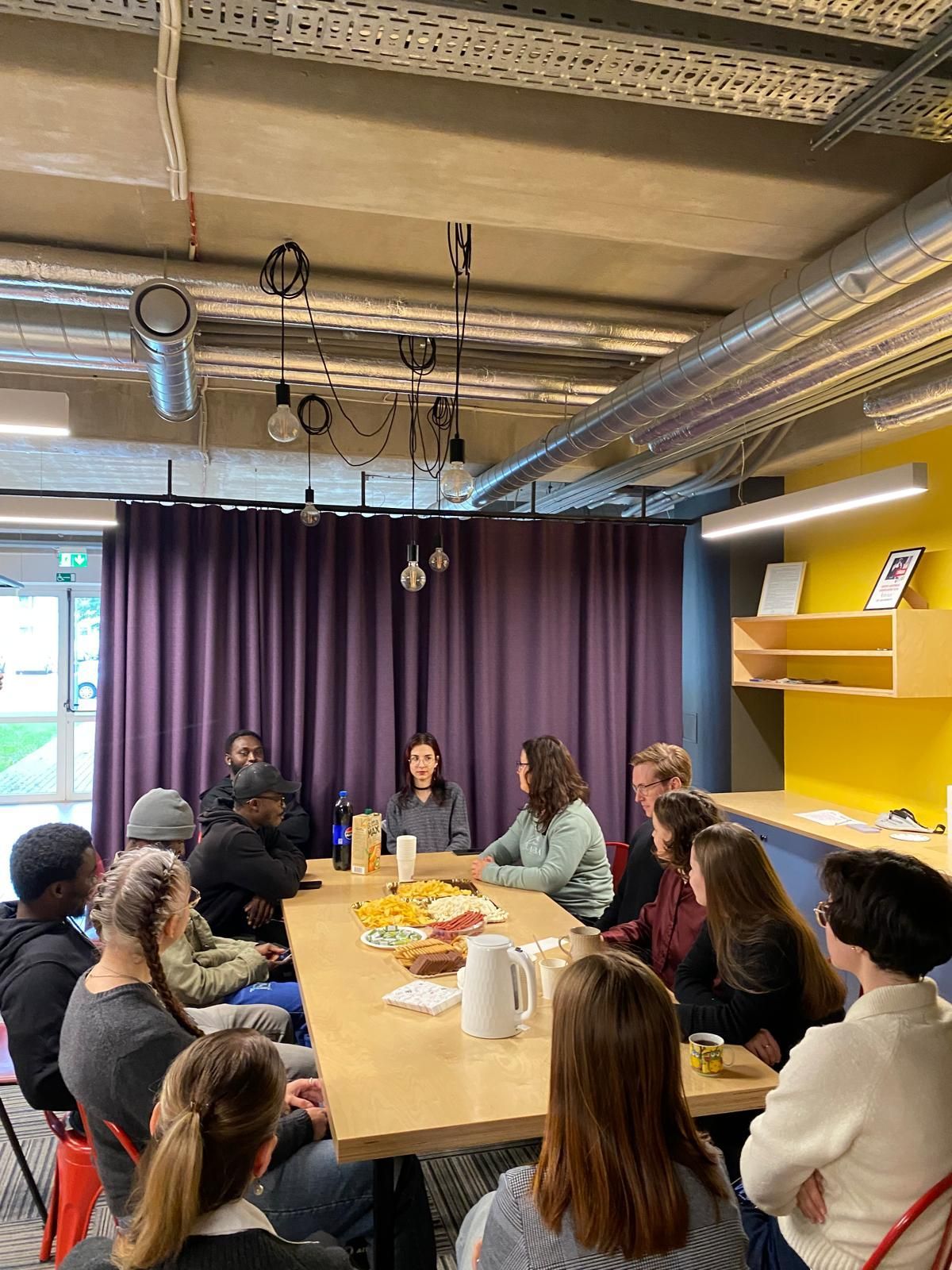
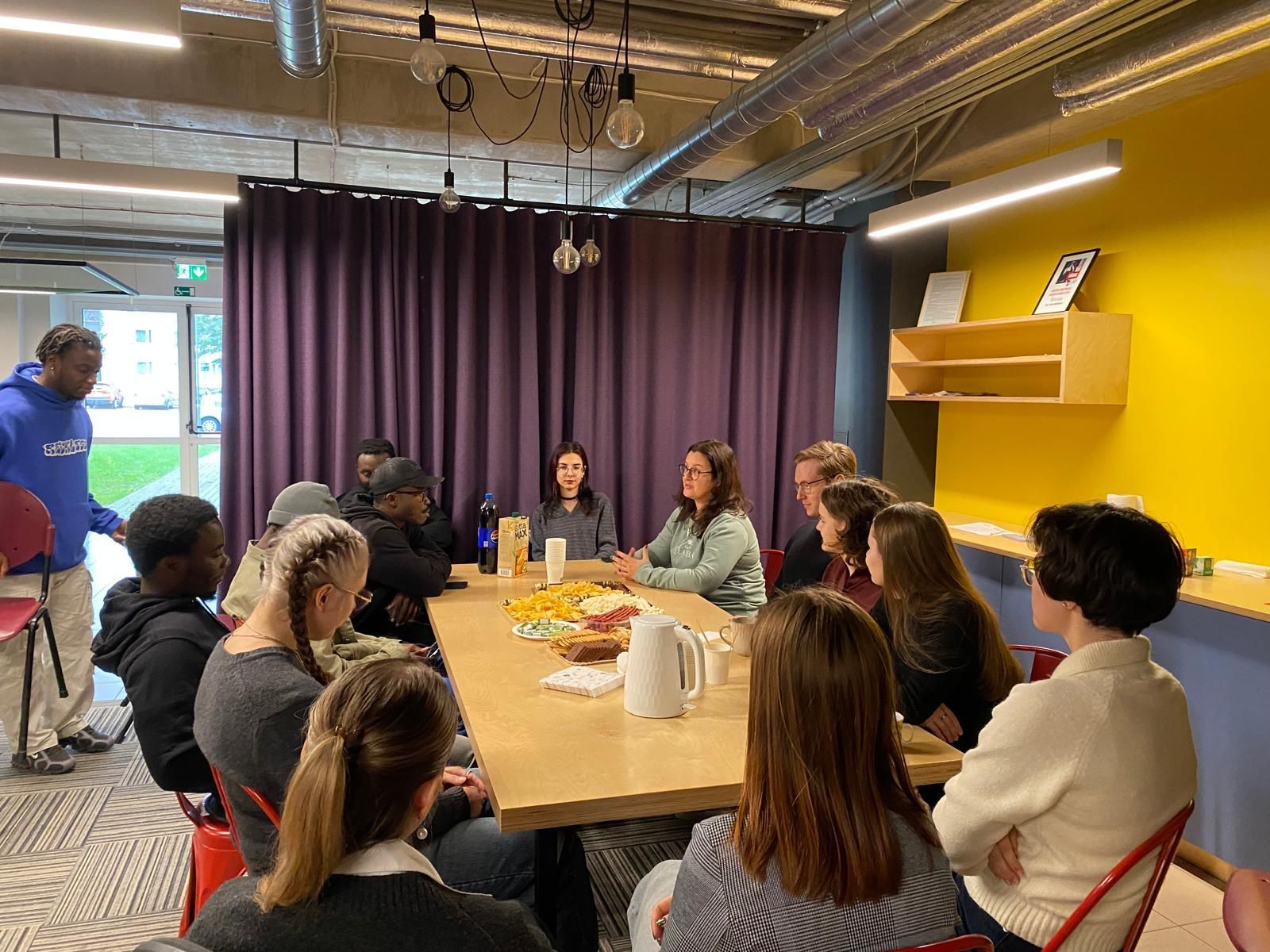
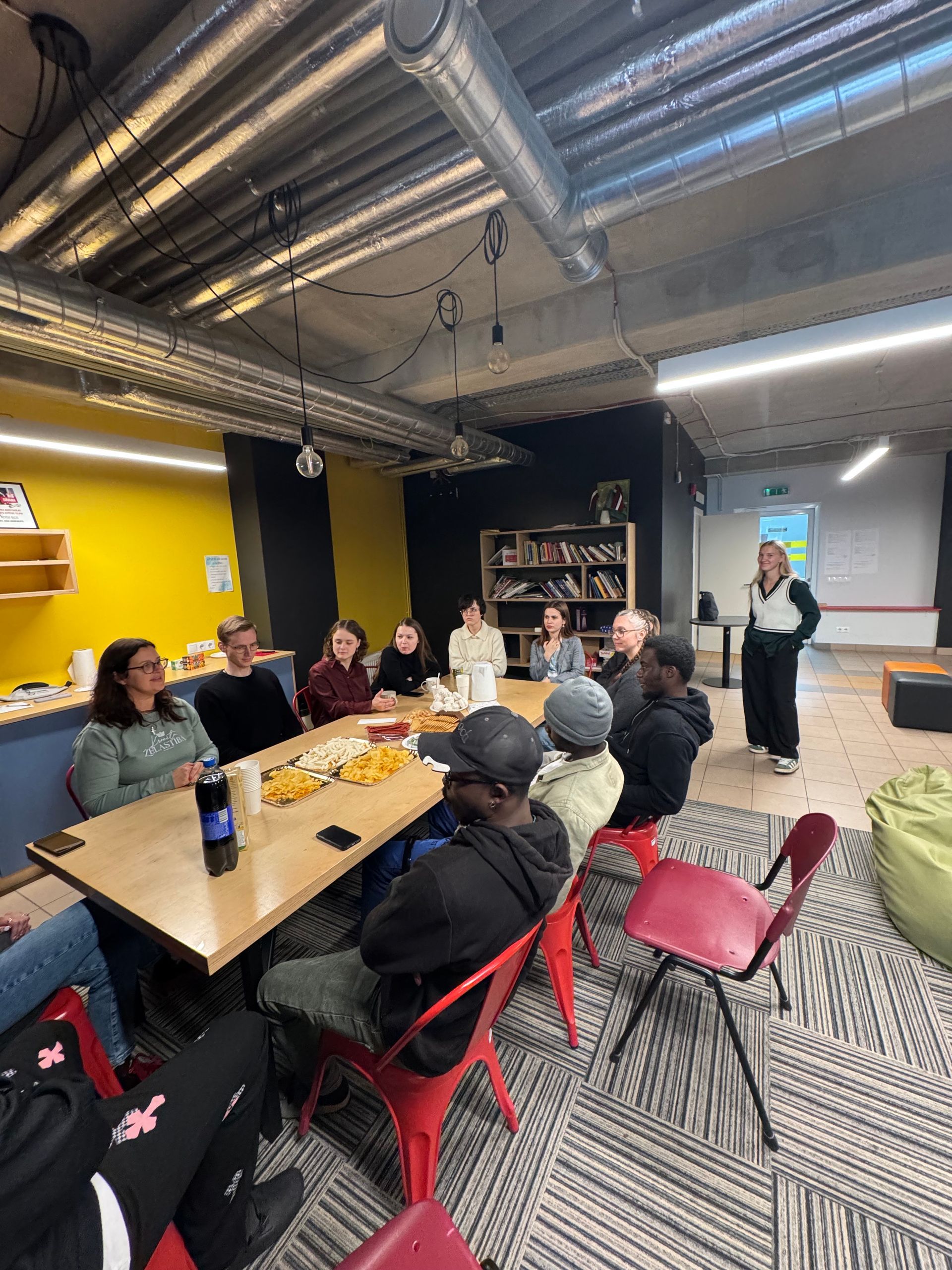
On September 30, 2025, the first Language Café organized by the COLOURS Project was held at Ventspils University of Applied Sciences.


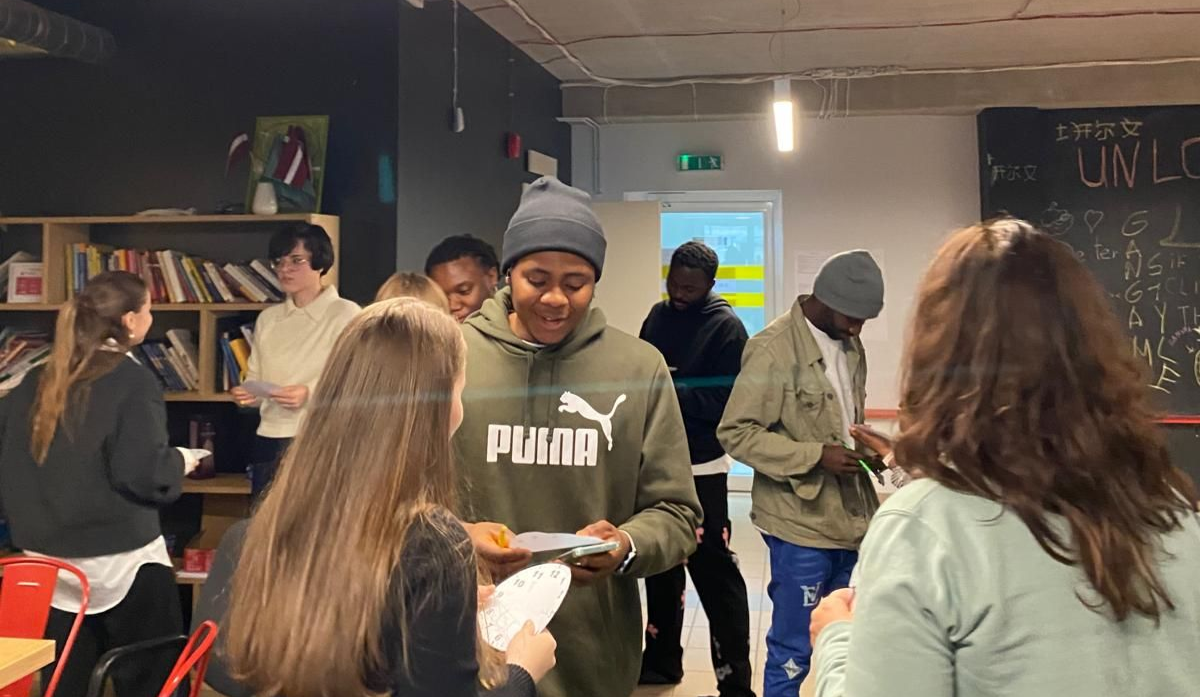
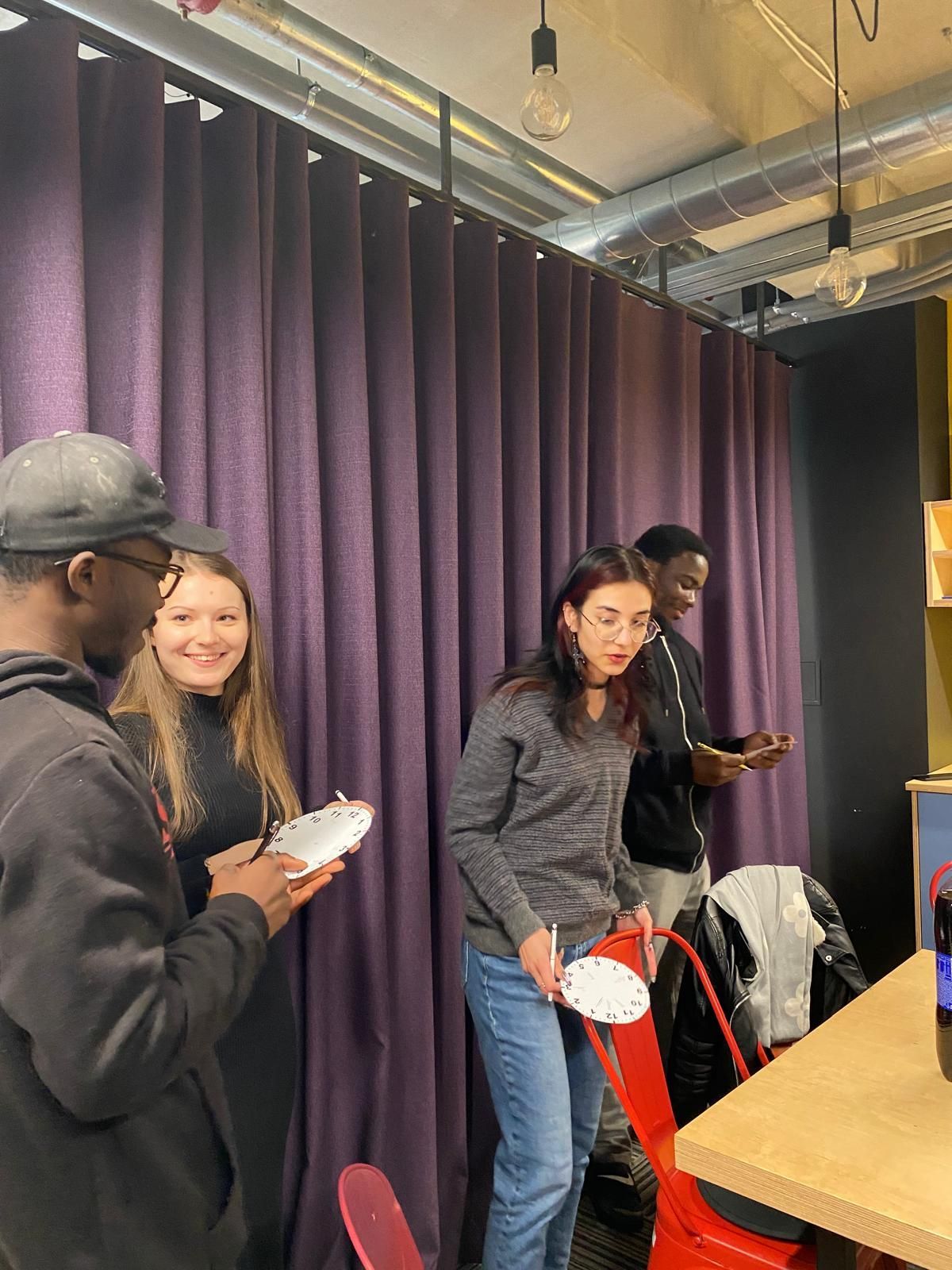
The event gathered international and local students in a relaxed and informal environment to practice languages (Mainly Latvian Language for now), exchange cultures, and foster connections across study programs. The event took place at student lounge, bringing together students from more than 6 different nationalities and speakers of a wide variety of languages, including English, Latvian, French, German, and Russian.


The Language Cafe was designed to support student integration and intercultural communication, two key focus areas of COLOURS. During the event, participants engaged in small-group conversations guided by Lasma Asme, the EDI coordinator. The atmosphere was lively and inclusive, with background music by Liva Slesare, allowing students to gain confidence in speaking while enjoying snacks and refreshments prepared by the EDI coordinator.


“The participation from both Latvian and international students exceeded our expectations,” commented Janvier Dylan, COLOURS representative and International student “It was inspiring to see how open and engaged everyone was, especially how many Latvian students were eager to communicate and connect across cultures. The energy and motivation to continue this kind of event were remarkable.”


The event concluded with students dividing into small groups, where Latvian participants taught international students common words and phrases useful for everyday communication. This interactive exchange created a lively and friendly atmosphere that encouraged mutual learning. The session ended with an open discussion about future activities, during which students shared creative ideas for how upcoming café

meetings could look. Many also expressed interest in volunteering and helping to organise the next events, highlighting their motivation to make the Language Cafe a regular and sustainable part of campus life the organisers noted that the success of the first Language Café demonstrates the importance of creating spaces that encourage communication, collaboration, and cultural exchange beyond the classroom.


The next Language Café is planned for 29th October 2025, and all VeA students, international and local, are welcome to join.
Share on other platforms

Other news
By Rota Žagare June 29, 2026
How is the Baltic blue economy changing – and what kinds of technologies, skills and decisions are needed to support its sustainable future? MarTe has published a new collection of webinar and workshop recordings on YouTube. The videos bring together researchers, industry experts and public sector representatives from Estonia and Latvia to discuss the future of the Baltic blue economy from two perspectives: the bigger strategic picture and practical technology tools.
By Rota Žagare June 18, 2026
A team of solar physicists has discovered a new way to detect and measure entropy variations in the Sun’s atmosphere – a breakthrough that could help researchers better understand how energy moves through the solar corona and why the Sun’s outer atmosphere is millions of degrees hotter than its surface. Entropy is a concept that dates back to the 1860s, when German physicist Rudolf Clausius introduced it while studying the efficiency of heat engines and the famous Carnot cycle. Since then, entropy has become one of the most fundamental ideas in physics, helping scientists describe how energy is distributed and transformed in systems ranging from steam engines and black holes to stars and even the Universe itself. Despite its importance, entropy has remained notoriously difficult to measure directly in the Sun's atmosphere. In a new study currently in press in The Astrophysical Journal Letters, researchers from the University of Warwick, the Ventspils International Radio Astronomy Centre (VIRAC, Ventspils University of Applied Sciences), and University College London have shown that entropy leaves observable fingerprints in waves that travel through the Sun's hot, magnetised atmosphere, known as the corona. "Entropy is one of the key quantities that tells us how energy is organised within a physical system," explains lead author Dmitrii Kolotkov, Stephen Hawking Fellow. "In a conceptual sense, we can think of solar active regions as natural heat engines, continuously converting and transporting energy through hot magnetised plasma. Their behaviour and efficiency are closely linked to entropy. The concept itself has deep roots in thermodynamics and even plays a central role in black hole physics, where entropy is associated with the fundamental limits of information and energy storage. When entropy remains unchanged, energy tends to stay more organised and localised. When entropy is perturbed, energy becomes redistributed and spreads through the surrounding plasma. If we can measure how entropy changes in solar active regions, we gain a new way of tracking how energy is transported, dissipated, and ultimately converted into heat."
By Rota Žagare June 8, 2026
On 18 May, the first EDI (Equality, Diversity, Inclusion) seminar, implemented within the COLOURS project, was successfully held at the café “Panorāma.” The aim of the seminar was to promote understanding of equality, diversity, and inclusion, as well as to strengthen cooperation between different groups of society. The seminar brought together 53 participants, including local students, international students, Erasmus+ students, administrative and academic staff, as well as members of the wider community. The event also attracted a broad range of participants: volunteers from the “Youth House,” city residents, secondary school students, participants of the Lifelong Learning Centre (MIC) alumni courses, and a guest lecturer from the University of Brittany in France. This diversity of participants ensured the practical implementation of the Quadruple helix principle, fostering collaboration between academia, industry, society, and the youth sector. The seminar was led by students Līva Slesare, Amanda Gintere, and Tillija Naumann, demonstrating the active involvement and leadership of young people in building an inclusive education and society. All seminar participants received a COLOURS virtual badge, serving as proof of the knowledge and skills acquired, and can be used for personal and professional development, including on LinkedIn profiles. It is planned that starting from autumn 2026, this training seminar will also be offered in an online format in both Latvian and English. This will make it accessible to a wider audience. Everyone – students, staff, and city residents alike – will have the opportunity to participate, gain knowledge about EDI, and receive the COLOURS badge. This initiative is seen both as an opportunity and a responsibility –to jointly build a more inclusive, open, and understanding society.
By Rota Žagare May 29, 2026
Ventspils University of Applied Sciences has officially adopted the COLOURS Alliance EDI Policy – a shared framework for equality, diversity and inclusion. The policy will now be adapted and implemented within the university’s operations. The aim is to strengthen inclusion across education, research, and everyday practices. The policy can therefore be seen as both a pedagogical and strategic implementation tool to prevent discrimination, increase understanding of differences, and equip students and staff to perform at their best in diverse teams. EDI stands for equality, diversity and inclusion. The training in EDI is designed to strengthen interpersonal relationships, raise awareness of the value of diversity in innovation, creativity and knowledge development, and encourage reflection on one’s own position and approach to others. The implementation of the policy contributes to the development of generic competences and critical thinking among both students and staff. This EDI policy is part of a much larger context, as we are one of nine higher education institutions in Europe adopting the same framework. EDI as a driver for an inclusive society The policy also emphasizes the importance of collaboration through the Quadruple Helix model, where universities, industry, the public sector, and civil society work together. The goal is not only to develop knowledge within EDI, but also to disseminate it and create societal impact. The policy marks the starting point for new initiatives and serves as a bridge to society. EDI strengthens the quality of education and research and is an important tool for both current operations and future needs. Signed policy is available HERE
By Rota Žagare May 28, 2026
On Tuesday, May 19th, second year students of the bachelor’s study programme “Translation and Language Technologies” participated in a lecture lead by guest lecturer Aurélie Le Melinaidre from the Southern Brittany University in France. She tested the students’ knowledge of various English idioms, encouraged creativity by asking them to rewrite a text fragment as differently as they could, and was pleasantly surprised by the students’ excellent knowledge of English. Students also learned about the guest lecturer’s experience teaching English in different countries. Guest lectures held on May 20th and 21st were led by guest lecturer Karolina Siwek from Jan Dlugosz University in Poland. The guest lecturer, met through the COLOURS network, gave four interconnected lectures about different translation aspects for the second- and third-year students of the bachelor’s study programme “Translation and Language Technologies”. Karolina Siwek firstly introduced the students to the history of translation, compared what the profession of a translator was like in the 19th and 20th centuries and what it is like today, highlighting the aspects that have remained the same and those that have changed. During Wednesday’s lecture, students had the opportunity to engage in a discussion and compare the nature of the profession, not only from a historical perspective, but also in terms of the current state of the translation industry in Poland and Latvia. During the lecture about the differences between literary and specialised translators, the guest lecturer compared the translator’s visibility in their work, various potential risks during translation, and the necessary skills, as well as discussed about the prestige and income of the profession. Particular attention was paid to hybrid competencies, which play a significant role in the modern translation profession. Meanwhile, on Thursday, a series of related lectures took place about ISO standards and their impact on the daily work of translators, covering both the positive and negative aspects. The guest lecturer also discussed possible emotions of a translator, their causes, and how to manage them, emphasizing, above all, that emotional regulation is a core professional skill for translators. The guest lecturer shared several stories about her experiences, describing how she handled specific situations and what she learned from them, giving the students a realistic insight into the profession of translation and offering useful advice. Prepared by Sanija Zundovska and Sindija Plotniece from the study programme “Translation and Language Technologies”
By Rota Žagare May 19, 2026
Three students from Ventspils University of Applied Sciences participated in the student networking event “Meet the Nordics: Insights, career opportunities and networking”, organized by the Nordic Council of Ministers’ Office in Latvia in Riga. The event was organized in cooperation with the embassies of Denmark, Finland, Norway, and Sweden the event brought together students from different universities to explore diplomacy, Nordic-Baltic cooperation, and international career opportunities. Throughout the event, students gained valuable insight into the daily work of diplomats, the challenges of working in international environments, and the skills needed to succeed in diplomacy. The speakers shared not only professional experience, but also personal stories about communication, adaptability, and building a meaningful career in an ever-changing global environment. Second-year student of the bachelor’s study programme “Intercultural Communication”, Luīze Anna Spriņģe , highlighted the networking session as the most memorable part of the event: “This part was the most valuable because we could learn more directly from the professionals and their experience. It was valuable to speak with diplomats in a more open environment where we felt comfortable asking different questions.” She also admitted that it was especially interesting to hear the advice of Norwegian Ambassador Ine Måreng, Finnish Deputy Head of Mission Eero Vento, and Danish Deputy Head of Mission Alexander Lemche on how to stand out professionally and build a career in diplomacy. Additionally, second-year student of the bachelor’s study programme “Intercultural Communication”, Evija Saldaka , emphasized the practical value of the experience: “It was interesting to hear about different career paths and practical examples from the diplomats’ daily work. The networking conversations felt especially useful.” Meanwhile, first-year student of the bachelor’s study programme “Translation and Language Technologies”, Janita Kate Asare , shared that the event gave her a deeper understanding of the responsibility and complexity of diplomatic work. She especially appreciated the discussions about diplomacy, work-life balance, and maintaining professionalism in international environments. The students agreed that international events like this provide much more than new knowledge. They create opportunities to develop communication skills, build meaningful professional connections, and inspire students to think more boldly about their future careers. The event also highlighted that diplomacy is not only about politics or international agreements, but equally about building understanding, trust, and dialogue between people and cultures. Written by: Elizabete Apiņa-Fleisa (BSP “Intercultural Communication”, 1st year)
Other news