Latvia shines brightly on the map of space exploration

April 13, 2026

On April 12, marking the International Day of Human Space Flight, global attention is focused on the latest Moon mission by NASA, whose crew has set a new record for the farthest human flight into space. However, space is no longer the privilege of major powers alone. Latvia is also increasingly asserting itself in this now crucial field of science. Since joining the European Space Agency, our country has implemented more than 120 projects, involving dozens of organizations and participating in internationally significant initiatives. For example, global-scale space infrastructure is being developed together with Ventspils University of Applied Sciences and the company VIRATEC, while the Latvian high-tech company Allatherm is involved in the Lunar Gateway project. Today, space is a practical and rapidly growing field of science that impacts our daily lives, economy, security, and development.


Since joining the European Space Agency, our country has implemented more than 120 projects, involving dozens of organizations and participating in internationally significant initiatives. For example, global-scale space infrastructure is being developed together with Ventspils University of Applied Sciences and VIRATEC, while Allatherm is involved in the Lunar Gateway project. Space today is a practical and rapidly growing field of science that influences our everyday life, economy, security, and development.


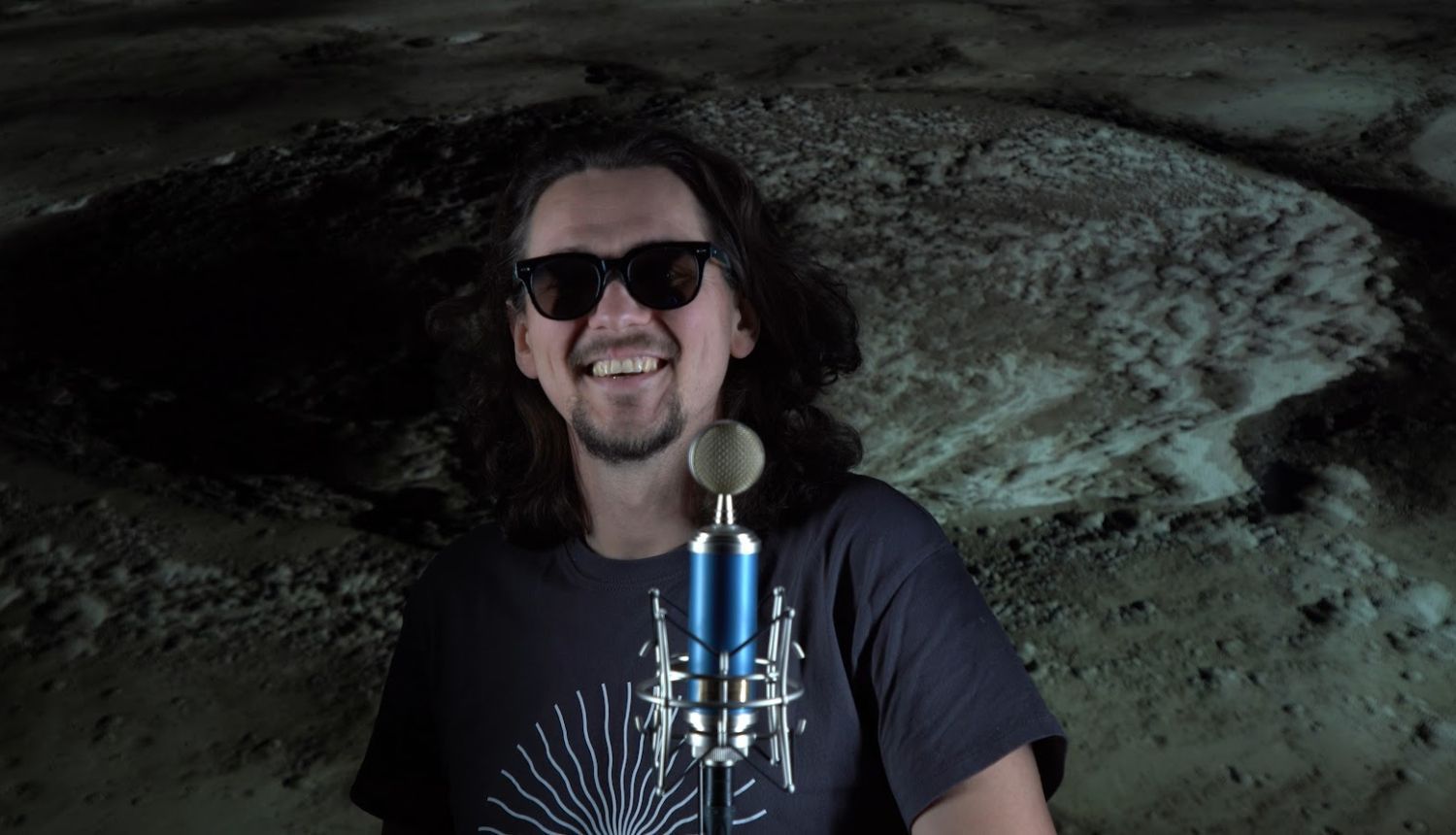
One of Latvia’s best-known space researchers with an international reputation, Andris Slavinskis, co-founder of the company Nanocraft and a professor supervising doctoral students at Riga Technical University and the University of Tartu Observatory, emphasizes that we live in a time when the boundaries between the possible and the impossible are rapidly blurring. His professional experience in space technology dates back to 2012, working at the University of Tartu Observatory, where the main focus is on electric solar wind sails (E-sail) and CubeSat satellite development. The electric solar wind sail is a spacecraft propulsion technology that uses the flow of solar wind particles and electrically charged tethers to generate thrust without fuel and move spacecraft. Meanwhile, CubeSat satellites are small, modular, and relatively inexpensive satellites that enable faster and more accessible development and testing of space technologies and scientific research. Slavinskis has also been involved in international initiatives – he participated in the development of the ESTCube satellites, contributed to the Comet Interceptor mission within the European Space Agency, and gained experience at the NASA Ames Research Center and Aalto University.


Speaking about exoplanet research – planets orbiting stars like the Sun – Slavinskis explains that although scientists already have evidence of their existence, directly observing them remains extremely challenging. In this context, planets are comparable to tiny grains next to a massive light source – a star – so researchers must analyze a minuscule amount of reflected light from a great distance. To address such challenges, new concepts are being developed, including technologies based on electric solar wind sails that could potentially enable reaching and studying such distant planets.


These projects are not just theoretical; Latvian companies and technology developers are also involved. For example, a significant technology developed by the Latvian company Deep Space Energy uses radioisotopes to generate energy. Initially, heat is produced, which is then converted into electricity. This solution is particularly important for missions traveling far from the Sun, where there is no longer sufficient sunlight to charge solar panels.


Latvia’s participation in global space missions is especially noteworthy. One of the most prominent examples is the involvement of a Latvian company in the joint NASA and European Space Agency project Lunar Gateway, where an innovative xenon refueling compressor and thermal management system are being developed– solutions that currently have no analogues in the world. Meanwhile, Ventspils University of Applied Sciences, in cooperation with its spin-off company VIRATEC, is developing technologies that will allow Latvia to become part of the global network of space antennas, providing communication, tracking, and telemetry services for lunar and deep space missions. Such initiatives demonstrate that Latvian companies are capable of creating high value-added innovations and competing internationally.


As Slavinskis notes, the space sector already significantly improves quality of life on Earth and helps address important societal challenges. For example, Earth observation satellites provide detailed data on the environment, natural resources, and infrastructure, enabling countries to make more precise and effective decisions.


“Earth observation satellites allow us to determine forest coverage, water quality, and the location of various objects. We can compare this data with national databases, identify discrepancies, or update them. This is very important for the economy and resource management,” explains the researcher.


In Latvia, this data is already being used in practice – for assessing lake quality, agricultural analysis, infrastructure monitoring, and identifying illegal construction. At the same time, space technologies also provide modern communication solutions and make a significant contribution to security.

“Anyone can purchase a satellite internet receiver and use internet that operates via space. The internet works very well – it is fast and stable,” the scientist explains. In the field of defense, satellites help understand what is happening on front lines or near borders.


The space sector is also one of the most promising career paths for young professionals. It offers opportunities for rapid development and achieving a high professional level in a relatively short time.


“The space sector is interdisciplinary. By studying space technologies, a person gains knowledge in many fields. For those thinking about their future profession, the good news is that many positions in Latvian space projects are still unfilled. If a young person starts working in this field now, in ten years they could become an experienced researcher with a doctoral degree,” Slavinskis outlines career opportunities.


He also mentions examples demonstrating the younger generation’s interest in the space sector – even at the high school level, students are already involved in research and working on scientific publications. As he emphasizes, nothing can be achieved alone in the space sector – close cooperation with engineers, scientists, and other specialists is essential. At the same time, experienced entrepreneurs are increasingly entering the field, and compared to ten years ago, such activity has grown significantly. Almost all projects in this area are international, meaning work takes place in a global environment.


Slavinskis reminds us that space exploration is both a practical and philosophical field that encourages reflection on humanity’s place in the Universe. Although a complete understanding of the Universe may never be achieved, this very challenge drives progress and allows Latvia to increasingly strengthen its position in the global space sector.


An important role in the development of Latvia’s space sector is played by the Ministry of Education and Science of Latvia, which coordinates the country’s participation in the European Space Agency and shapes space policy. From 2021 to June 2025, Latvian organizations have been awarded €12.1 million in ESA program funding, supporting the implementation of 73 projects, with more than 80% allocated to research and development. Since 2020, Latvia has been an associate member of the ESA, and the ministry continues working to ensure active national participation in the next cooperation period from 2027 to 2034.


Source: https://www.izm.gov.lv/lv/jaunums/latvija-spozi-mirdz-kosmosa-izpetes-karte

The story was created with the support of European Union funds.
Share on other platforms

Other news
By Rota Žagare July 20, 2026
The Engineering Research Institute "Ventspils International Radio Astronomy Centre" (VIRAC) of Ventspils University of Applied Sciences (VUAS) continues to develop its research infrastructure by implementing the project "Modernization of the Irbene Radiotelescope Complex Phase 4" (Project No. 1.1.1.2/1/25/I/005), funded by the European Regional Development Fund (ERDF) with co-financing from the Latvian state budget. The goal of the project is to enhance VIRAC as a centre of excellence of national importance with modern and sustainable scientific infrastructure. Several significant procurements and activities have been carried out as part of the project. To ensure the storage of large volumes of radio astronomy observation data, new hard drives with double the capacity were purchased using project funding for the Irbene Flexbuff data server. The Flexbuff server is used to store radio astronomy observation (typically VLBI) data. The previous data storage capacity was no longer sufficient, as both the transmission speed of observation data and the overall data volume have grown significantly in recent years. The new drives will ensure compliance with the increasing storage requirements of the EVN and CERN Tier-2. A contract has been concluded for the procurement of a six-wheeled ATV (quad bike) and its equipment. Such a mobile vehicle makes it possible to transport and test antenna, mobile satellite communication, unmanned, and floating equipment control and immunity solutions in motion. The vehicle is capable of transporting and testing research equipment in motion across the antenna complex's territory of more than 70 hectares, including forest and marsh conditions. Providing such equipment is essential for the developed systems to reach a high Technology Readiness Level (TRL) under real-world conditions. The engineering systems developed as a result of the research and tested with this vehicle have high dual-use potential. In May 2026, a MIG/MAG semi-automatic welding machine with the necessary peripherals and a set of materials suitable for welding aluminum and its alloys was purchased. The equipment is required for manufacturing feed systems for the RT-32 and RT-16 radio telescopes in order to expand their reception bands and promote new radio astronomical observations. As part of the modernization project, a procurement for the photogrammetry and alignment of the RT-32 radio telescope antenna surface will soon be concluded to improve surface accuracy, sensitivity, and performance at higher frequencies. Currently, the efficiency of the RT-32 antenna reaches only 35–38%, and in the highest frequency bands, it is even lower, making observations practically impossible. Photogrammetric measurements will make it possible to precisely determine the necessary position corrections for each primary mirror panel and adjust the panel mountings accordingly, reducing antenna surface error. Following the antenna surface alignment, the sensitivity, measurement accuracy, and observation capabilities of the radio telescope will improve significantly across all operating frequency bands. Taking into account that on December 15, 2025, a positive decision was received from the European Commission regarding amendments to the European Union Cohesion Policy Programme for 2021–2027, granting flexibility funding for its implementation, contract amendments for the project "Modernization of the Irbene Radiotelescope Complex Phase 4" were signed in July of this year. An additional EUR 79,151 was allocated, of which 85% is ERDF funding and 15% is Latvian state budget co-financing. With the additional funding granted, further procurements are planned within the project for the development of VIRAC's research infrastructure: purchase and installation of spare asynchronous electric motors and their control systems required to ensure the sustainability of the motor drives for the RT-32 and RT-16 radio telescopes; purchase of systems necessary to ensure the sustainability of the RF chain and control systems for the RT-32 and RT-16 radio telescopes; and the purchase of a portable handheld vector network analyzer with a bandwidth of at least up to 26.5 GHz. The EU financial support received under the project "Modernization of the Irbene Radiotelescope Complex Phase 4" (No. 1.1.1.2/1/25/I/005) strengthens VIRAC's capacity to conduct high-quality radio astronomical observations and develop new, dual-use research competencies, while ensuring the sustainability and international competitiveness of the Irbene Radiotelescope Complex. Prepared by: Arita Rubīna Public Relations Specialist for the Project
By Rota Žagare June 29, 2026
How is the Baltic blue economy changing – and what kinds of technologies, skills and decisions are needed to support its sustainable future? MarTe has published a new collection of webinar and workshop recordings on YouTube. The videos bring together researchers, industry experts and public sector representatives from Estonia and Latvia to discuss the future of the Baltic blue economy from two perspectives: the bigger strategic picture and practical technology tools.
By Rota Žagare June 18, 2026
A team of solar physicists has discovered a new way to detect and measure entropy variations in the Sun’s atmosphere – a breakthrough that could help researchers better understand how energy moves through the solar corona and why the Sun’s outer atmosphere is millions of degrees hotter than its surface. Entropy is a concept that dates back to the 1860s, when German physicist Rudolf Clausius introduced it while studying the efficiency of heat engines and the famous Carnot cycle. Since then, entropy has become one of the most fundamental ideas in physics, helping scientists describe how energy is distributed and transformed in systems ranging from steam engines and black holes to stars and even the Universe itself. Despite its importance, entropy has remained notoriously difficult to measure directly in the Sun's atmosphere. In a new study currently in press in The Astrophysical Journal Letters, researchers from the University of Warwick, the Ventspils International Radio Astronomy Centre (VIRAC, Ventspils University of Applied Sciences), and University College London have shown that entropy leaves observable fingerprints in waves that travel through the Sun's hot, magnetised atmosphere, known as the corona. "Entropy is one of the key quantities that tells us how energy is organised within a physical system," explains lead author Dmitrii Kolotkov, Stephen Hawking Fellow. "In a conceptual sense, we can think of solar active regions as natural heat engines, continuously converting and transporting energy through hot magnetised plasma. Their behaviour and efficiency are closely linked to entropy. The concept itself has deep roots in thermodynamics and even plays a central role in black hole physics, where entropy is associated with the fundamental limits of information and energy storage. When entropy remains unchanged, energy tends to stay more organised and localised. When entropy is perturbed, energy becomes redistributed and spreads through the surrounding plasma. If we can measure how entropy changes in solar active regions, we gain a new way of tracking how energy is transported, dissipated, and ultimately converted into heat."
By Rota Žagare June 15, 2026
As part of the BIP (Blended Intensive Programme) and summer school “Digital Innovation Through AI,” students from Latvia, Ukraine, Spain, Poland and other countries gathered at Ventspils University of Applied Sciences for a week to expand their knowledge of the potential of artificial intelligence in business and innovation. During the programme, students worked in international teams to develop their own business ideas, analyse market needs, create solution concepts and refine their projects under the guidance of experienced mentors. Participants learned various methods and tools for using artificial intelligence in the development of products and services, while also gaining practical experience in presenting ideas and working as a team.
By Rota Žagare June 8, 2026
On 18 May, the first EDI (Equality, Diversity, Inclusion) seminar, implemented within the COLOURS project, was successfully held at the café “Panorāma.” The aim of the seminar was to promote understanding of equality, diversity, and inclusion, as well as to strengthen cooperation between different groups of society. The seminar brought together 53 participants, including local students, international students, Erasmus+ students, administrative and academic staff, as well as members of the wider community. The event also attracted a broad range of participants: volunteers from the “Youth House,” city residents, secondary school students, participants of the Lifelong Learning Centre (MIC) alumni courses, and a guest lecturer from the University of Brittany in France. This diversity of participants ensured the practical implementation of the Quadruple helix principle, fostering collaboration between academia, industry, society, and the youth sector. The seminar was led by students Līva Slesare, Amanda Gintere, and Tillija Naumann, demonstrating the active involvement and leadership of young people in building an inclusive education and society. All seminar participants received a COLOURS virtual badge, serving as proof of the knowledge and skills acquired, and can be used for personal and professional development, including on LinkedIn profiles. It is planned that starting from autumn 2026, this training seminar will also be offered in an online format in both Latvian and English. This will make it accessible to a wider audience. Everyone – students, staff, and city residents alike – will have the opportunity to participate, gain knowledge about EDI, and receive the COLOURS badge. This initiative is seen both as an opportunity and a responsibility –to jointly build a more inclusive, open, and understanding society.
By Rota Žagare May 29, 2026
Ventspils University of Applied Sciences has officially adopted the COLOURS Alliance EDI Policy – a shared framework for equality, diversity and inclusion. The policy will now be adapted and implemented within the university’s operations. The aim is to strengthen inclusion across education, research, and everyday practices. The policy can therefore be seen as both a pedagogical and strategic implementation tool to prevent discrimination, increase understanding of differences, and equip students and staff to perform at their best in diverse teams. EDI stands for equality, diversity and inclusion. The training in EDI is designed to strengthen interpersonal relationships, raise awareness of the value of diversity in innovation, creativity and knowledge development, and encourage reflection on one’s own position and approach to others. The implementation of the policy contributes to the development of generic competences and critical thinking among both students and staff. This EDI policy is part of a much larger context, as we are one of nine higher education institutions in Europe adopting the same framework. EDI as a driver for an inclusive society The policy also emphasizes the importance of collaboration through the Quadruple Helix model, where universities, industry, the public sector, and civil society work together. The goal is not only to develop knowledge within EDI, but also to disseminate it and create societal impact. The policy marks the starting point for new initiatives and serves as a bridge to society. EDI strengthens the quality of education and research and is an important tool for both current operations and future needs. Signed policy is available HERE
Other news