News in the project “3rd round of modernization of Irbene radio telescope complex”
September 20, 2020

The project “3rd round of modernization of Irbene radio telescope complex” (No. 1.1.1.4/17/I/010) is based on the VIRAC development strategy for 2016-2020. The project was primarily intended for the modernization of the Irbene radio telescope complex, implementing the activities not implemented in the 2nd round of modernization and arranging the operation of the radio telescopes.


On July 28, 2020, amendments to the project agreement were approved, which envisage abandoning the previously planned purchase of a multifunctional mobile laboratory, the purchase of equipment necessary for the construction of the engineering infrastructure of the Short Base Interferometry Radio Astronomical System Control System and DBBC new generation equipment,, by allocating the funding for these activities to the purchase of broadband cryogenic receiver components for VLBI and single antenna observations, the costs of which have significantly increased, as well as by building a receiver booth for the RT-32 radio telescope.


The amendments also extended the project implementation period by six months, i.e. until 31 July 2021.


After several unsuccessful procurements, on July 28, 2020, a repeated procurement of construction works was announced for the repair of premises in the radio telescopes RT-16 and RT-32, which envisaged reducing the volumes of construction works in order of priority to fit into the project budget. However, after receiving the bids and evaluating the costs of other concurrent and planned procurements, on 17 September the procurement was terminated and at the end of September it is planned to announce the procurement of new works with even reduced volumes, planning repairs only in the RT-16 radio telescope.


On September 9, 2020, the decision on the results of the procurement “RT-32 mirror surface adjustment accuracy study, adjustment service and purchase of microwave holography system for RT-32 mirror surface control” (procurement ID No. 2020/09 / ERDF) was announced. No tender was received for the first part of the procurement “RT-32 mirror surface accuracy study and adjustment service”, thus in accordance with the procurement regulations for this part the procurement was terminated and due to limited project funding this part will not be performed. 


For the second part of the procurement tenderer “Purchase and delivery of microwave holography system RT-32 for regular control of mirror surface errors and training of the personnel of the Ventspils University of Applied Sciences Institute of Engineering Ventspils International Radio Astronomy Centre” (hereinafter - VIRAC), The only tenderer to be awarded the contract was MT Mechatronics, a company established in Germany.


On September 17, 2020, an open tender was announced “Purchase of Broadband Cryogenic Receiver Components for VLBI and Single Antenna Observations” (Procurement ID No. VeA 2020/07 / ERDF) for purchase of RT-32 cryogenic and vacuum system components and cooling low-noise amplifier RT-32 Purchase of L / S range receiver.
Application deadline - October 15, 2020


Project manager: Baiba Reimane

Share on other platforms

Other news
By Rota Žagare • November 6, 2026
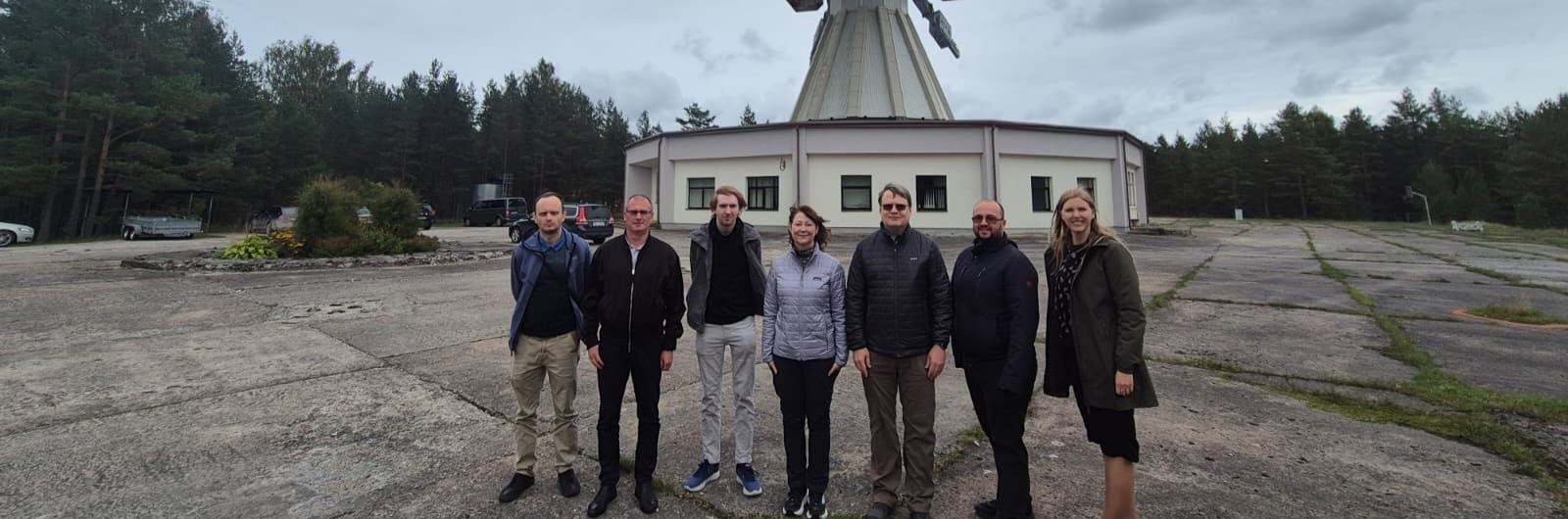
With support from the Baltic-American Freedom Foundation (BAFF), from the 21st of September to the 1st of October 2026, two leading scientists from the U.S. National Radio Astronomy Observatory (NRAO) – Dr. Todd R. Hunter and Dr. Crystal L. Brogan – visited the Engineering Research Institute “Ventspils International Radio Astronomy Centre” (VIRAC) at Ventspils University of Applied Sciences (VUAS). During their visit to Ventspils, the guests familiarized themselves with the Irbene radio astronomy complex and the receiver technologies developed in-house by VIRAC, and held seminars on mitigating radio-frequency interference and improving radio astronomy data processing. Together with VIRAC specialists, the researchers identified complementary research directions in the study of massive star formation, in which observations from the Irbene radio telescopes can provide substantial support for data obtained with leading U.S. radio astronomy instruments (ALMA, VLA/ngVLA). The visit served as an important step toward establishing a long-term partnership between Latvian and U.S. radio astronomy institutions. The foundations were laid for joint international research projects and scientific publications. Alongside the strategic discussions, the U.S. experts provided individual consultations for VIRAC researchers, delivered a public lecture for a wider audience in Ventspils, and offered valuable feedback and introduced international career opportunities to students in the exact sciences, both in Ventspils and subsequently in Riga at the University of Latvia (UL).
By Rota Žagare • November 5, 2026
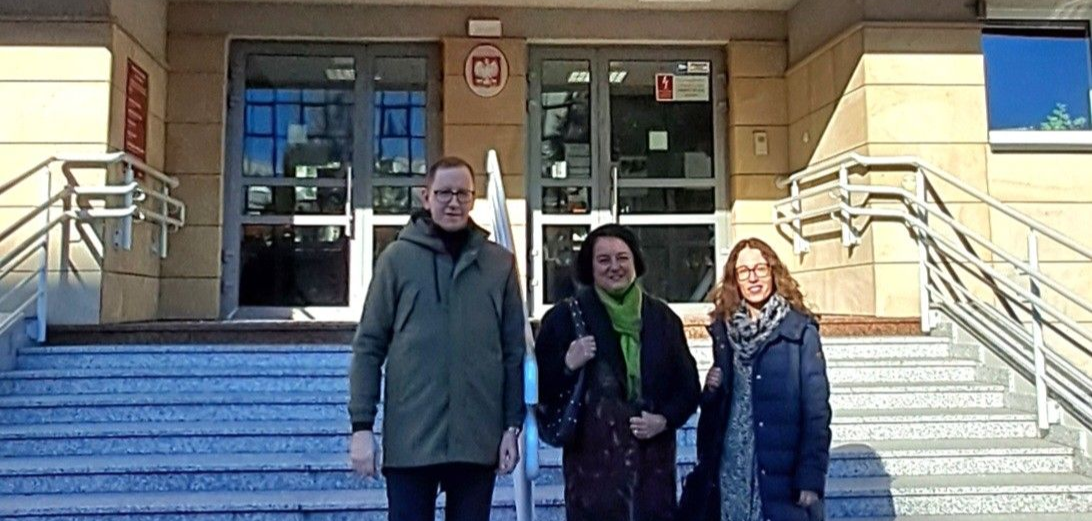
From 26 to 30 October, Assistant Professor Egita Proveja, Associate Professor Jānis Veckrācis and Lecturer Aiga Bādere of the Faculty of Translation Studies (FoTS) at Ventspils University of Applied Sciences (VUAS) visited the Faculty of Humanities of Jan Długosz University in Częstochowa ( Uniwersytet Jana Długosza w Częstochowie , JDU, Poland). The visit took place within the framework of both the COLOURS European University Alliance and Erasmus+ cooperation. The main aim of the visit was to launch a joint practice-oriented project for translation students of VUAS FoTS and JDU. Latvian and Polish students are expected to work with professional texts and specialised vocabulary in various formats of cooperation. Working meetings were held with the management and staff of the Faculty of Humanities. The VUAS representatives Jānis Veckrācis and Aiga Bādere discussed specific plans for cooperation with the Dean of the JDU Faculty of Humanities, Aiga Bādere met the Polish students involved in the project, and Egita Proveja observed German-language classes. The VUAS representatives also met the JDU Vice-Rector. The visit provided an opportunity to discuss the cooperation in detail, including a joint challenge-based project, its implementation timeline, the allocation of tasks and the expected results. Plans for a summer school were also discussed. The programme also included a study visit to the Jasna Góra Monastery, where a JDU graduate, now a professional guide, showed how education in the humanities and professional competence help to preserve and promote the region’s cultural heritage. The visit strengthened cooperation between the two universities and opened up opportunities to involve students at all levels of study in future joint projects.
By Rota Žagare • October 22, 2026
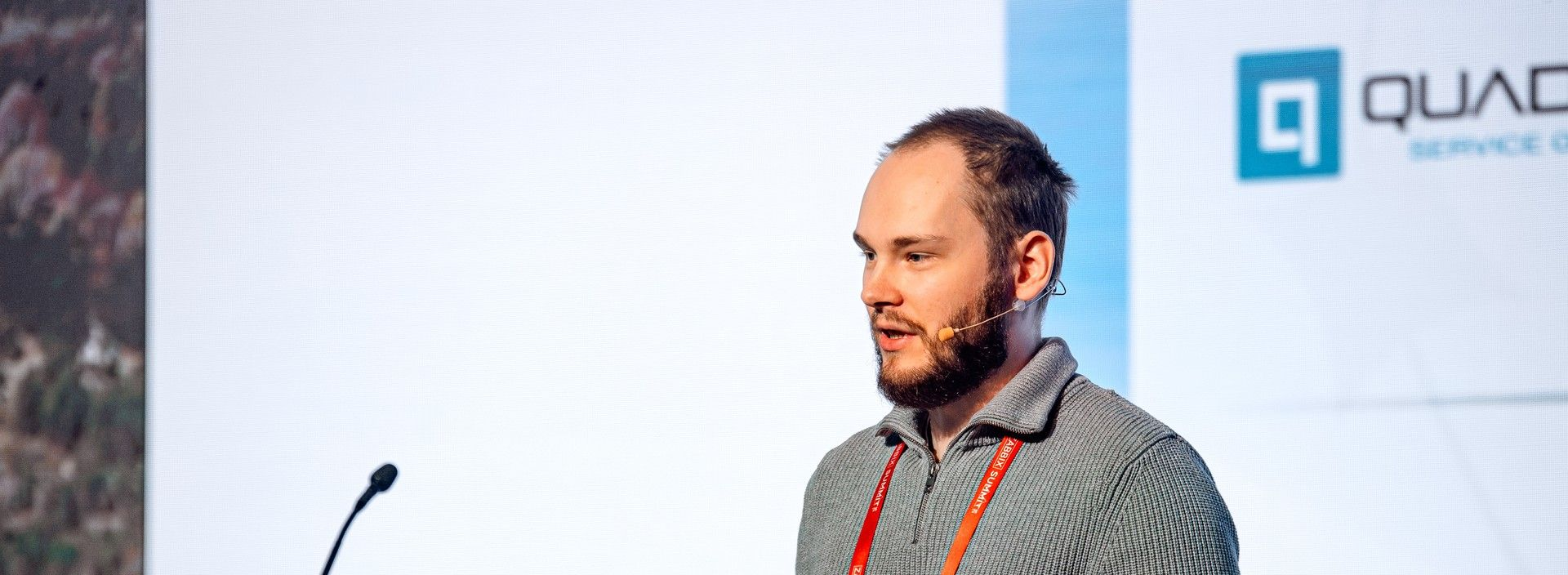
From 7 to 9 October, the international Zabbix Summit 2026 conference took place in Riga, bringing together representatives from various countries to share experience on the capabilities of the Zabbix monitoring platform and its use across different industries. Kristaps Blumbergs, a Research Assistant at the Ventspils International Radio Astronomy Centre (VIRAC), also attended the conference. 
By Rota Žagare • October 20, 2026
On 16 October, Ventspils University of Applied Sciences hosted a Career Day for Early-Career Researchers, during which doctoral students and early-career researchers explored various professional development opportunities both within and beyond academia. The event highlighted the importance of international cooperation in research, featured personal experiences of scientific career development, and fostered collaboration among representatives of different scientific disciplines. The Career Day was organised as part of the international NextTechTalents project, introducing participants to opportunities to advance their research careers, develop professional skills, and engage in international initiatives. Special attention was also given to the opportunities offered to doctoral students and early-career researchers by the COLOURS European University Alliance. Gvido Grīnbergs from Ventspils High Technology Park shared his professional experience, describing his journey from research to entrepreneurship. He emphasised that the knowledge and skills acquired through research can be successfully applied beyond academia, including in entrepreneurship and technology development. Drawing on his personal experience, Gvido Grīnbergs highlighted the need to strengthen collaboration between researchers, entrepreneurs, and technology developers to transform scientific expertise into practical and innovative solutions. Oskars Teikmanis, Chairman of the Board of the Latvian Association of Young Researchers (LJZA), presented the diverse career paths and opportunities available to early-career researchers. He emphasised that a career in science is not limited to conducting research but can also develop in areas such as scientific publishing, research integrity, science policy, research funding, administration, innovation, and science communication. A doctoral degree demonstrates not only scientific qualifications but also a broad range of competencies that can be applied across various professional fields. The Career Day also featured a networking session, providing participants with an opportunity to engage in discussions, exchange ideas, and establish collaborations with fellow early-career researchers, doctoral students, doctoral supervisors, project representatives, and industry professionals.  In addition to presentations and discussions, participants explored the research infrastructure of Ventspils University of Applied Sciences by visiting the laboratories of the Faculty of Information Technologies. The event concluded with a visit to Irbene, where participants took a guided tour of the Ventspils International Radio Astronomy Centre, learning about its research infrastructure and how it is used in scientific research.
By Rota Žagare • October 14, 2026
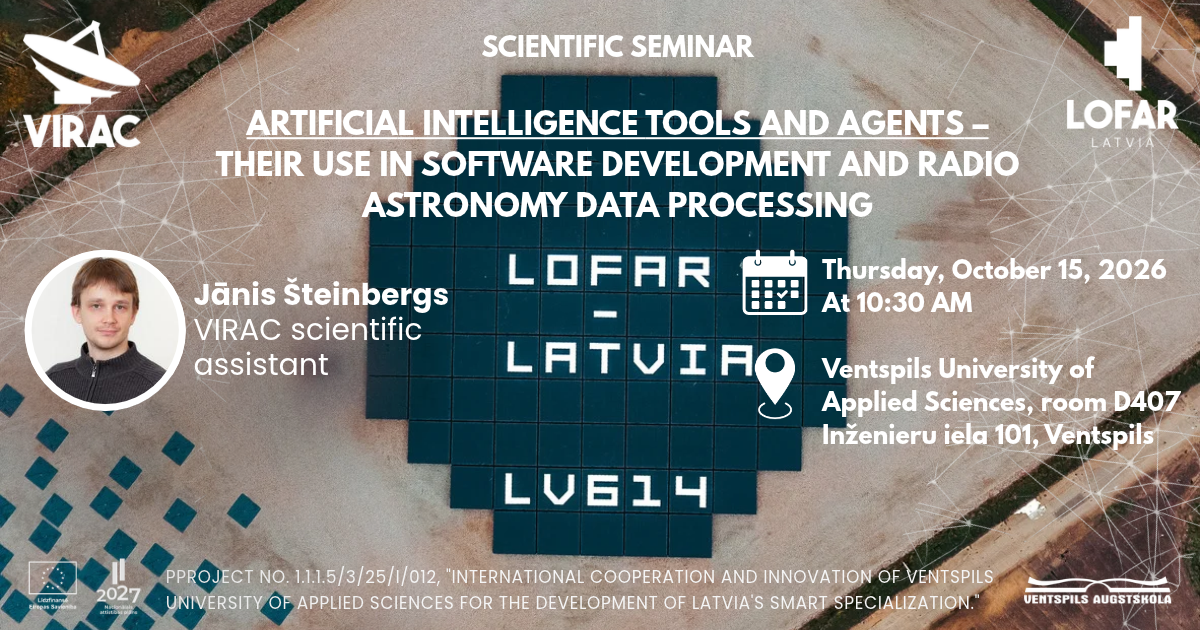
The Engineering Research Institute “Ventspils International Radio Astronomy Centre” (VIRAC) of Ventspils University of Applied Sciences is organising the seminar “Artificial Intelligence Tools and Agents: Their Use in Software Development and Radio Astronomy Data Processing” to introduce the capabilities of artificial intelligence (AI) agents and their practical applications in the development of smart technologies and scientific research. The seminar will take place on 15 October at 10:30 and will be led by Jānis Šteinbergs, Scientific Assistant at VIRAC.
By Rota Žagare • October 12, 2026
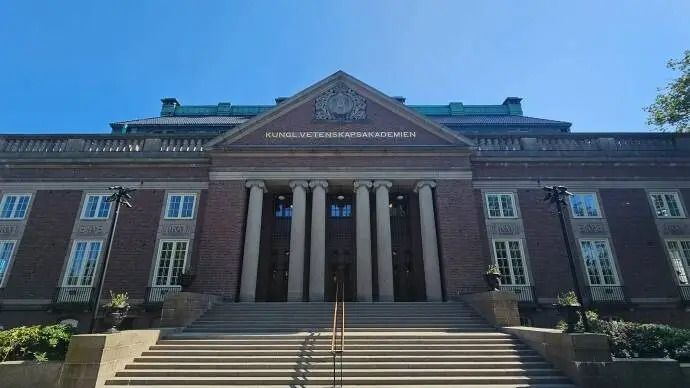
Andris Vaivads, Rector of Ventspils University of Applied Sciences, has been elected as a new foreign member of the Royal Swedish Academy of Sciences' Class for Astronomy and Space Science. Andris Vaivads studies what is commonly known as the magnetosphere around the Earth, other planets and the SunClass for astronomy and space science. He performs his research as a professor in Experimental Space Physics at KTH Royal Institute of Technology in Stockholm. Earlier, he spent 20 years as a researcher at the Swedish Institute of Space Physics in Uppsala. He studies the magnetosphere around Earth, other planets, and the Sun. Much of space is filled with plasma, a gas consisting of electrically charged particles that are influenced, among other things, by magnetic fields. When magnetic fields pointing in different directions reconnect – a process known as magnetic reconnection – large amounts of magnetic energy can rapidly be converted into other forms of energy, including kinetic energy. Andris Vaivads’s research focuses on these processes, where large amounts of energy are converted within small regions of space. Plasma processes can, among other things, produce the Northern lights (Auroras), affect satellites, and heat plasma to tens and hundreds of millions of degrees. The research group at KTH, in which Andris Vaivads spends 20 per cent of his working time, develops instruments to measure electric fields on satellites. The group also designs small measurement probes that can be launched from Esrange Space Centre in Kiruna on rockets. More recently, Andris Vaivads has also studied processes in the solar wind, a kind of plasma wind that plays a major role in space weather. This research uses observations from spacecraft launched by ESA (Solar Orbiter) in Europe and NASA (Parker Solar Probe) in the US. Members of the Royal Swedish Academy of Sciences serve on committees and participate in classes that initiate investigations, respond to consultations, and organise conferences and seminars. Based on the information published on the official website of the Royal Swedish Academy of Sciences.
Other news