Representatives of VUAS are going to the COLORS kick off event in Paderborn

March 14, 2024

University alliance led by Paderborn University plans international campus: sites in nine European countries


Kick-off on 18 March


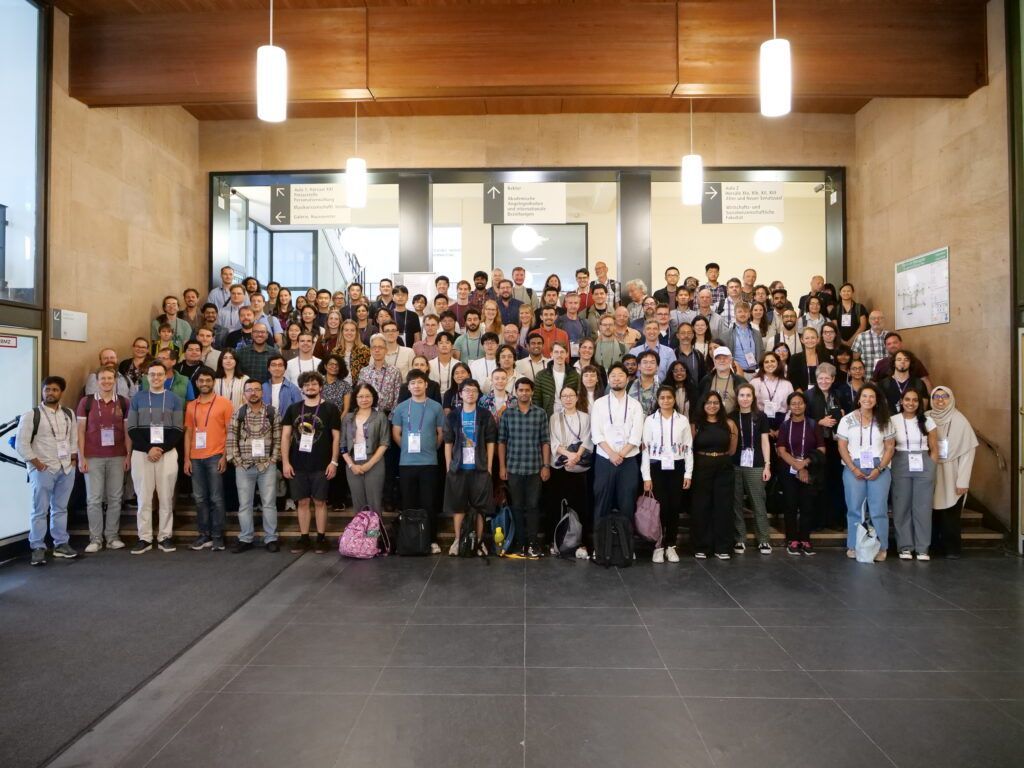
Register at your local university and then do international courses in various countries: the vision of a European campus is gradually becoming a reality. Since the beginning of the year, the European Commission has provided the COLOURS university alliance with a total of 14 million euros of funding, as one of a total of 50 initiatives. Under Paderborn University’s leadership, this alliance brings together nine international universities with around 126,000 students and 12,300 employees. The aim is to strengthen cooperation for the long term, increase international visibility, and promote student and researcher mobility within Europe. This also includes designing joint courses of study. What makes this special is that students are able to play an active role. Various representatives are coming to Paderborn for the kick-off event on Monday 18 March.


‘COLOURS’ stands for ‘COLlaborative innOvative sUstainable Regional univerSities’. The name says it all:  the core topics of ‘open innovation’, ‘challenge-based teaching’ and ‘impact-driven research’ are linked with regional ‘smart specialisation objectives’. In other words, the initiative is seeking to get the ball rolling for social and technological initiatives for citizens across Europe and promote strategic cooperation. This may for example include new physical and virtual mobility programmes, or creating joint courses of study. ‘Students must play a particularly major role in developing these services, to actively help shape the concept of an inter-university campus’, explains Professor Torsten Meier, Vice-President for International Relations at Paderborn University. Another aim is to translate the United Nations’ Sustainable Development Goals into specific measures for research, teaching and technology transfer. To achieve this, the partners are developing practical models that will help their education systems serve as catalysts for environmental, digital and social change in Europe. The universities’ collaboration is being supported by 55 associate partners, who are working as disseminators within regional innovation networks.


Alongside Paderborn University as the coordinating institution, the alliance also includes Le Mans University (France), the University of Castilla-La Mancha (Spain), the University of Ferrara (Italy), Kristianstad University (Sweden), Jan Długosz University in Częstochowa (Poland), Josip Juraj Strossmayer University in Osijek (Croatia), Ventspils University of Applied Sciences (Latvia) and the University St. Kliment Ohridski Bitola (Northern Macedonia). Lesya Ukrainka Volyn National University (Ukraine) is an associate partner of the alliance.


The opening ceremony is taking place on Monday 18 March from 4 to 6 p.m. in Paderborn University’s lecture hall G. Afterwards, all interested parties are invited to a reception in the ‘Forum’ cafeteria as part of a ‘COLOURS Market Square’, offering an opportunity to find out more about the partner universities and regions and to talk to the partners directly. You must register in advance to attend.


Further information and registration can be found on the event website: go.upb.de/COLOURS_Kick_Off.

Share on other platforms

Other news
By Rota Rulle February 27, 2026
The TALKS & TEA afternoons are starting again! Next week on Tuesday we invite YOU to a cozy tea afternoon with activities to learn new Latvian words and to connect with local students! This time we will talk about festivals and celebrations we have in Latvia but, of course, we are also excited to hear about the festivals that you celebrate! Everybody is welcome to join! Where & when? Date: 3rd March 2026 Time: 17:00 Place: D103 We are looking forward to seeing you and your friends!
By Rota Rulle February 25, 2026
Last weekend, the TechChill Student Challenge 2026 took place in Riga, bringing together motivated students to experience the fast-paced world of startups. We are proud that 16 students from Ventspils University of Applied Sciences participated in the 24-hour hackathon, while three students from the Start-up Management programme were part of the organizing team, contributing to the successful delivery of the event. During the challenge, participants formed teams, developed business ideas, validated their concepts, and presented their solutions to a professional jury, all within just 24 hours. Hackathons provide a valuable opportunity for students to apply their knowledge in practice, strengthen teamwork and problem-solving skills, and develop an entrepreneurial mindset. The jury consisted of industry representatives: Luīze Dārta Sietiņa (TechChill), Āris Brenčis (NGL Ventures), Velma Linko (Junction), Lev Bass (Hukt AI), and Sigvards Krongorns (Verge HealthTech Fund). Their expertise provided valuable feedback and real-world insight into the startup ecosystem. Among the participants, 4th year Start-up Management student Kate Liepa and her team achieved 2nd place, receiving tickets to Latitude59. You can read her reflections on the experience here: https://www.linkedin.com/posts/kate-liepa-77168b24b_techchill-student-challenge-has-come-to-ugcPost-7431977095171371009-OA0U We are proud of our students for their initiative, engagement, and strong representation of the university.
By Rota Rulle February 23, 2026
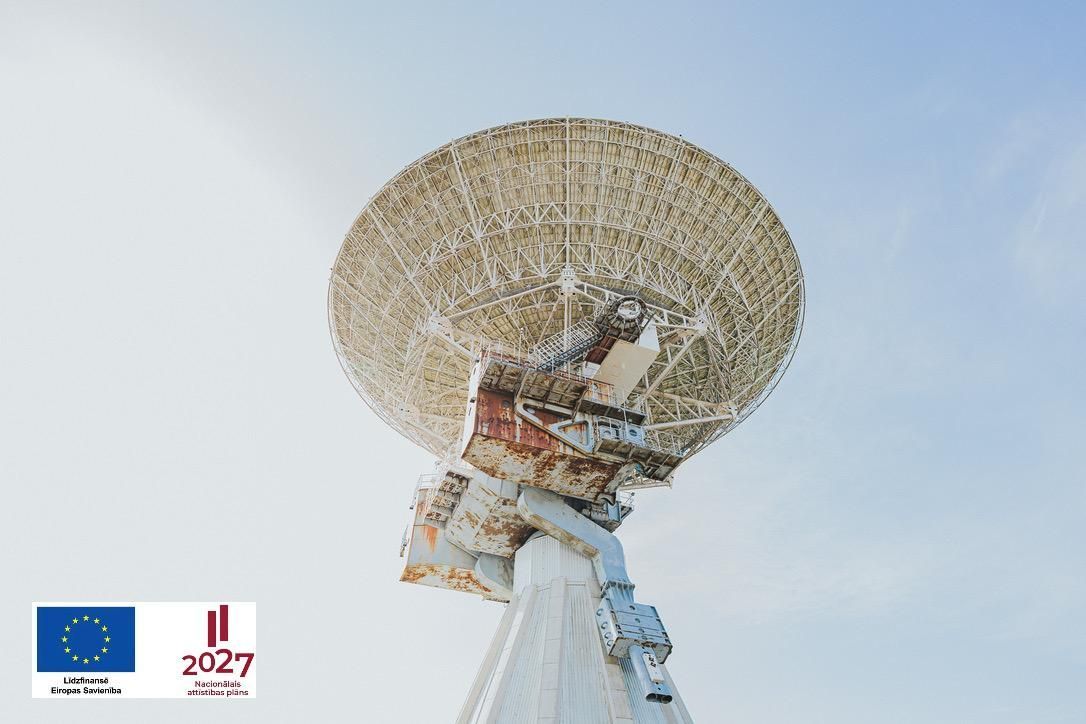
As of January 2026, the Fundamental and Applied Research Programme of the Latvian Council of Science project No. lzp-2025/1-0065 “Multi-material Dust Astrochemistry (DACE)” has commenced. The research is being carried out by staff of the Astronomy and Astrophysics Department at the Engineering Research Institute “Ventspils International Radio Astronomy Centre” (VIRAC) of Ventspils University of Applied Sciences. The scientific significance of DACE lies in its novelty. It has long been known that within the Solar System and in the wider cosmic space of our Galaxy and beyond there exist tiny solid grains – interstellar dust. They have a varied chemical composition, albeit two classes of materials dominate: silicate minerals (rock) and carbon (soot). This diversity of dust is taken into account in several subfields of astrophysics, such as physics of the interstellar medium physics and cosmochemistry (the science of the origin of the compounds and elements that formed the Solar System). However, in astrochemistry – which studies molecular transformations in the interstellar medium – the varied composition of dust has so far been largely ignored. Nevertheless, it may be significant, as many important chemical transformations in space occur on dust grain surfaces. Within DACE, we will investigate how differences in interstellar dust materials – including temperature, surface adsorption (molecular sticking) properties, and other parameters – affect the chemical composition of interstellar nebulae. Starting in January, leading researchers J. Kalvāns and J. Freimanis began work on the DACE project, conducting preliminary studies as well as initial scientific and administrative planning and preparation. Full, coordinated, and active research began in February with the formal involvement of students. On February 18, the project’s opening seminar was held, during which two key research directions were defined: calculating temperatures for dust grains in interstellar clouds embedded in cosmic radiation fields, and adapting a new reaction database for astrochemical calculations. After the seminar, project participants visited VIRAC radio telescope complex in Irbene (see photo).
By Rota Rulle February 20, 2026
What is the PhD experience like elsewhere in Europe?  The Doctoral Breakfast offers all PhD candidates from the universities of the COLOURS European Alliance a dedicated space to meet, share experiences, and broaden their perspectives on doctoral studies. This monthly online event provides a welcoming environment for informal discussions, the exchange of good practices, and the emergence of new ideas. The objective is promote and prepare international mobility experiences for teaching or training, to build connections, encourage dialogue, and foster peer-to-peer exchanges at the European level. It is also an opportunity to explore different approaches to doctoral studies, enrich one’s scientific reflection, and begin building a European research network from the start of an academic career. Upcoming sessions: Monday, 27 April – 9 to 10 :30 AM, CIeL meeting room and online https://short.univ-lemans.fr/DoctoralBreakfast-27april Friday, 29 May – 9 to 10 :30 AM, CIeL meeting room and online https://short.univ-lemans.fr/DoctoralBreakfast-29may
By Rota Rulle February 13, 2026
Offshore wind energy, green hydrogen production, sustainable maritime transport, smart port infrastructure, and marine biotechnology are increasingly recognised as key pillars of the sustainable blue economy in the Baltic Sea region, shaping its long-term environmental resilience, energy independence, and economic transformation. At the first technical workshop of the project Marine Technology Excellence Hub for Sustainable Blue Economy in the Baltics (MarTe) , held at Ventspils University of Applied Sciences (VUAS), researchers demonstrated how such ambitions depend on advanced physical modelling and simulation tools that bridge research and industrial implementation. The workshop, titled “ Physical Modelling for Blue and Green Transitions: Deep-Tech Tools from Lab to Market ”, brought together experts from VUAS, Riga Technical University, the University of Latvia, the UL Institute of Solid State Physics, Latvia University of Life Sciences and Technologies, Tallinn University, and the University of Tartu. Physical Modelling as a Development Engine A central theme of the event was the role of numerical simulation in accelerating technological development. Using tools such as SOLIDWORKS, COMSOL Multiphysics, OpenFOAM, and other advanced platforms, engineers can analyse structural behaviour, fluid dynamics, heat transfer, electromagnetics, and multiphysics interactions before building physical prototypes. “MarTe connects academic staff in Latvia and Estonia with industry, public administration and funding organisations to jointly develop innovation related to the Baltic Sea, coastal regions and ports,” explained VUAS researcher Vladislavs Bezrukovs. “We focus on science-intensive deep-tech solutions that support the green transition and digitalisation, including offshore renewable energy systems, green hydrogen technologies, maritime decarbonisation, smart port infrastructure, environmental monitoring, and bio- and hydro-technologies tailored for the Baltic Sea region.” Open-Source and Commercial Tools in Practice Sabīne Upnere (Riga Technical University) demonstrated applications of the open-source computational fluid dynamics toolkit OpenFOAM, highlighting its importance for small and medium enterprises due to the absence of costly licences. She showed how complex wind and water flow phenomena can be modelled in maritime contexts, including structural interaction and thermal processes. Normunds Jēkabsons (University of Latvia) shared long-term experience in modelling wind turbines, vibration, heat transfer, and industrial flow systems, emphasising the strategic value of open-source tools for research flexibility and innovation capacity building. From the commercial software perspective, Martin Johansson and Alex K. Aaskilde (PLM Group Sverige AB) introduced the newest features in SOLIDWORKS, including AI-assisted design functionalities that automate optimisation and reduce development time. They also presented support programmes offering free licences for early-stage start-ups, lowering barriers to innovation. Modris Dobelis (Riga Technical University) demonstrated how SOLIDWORKS is integrated into engineering education and certification pathways, giving participants hands-on modelling opportunities and illustrating the direct link between academic training and industrial competence. Marina Konuhova (Institute of Solid State Physics, University of Latvia) demonstrated how multiphysics simulation in COMSOL enables the modelling of strongly coupled physical processes in liquid–hydrogen systems, including thermodynamic, fluid dynamic, and mechanical interactions relevant to renewable energy and industrial hydrogen applications. Her presentation illustrated how advanced numerical modelling supports optimisation of compression processes, improves system safety and efficiency, and reduces development risks at early design stages. Vladislavs Bezrukovs (VUAS) showcased the application of electromagnetic (EM) simulations in EMWorks for analysing field distribution, induced currents, and performance constraints in linear generator systems. The presentation emphasised how accurate modelling of complex geometries and realistic boundary conditions is essential for predicting electromagnetic behaviour, optimising generator efficiency, and ensuring reliable operation in demanding engineering environments. Modelling for Safety, Environment and Green Transition Kristjan Tabri (Tallinn University of Technology) presented a comprehensive numerical reconstruction of the MS Estonia ferry disaster. His work illustrated how structural modelling and load simulations can deepen understanding of ship failures and contribute to maritime safety standards. Environmental forecasting was addressed by Uldis Bethers and Tija Sīle (University of Latvia). They presented modelling systems that predict wind, wave, and hydrodynamic conditions without direct measurement, supporting port operations and coastal risk management. From the industry perspective, Laura Apoga (LVR Flote Ltd) delivered an overview of maritime innovation within Latvia’s fleet modernisation efforts. She presented examples of hybrid vessel implementation, operational optimisation, and collaborative models between public institutions and industry partners. The talk highlighted practical pathways for introducing greener propulsion systems and improving coastal support services. Andrejs Zvaigzne (Riga Technical University) showcased the development of zero-emission hydrogen fuel cell fishing vessels, discussing technical integration and regulatory challenges for decarbonising Baltic maritime transport. Andrejs Krauklis (Latvia University of Life Sciences and Technologies) discussed modelling of hydrothermal ageing and polymer degradation, critical for assessing long-term material reliability and environmental pollution risks. Aleksejs Zolotarjovs (Institute of Solid State Physics, University of Latvia) presented the Spectromarine case study – a successful example of bringing laboratory-developed water monitoring technologies to market through strategic niche positioning. From Digital Design to Sustainable Blue Economy Across all presentations, one message was clear: physical modelling is not an auxiliary tool but a core driver of innovation. By combining structural simulations, hydrodynamics, energy systems modelling, and environmental forecasting, researchers can move efficiently from theoretical concepts to industrial prototypes. The workshop, which was attended by more than 50 participants both in person and remotely, demonstrated how simulation technologies underpin the transition to a sustainable blue economy in the Baltic region – enabling safer ships, greener propulsion systems, optimised port operations, and advanced marine materials. Recorded presentations from the MarTe technical workshop are available on YouTube allowing a broader audience to access the knowledge shared during the event. MarTe continues to strengthen collaboration between Latvia and Estonia, aligning academic expertise with industry needs and supporting the development of deep-tech solutions for the Baltic Sea region. MarTe project: Marine technology excellence hub for sustainable blue economy in Baltics (European Commission – Horizon Europe, HORIZON-WIDERA-2023-ACCESS-07-01. Nr. 101186498.
By Rota Rulle February 5, 2026
On January 16 within the framework of the State Research Programme of Ventspils University of Applied Sciences, Professor Una Libkovska, within the framework of the State Research Programme project "Development of evidence-based solutions for the effective improvement of professional competence of adults and assessment of the transfer of its results to practice in Latvia" (VPP-IZM-Education-2023/4-0001), participated in a meeting with entrepreneurs organized by the State Education Development Agency and the Ventspils State City Education Board on opportunities and challenges for adult learning. During the meeting, the opportunities offered by the skills management platform STARS for adult continuing education and professional upskilling were discussed, with a particular focus on the European Union projects "Training for Workers" and "Digital Skills for Experts". The discussions emphasize the importance of employers in providing support to employees in the process of starting training, as well as the need to establish purposeful cooperation between entrepreneurs, local government and educational institutions. VIAA's Department of Adult Education presented the learning opportunities offered by the STARS platform, as well as the necessary support for employed adults to start their studies and the role of the municipality in providing this support. In the second part of the event, meetings were held with municipal specialists and adult education organizers, representatives of youth and cultural work and other interested parties. The discussion discussed ways to strengthen cooperation in adult education, as well as identifying the necessary support from VIAA in reaching out to adults and motivating them to engage in learning. The event brought together more than 20 representatives of business and institutions of Ventspils municipality, who actively participated in discussions, shared their experience and expressed proposals for improving the adult education offer. The meeting reaffirmed that coordinated and targeted cooperation between state institutions, local governments, educational institutions and employers is an essential prerequisite for the effective development of adult skills, strengthening competitiveness and sustainable employment.
Other news