Conference “Baltic Applied Astroinformatics and Space Data Processing”

November 28, 2025

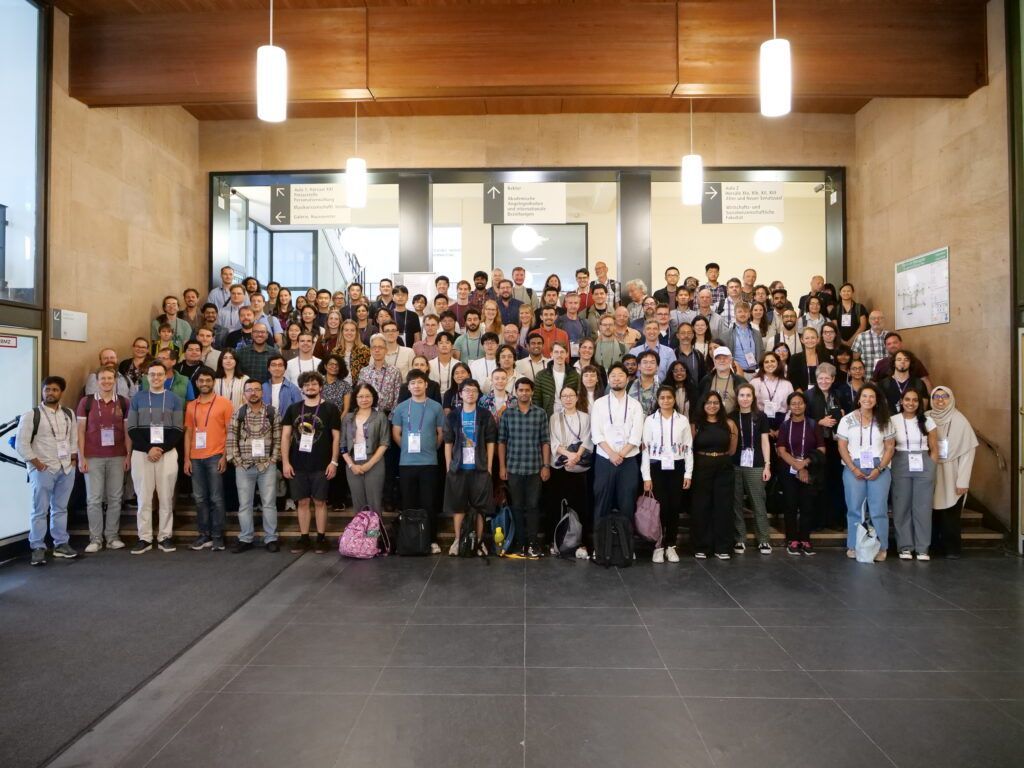
Over two days, 12–13 November, Ventspils University of Applied Sciences hosted the 9th International Scientific Conference Baltic Applied Astroinformatics and Space Data Processing (BAASP), organized by the Engineering Research Institute “Ventspils International Radio Astronomy Centre”. The conference brought together scientists from the Baltic States, Europe, and other parts of the world to share research on astrophysics and radio astronomy, near-Earth space studies, and space technologies.


The BAASP conference is held in Ventspils every two years. This conference series serves as a platform for fostering and strengthening international cooperation and knowledge exchange in the Baltic region and worldwide. It brings together astronomers, space scientists and engineers, as well as experts from related fields such as computer science, electronics, satellite technologies, geodesy, remote sensing, and environmental sciences. This year’s conference gathered participants from Ventspils University of Applied Sciences, the University of Latvia, Riga Technical University, and representatives from Lithuania, Estonia, and Finland, as well as from Ukraine, Spain, Nigeria, Algeria, and China. Thus, the geographical reach of this year’s participants extended well beyond the Baltic region. The keynote speakers were Professor Andris Slavinskis from the University of Tartu (Estonia), Dr. Oleg Ulyanov from the Radio Astronomy Institute of the National Academy of Sciences of Ukraine, and Professor Ilya Usoskin from the University of Oulu (Finland). In total, the conference participants delivered 29 presentations.


BAASP 2025 continued the discussion on how emerging technologies are shaping astronomy, space science, geosciences, and remote sensing. As emphasized in the conference topics, so-called “big data” plays an increasingly important role in space science, requiring powerful capabilities for data acquisition, management, processing, and interpretation. Astroinformatics, as an interdisciplinary field, combines space science with high-performance computing, artificial intelligence, and machine learning, enabling major advancements in observational astronomy, satellite technologies, and Earth–space interaction studies. In recent years, Europe has continued to play a significant role in the development of next-generation astronomy. The expansion of the LOFAR low-frequency antenna network across the continent, including the Baltic region, enables high-resolution studies of cosmic magnetism, solar activity, and transient radio phenomena. The European VLBI Network (EVN) has significantly enhanced its real-time e-VLBI capabilities and sensitivity across a wide frequency range, supported by UK-based stations such as Jodrell Bank and e-MERLIN. These improvements have contributed to precise localization of fast radio bursts and compact extragalactic sources. Technological progress also enables automated, rapid-response observation modes. This emerging field integrates radio, optical, gravitational-wave, and neutrino data to study high-energy cosmic events such as neutron-star mergers and magnetar flares. At the same time, AI-driven data acquisition, on-board satellite computing, and quantum-technology-based algorithms open new possibilities for real-time analysis and autonomous decision-making in both Earth-observation and deep-space missions. CubeSats and modular satellite platforms continue to transform the landscape of low-cost, high-impact space research, creating new demands for data-integration and security models, as well as cross-domain interoperability.


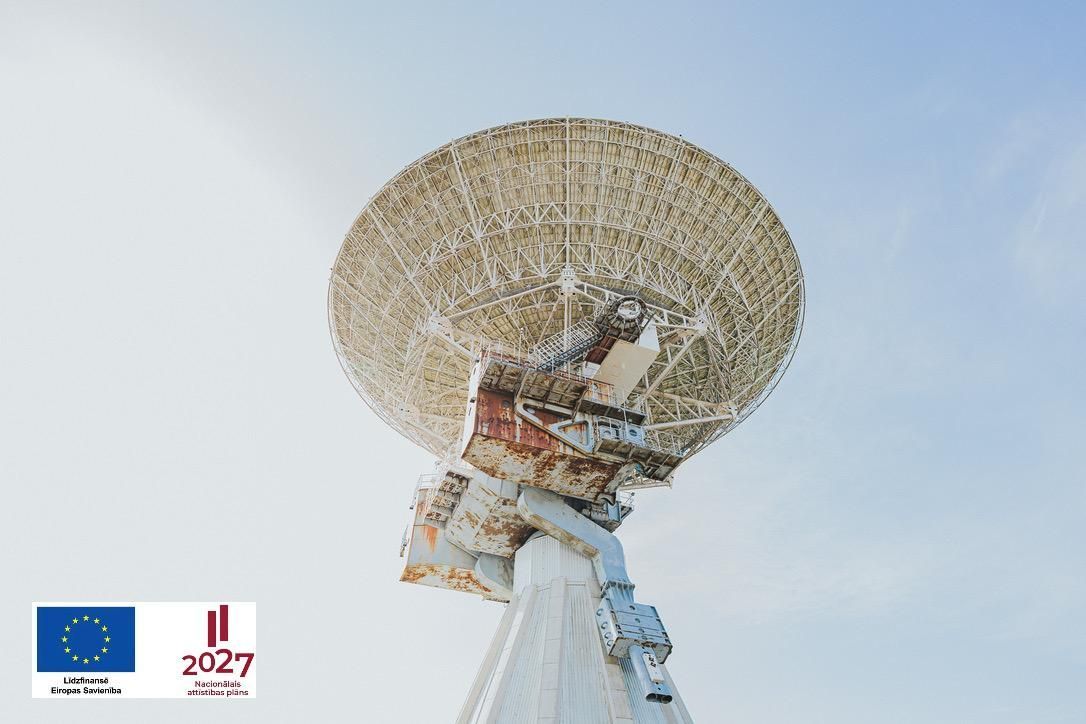
“During the conference we focus on space science both from the scientific and technological perspectives—data processing, algorithms, electronics, receivers, and astrophysics and astronomy as such,” explained Ventspils International Radio Astronomy Centre researcher Vladislavs Bezrukovs. The presentations largely reflected ongoing projects. “One of the conference topics is space weather. The Sun is currently at the peak of its activity cycle; a magnetic storm is approaching, and there have just been three large solar flares. Several talks at the conference were related to solar studies and extreme solar and space conditions,” Bezrukovs noted. “There were also presentations on instruments that allow us to observe the cosmos—telescopes and transmitters. We position ourselves as a deep-space communication center, and these presentations show how this technology is progressing. The conference also covered galactic and extragalactic studies, fundamental science, and fundamental astrophysics.”


Rector of Ventspils University of Applied Sciences, Andris Vaivads, highlighted one of the conference topics especially relevant to the university—the presentation by Ventspils International Radio Astronomy Centre research assistant Gints Jasmonts on Modeling Comet Activity for the European Space Agency’s Comet Interceptor Mission. “Doctoral student Gints Jasmonts presented research on comet modeling—how comet tails form and how comae (envelopes of gas and dust) develop around comets. Several of our scientists work in this field, and Ventspils University is involved in ESA’s upcoming Comet Interceptor mission. This mission will travel to a fixed point in space and wait for an unknown object entering the Solar System from interstellar space, which will then be studied. Our researchers are modeling how the environment around such an object might look and how different instruments on the spacecraft could observe it. The Ventspils-based company Bitlake Technologies is also involved in system development for this mission,” Vaivads said. Expanding on this, Bezrukovs added: “This is especially relevant now because an interstellar comet, 3I/ATLAS, is currently traveling through the Solar System, raising many questions—and the Comet Interceptor mission will study such possible future visitors.”


Speakers delivered their presentations over two days, and on the second day participants also visited the International Radio Astronomy Centre in Irbene. “I hope this may become an annual event. The number of speakers is growing, so there is interest in making the conference broader and more frequent,” Bezrukovs added.


Share on other platforms

Other news
By Rota Rulle February 5, 2026
On January 16 within the framework of the State Research Programme of Ventspils University of Applied Sciences, Professor Una Libkovska, within the framework of the State Research Programme project "Development of evidence-based solutions for the effective improvement of professional competence of adults and assessment of the transfer of its results to practice in Latvia" (VPP-IZM-Education-2023/4-0001), participated in a meeting with entrepreneurs organized by the State Education Development Agency and the Ventspils State City Education Board on opportunities and challenges for adult learning. During the meeting, the opportunities offered by the skills management platform STARS for adult continuing education and professional upskilling were discussed, with a particular focus on the European Union projects "Training for Workers" and "Digital Skills for Experts". The discussions emphasize the importance of employers in providing support to employees in the process of starting training, as well as the need to establish purposeful cooperation between entrepreneurs, local government and educational institutions. VIAA's Department of Adult Education presented the learning opportunities offered by the STARS platform, as well as the necessary support for employed adults to start their studies and the role of the municipality in providing this support. In the second part of the event, meetings were held with municipal specialists and adult education organizers, representatives of youth and cultural work and other interested parties. The discussion discussed ways to strengthen cooperation in adult education, as well as identifying the necessary support from VIAA in reaching out to adults and motivating them to engage in learning. The event brought together more than 20 representatives of business and institutions of Ventspils municipality, who actively participated in discussions, shared their experience and expressed proposals for improving the adult education offer. The meeting reaffirmed that coordinated and targeted cooperation between state institutions, local governments, educational institutions and employers is an essential prerequisite for the effective development of adult skills, strengthening competitiveness and sustainable employment.
By Rota Rulle February 3, 2026
Ventspils University of Applied Sciences invites you to the public defense of Sanita Lasmane’s doctoral thesis, “Analysis and Improvement of Labor Market Assessment Approaches: A Case Study of Latvia,” for the acquisition of a Doctor of Science degree (Ph.D.) in Social Sciences. Scientific Supervisor: Professor Sergejs Hiļķevičs, Dr. phys. The author, S. Lasmane, will present innovative research aimed at adapting labor market assessment approaches specifically to the socio-economic situation in Latvia. The thesis was developed within the joint doctoral study program “Economics and Business” offered by three higher education institutions: Ventspils University of Applied Sciences, Vidzeme University of Applied Sciences, and the RTU Rēzekne Academy. Research Relevance: S. Lasmane’s research offers solutions in two directions of national importance: - A New Human Capital Assessment Approach: A new approach has been developed for the quantitative assessment of human capital at national and regional levels using regularly available data. - Estimation of Cobb-Douglas Production Function Parameters for Latvia: The Cobb-Douglas production function has been adapted to Latvian parameters, assuming that the sum of the coefficients α and β is not equal to 1. This was achieved by using traditional resources—capital and labor—as well as replacing them with potential "invisible agents" in the economy: banks and enterprises. Scientific Reviewers Associate 1.Professor Aija van der Steina, Dr. oec., Vidzeme University of Applied Sciences, Latvia; 2.Professor Sandra Jēkabsone, Dr. oec., University of Latvia, Latvia; 3.Associate Professor Ramutė Narkūnienė, Ph.D., Utena University of Applied Sciences, Lithuania. Time and Venue of the Defense Date: February 25, 2026, at 12:00 PM Location: Ventspils University of Applied Sciences, Inženieru Street 101, Ventspils, LV-3601, Auditorium B4. The doctoral thesis is available for review at the Ventspils University of Applied Sciences Library (Inženieru Street 101, Ventspils) and online at www.venta.lv .
By Rota Rulle February 2, 2026
MarTe 1st Technical Workshop “Physical Modelling for Blue & Green Transitions: Deep-Tech Tools from Lab to Market” Date: 4–5 February 2026 Venue & Format: Hybrid On-site: Ventspils University of Applied Sciences (Ventspils Augstskola) 101A Inženieru Street, Ventspils, LV-3601, Latvia Online: Zoom (with live YouTube translation) Language: English Registration: HERE About the Workshop The MarTe 1st Technical Workshop brings together researchers, industry representatives, startups, and students to explore how modern physical modelling and simulation tools can accelerate innovation in the blue and green economy . Aligned with Marine Technology Excellence Hub for Sustainable Blue Economy in the Baltics ( https://www.marinetechub.eu/ -MarTe) mission, the workshop demonstrates how deep-tech tools such as SolidWorks and COMSOL help transform early-stage ideas into real-world solutions. Through lectures, live demonstrations, and hands-on activities, participants will learn how modelling and simulation reduce development risks, shorten design cycles, and support the transition from laboratory concepts to market-ready technologies. The workshop will highlight practical applications in marine and maritime technologies, renewable energy, hydrogen (H₂-to-X) solutions, and sustainable blue economy value chains , with examples relevant to the Baltic Sea region and beyond. Programme Highlights: Introduction to physical process modelling, CAD-based modelling with SolidWorks and Multiphysics simulations with COMSOL Live demonstrations and hands-on exercises Designed for participants with little or no prior experience in 3D physical modelling. Success stories in deep-tech development from Research to Market Pathways from low TRL to market (TRL 6–7+) Who Should Attend? This workshop is open to: Industry representatives in marine, maritime, and green technologies Researchers and engineers working on applied R&I Startups and entrepreneurs in deep-tech and blue economy sectors Students and early-career innovators interested in simulation tools and applied modelling Participants will gain practical skills , insights into real success stories, and opportunities to connect with the MarTe innovation ecosystem. Why Participate? Learn modern simulation and modelling approaches Discover how to move ideas from lab to market Exchange knowledge with experts from academia and industry Build collaborations in the Baltic Sea blue economy Full agenda will be announced soon. For more information, please follow the MarTe project channels or contact the organizers. Contacts: Vladislavs Bezrukovs Vladislavsb@venta.lv Phone: +37127134283 Baiba Reimane baiba.reimane@venta.lv
By Rota Rulle January 26, 2026
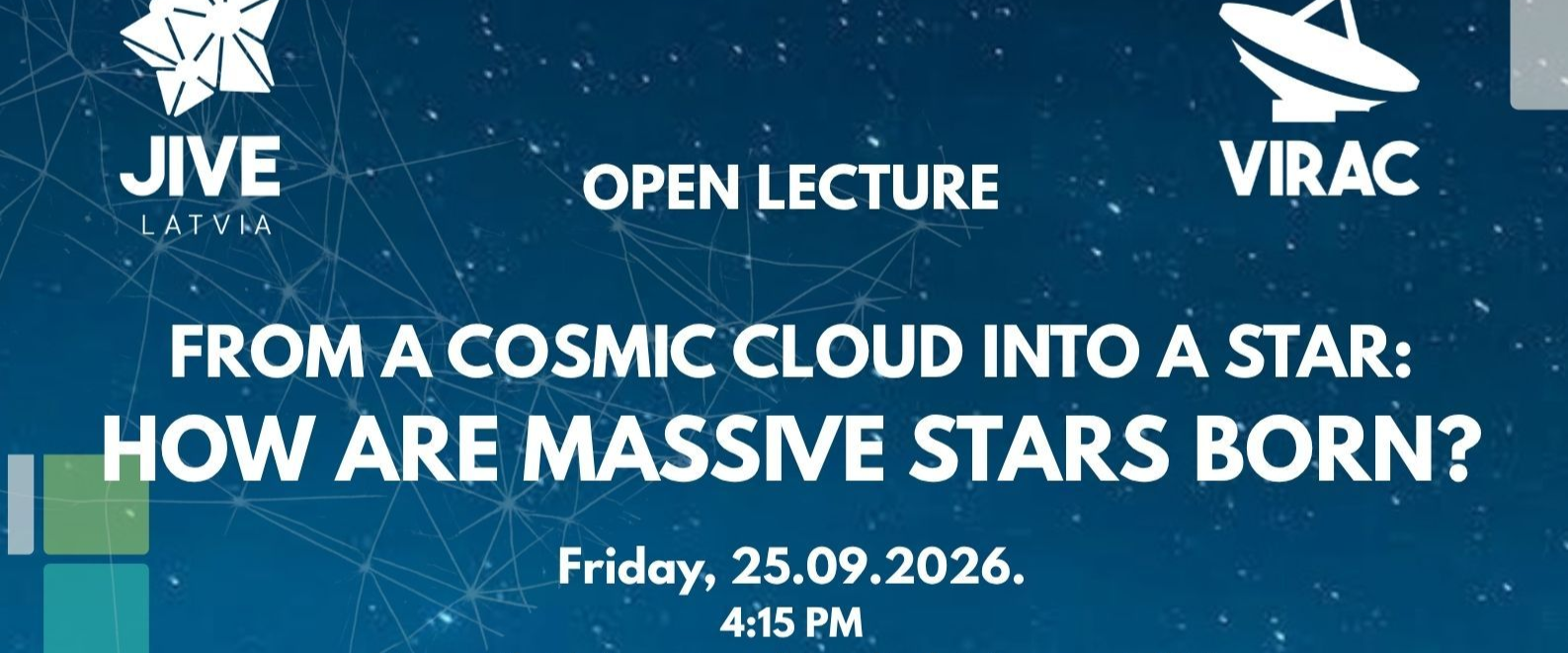
An international team of astronomers has successfully completed the IVARS (Interferometer for Variable Astrophysical Radio Sources) project, delivering a new observational capability for studying the formation of massive stars through time-variable radio emission. By combining two radio telescopes at the Irbene Radio Observatory in Latvia into a dedicated single-baseline interferometer, the project has enabled the first sustained, high-cadence monitoring of radio continuum variability in high-mass protostars, carried out simultaneously with maser monitoring. 
By Rota Rulle January 8, 2026
Ventspils University of Applied Sciences Faculty of Translation Studies master's study programme Translation and Terminology keeps expanding its range of international partners by initiating a strategic collaboration with the Austrian company Kaleidoscope . This collaboration will provide university lecturers and students access to modern and AI-based language and terminology management tools, which are essential in today’s digital translation and terminology environment. The collaboration plans to integrate the company’s developed solutions into the study process, providing future specialists with practical skills in working with AI solutions. The Austrian company Kaleidoscope is internationally acknowledged in the field of content management. The company specializes in developing innovative software solutions that help businesses worldwide optimize the translation process and ensure terminology consistency. One of their best-known products is the AI-based platform Quickterm , which is considered as the market leader in terminology management. Kaleidoscope combines decades of experience with modern automation and quality control methods. The company’s goal is to help organizations and educational establishments communicate effectively in a multilingual environment, while reducing costs and improving content accuracy. This collaboration proves the master's study programme’s desire and ability to keep up with the latest trends in the translation and terminology industry. Students and lecturers, working with Kaleidoscope tools, will gain advantages in both the Latvian and international labor market. The first practical lessons are expected to begin in the spring semester.
By Rota Rulle December 16, 2025
On 9 December, a meeting with representatives of Latvia’s space sector was held at the Saeima, focusing on the establishment of a unified approach to the governance and development of the space sector in Latvia. The event was attended by Mārcis Donerblics, Head of the Ventspils International Radio Astronomy Centre; Andris Vaivads, Rector of Ventspils University of Applied Sciences; and Jānis Šate, Head of the “Electrical Engineering” study programme. The meeting was initiated by Saeima Speaker Daiga Mieriņa, bringing together representatives of industry organisations, entrepreneurs, education and research institutions, along with officials from public administration bodies. The purpose of the discussion was to highlight the need for a clear and coordinated governance model that would advance the sustainable development of Latvia’s space sector, strengthen inter-institutional cooperation, and assure unified representation of national interests at the international level. The meeting highlighted the role of the space sector in driving innovation, strengthening the high-tech ecosystem, and enhancing Latvia’s competitiveness. Representatives of the Latvian Space Industry Association, space sector entrepreneurs, experts from academic institutions, as well as officials from various ministries and state institutions. Participants highlighted that a unified governance approach is an essential requirement for Latvian organisations to actively participate in European Union space programmes and international cooperation projects, including collaboration with the European Space Agency. The meeting also addressed topics related to enhancing public-private sector cooperation, opportunities for attracting funding, and the importance of maintaining dialogue on the long-term development of space policy in Latvia. Participants recognised the significance of ongoing collaboration and emphasised the necessity of regular communication between policymakers and industry representatives. The meeting at the Saeima marks an important milestone toward a better-coordinated and goal-oriented Latvia’s space sector, promoting a unified vision and strengthening Latvia’s position within the European and international space community.
Other news