Electronics engineering students participate in hackathon in Croatia
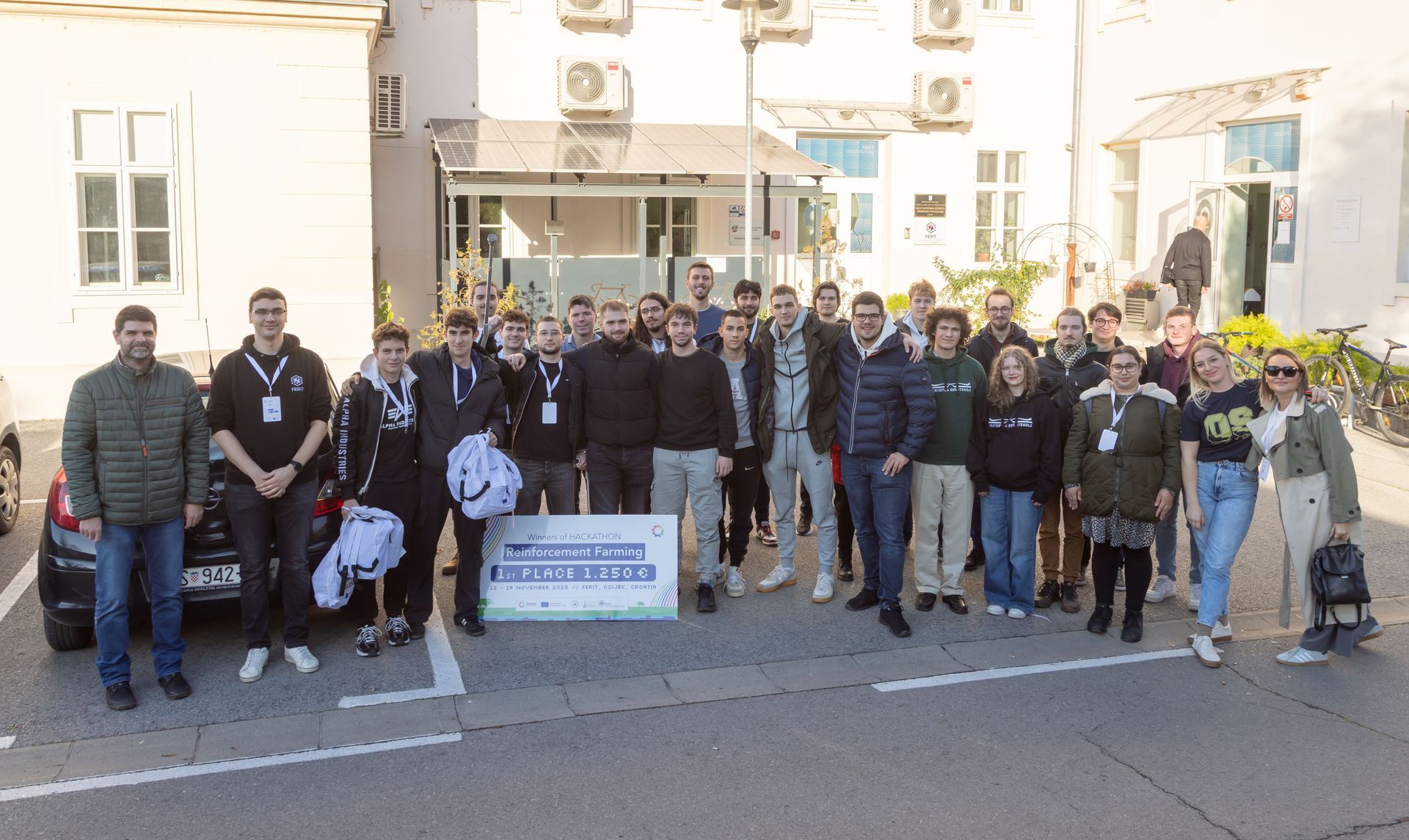
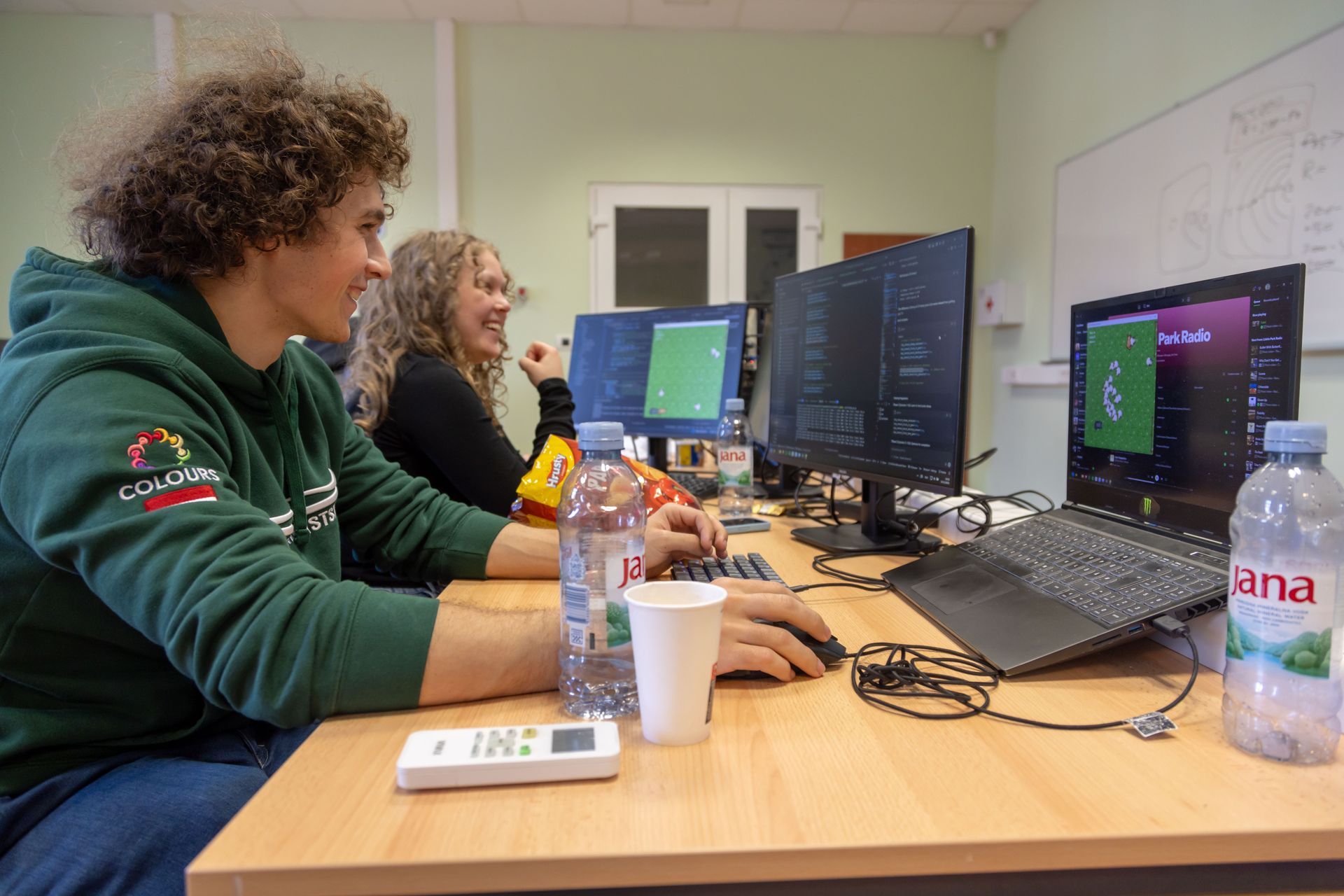
From November 11 to November 15, 2025, Ventspils University of Applied Sciences Electronics Engineering 3rd year students Rūdolfs Pakalns, Marta Dzelme and 1st year student Kristofers Jēkabs Rozevskis participated in the university alliance "COLOURS" hackathon "Reinforcement Farming", which took place at the University of Osijek in Croatia, at the Faculty of Electrical Engineering, Computer Science and Information Technology (FERIT). The main task of the hackathon was to train artificial intelligence agents as game characters using "stimulated learning" methods. On the last day, the AI characters developed by the teams competed against agents from other teams.
Since the Electronics Engineering study program does not include courses that provide in-depth knowledge of artificial intelligence training, this hackathon was a great opportunity to gain additional knowledge that is useful in the rapidly developing field of artificial intelligence and helps to understand how AI, which is often used to facilitate everyday work, works.
Rudolf admits that before participating in the project, he didn’t have a clear idea of how artificial intelligence training works; he had only heard about it. But during the hackathon, by actively working in a team and trying to solve real-life tasks, he gained experience in how AI is trained, how it reacts to data, and how to work with it in practical situations. This experience has given him a much more valuable understanding of AI and, in his opinion, is a very useful skill in today's and tomorrow's technology industry.
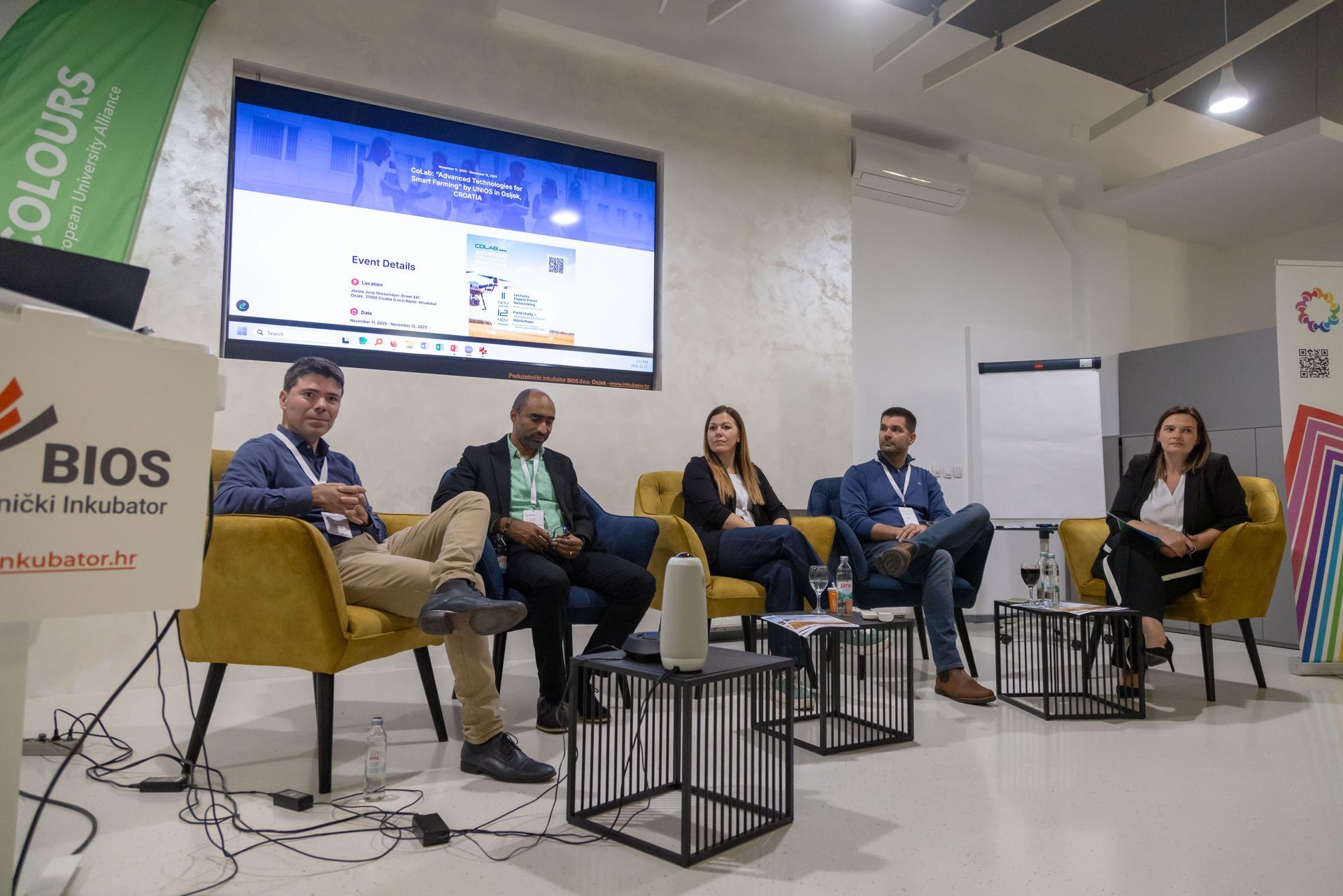
As part of the project, students also attended the event "CoLab – Advanced Technologies for Smart Farming” and Field Study, which included a tour of a livestock farm equipped with several modern robotic devices. The farm is equipped with a robot manufactured by LELY, which prepares and delivers feed to the cows. The cows are monitored by smart collars that identify the cow's ID number, provide early warning of health problems, and collect milking statistics. Milking is also fully automated with a structure that performs milking and care. In addition, this event provided educational lectures on existing robotics and artificial intelligence systems used to improve agriculture, as well as solutions that are currently being developed.
“In addition to the hackathon itself, it was very interesting to talk to local students and learn about their study programs and how they acquire STEM knowledge and skills. The local students were very welcoming and enthusiastically introduced us to Croatian traditions and history, adding cultural value to this project," says Marta.
Kristofers Jēkabs Rozevskis emphasizes that participating in the hackathon has significantly contributed to his understanding of the principles and practical applications of artificial intelligence. "Knowledge in this field is very important for understanding how, at least in part, the artificial intelligence we work with on a daily basis is created. Although I had previously encountered AI development and theoretical principles, this project gave me a much clearer understanding of the steps and principles of AI training, how AI is taught to perform specific tasks, and which details can lead to incorrect or undesirable results," says Kristofers.
As part of the project, students used stimulated learning methods to train agents to operate in a gaming environment, and during practical work, the sensitivity of AI training to the chosen "reward" structure became particularly apparent. "When setting an excessively large 'reward' for an action, the agent tended to 'get stuck' on it. This helped to better understand why some AI tends to make mistakes – perhaps it is more trained on the syntax of a text than on its truthfulness, or vice versa," explains Kristofers. He adds that he is particularly pleased to have the opportunity to share his knowledge and experience on a topic that interests him with both his classmates and students from other countries, strengthening mutual professional and academic cooperation.
"This experience has been very valuable and educational, broadening our view of the possibilities of applying smart systems in various industries, so we would definitely take the opportunity to participate in COLOURS or another project again," the students admit.

Share on other platforms
Other news