June Research Spotlight Karina Šķirmante: When Information Technology Meets the Universe

June 18, 2025

When Information Technology Meets the Universe Space exploration is becoming increasingly important, expanding humanity’s knowledge of the universe, promoting innovation and technological development, and attracting new talent to science. Her work highlights the importance of combining expertise from various fields to address complex scientific questions. At such a point of cooperation between technology and astronomy is the doctoral candidate Mg. sc. comp. Karina Šķirmante, a leading researcher and lecturer at Ventspils University of Applied Sciences (VeA).


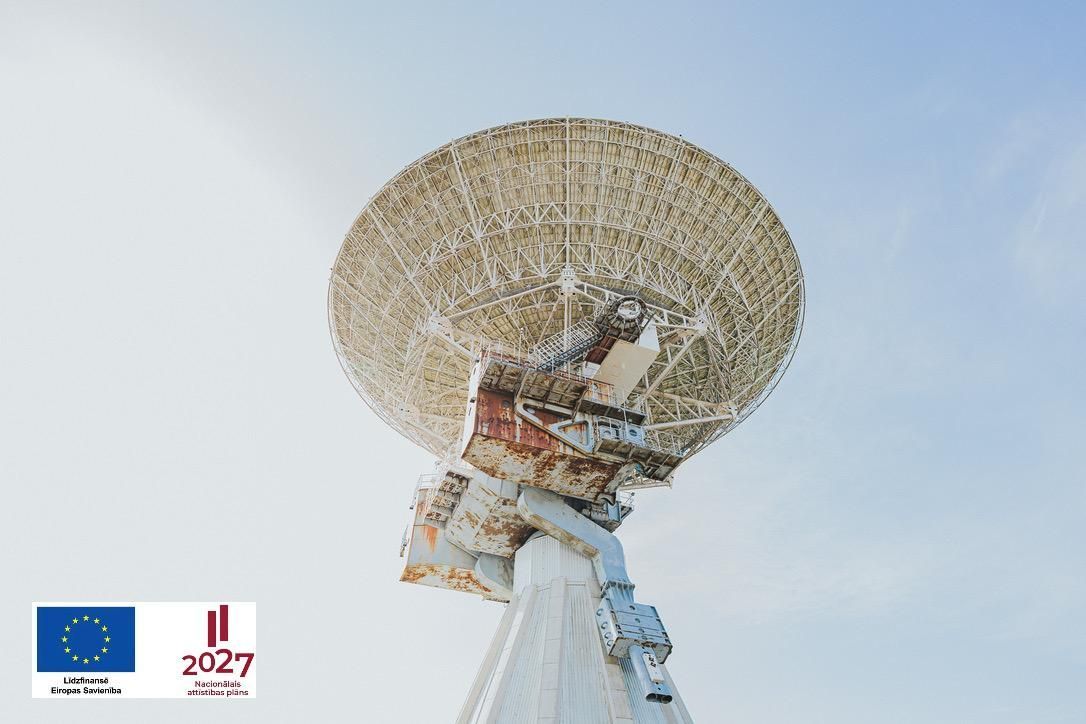
Karina’s research activities cover high-performance computing and data processing, focusing on space technology projects. She is actively involved in the European Space Agency’s Comet Interceptor project, which aims to launch a probe in 2029 to study a comet that has never come close to the Sun directly in space for the first time. In preparation for this mission, Karina, together with colleagues from the Ventspils International Radio Astronomy Centre (VSRC) of the Institute of Engineering Sciences of the Estonian Academy of Sciences, is modelling comet activity in the radio frequency band, in collaboration with researchers from the Tartu Observatory (Estonia) and Aalto University (Finland). This international collaboration is helping to develop and calibrate the instruments that will be used during the mission. 
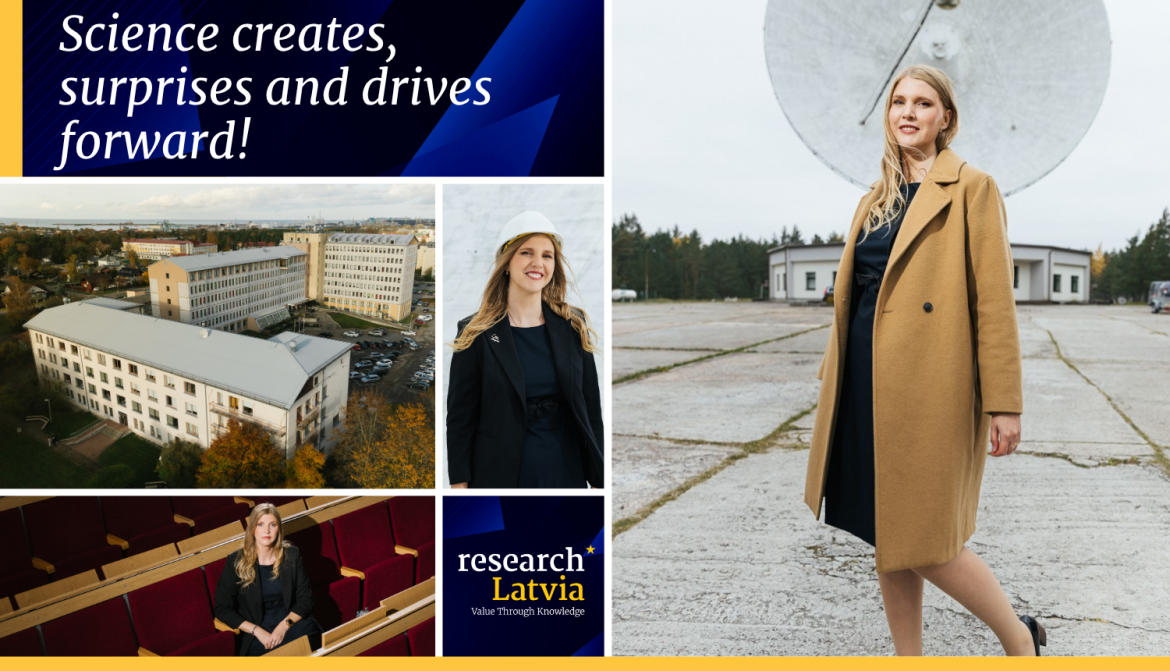
Photo: Mārtiņš Goldbergs

"This probe will be located at the so-called "Lagrangian 2" point and will wait for a suitable comet. When it gets close, the probe with subproblems will head towards it to obtain as many images and data as possible," explains VeA's lead researcher K. Šķirmante.


In parallel, she develops student involvement in radio astronomy, providing an opportunity to apply information technology knowledge in real research projects – from data processing to machine learning solutions: "When a student sees that his IT knowledge is practically applicable in science, there is also a desire to work further in this direction," emphasizes the VeA leading researcher and lecturer at the Faculty of Information Technology.


The future doctor's creative contribution is also manifested in other areas. Karina is one of the developers of the modern, mental health-adapted app EMORI. It has won the internationally recognised "Red Dot" award for excellent design and a carefully thought-out approach to promoting emotional self-regulation.
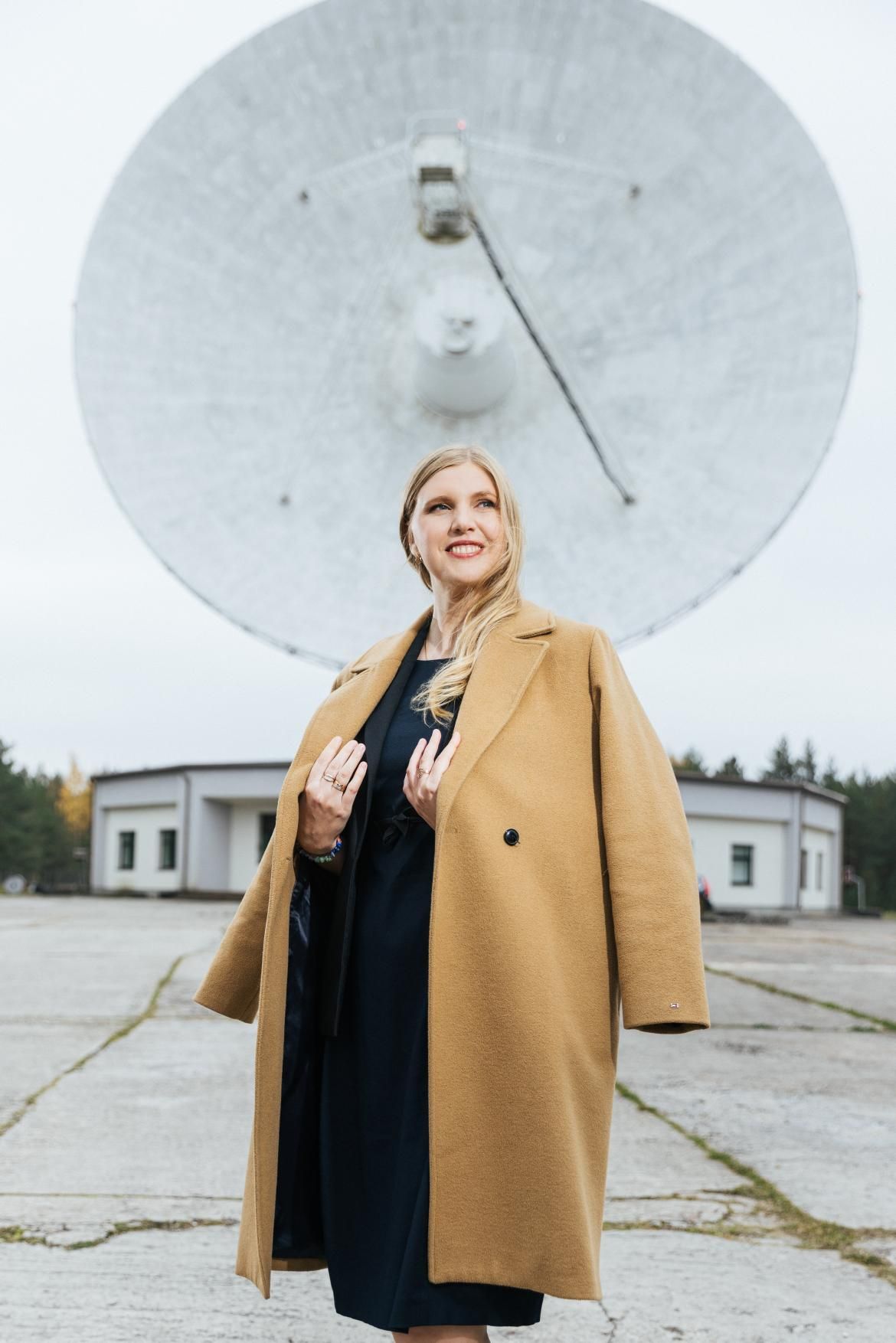
Ventspils University of Applied Sciences

Ventspils International Radio Astronomy Centre

Leading Researcher

Mg. sc. comp. Karina Šķirmante.

Photo: Mārtiņš Goldbergs.

"The greatest satisfaction in research comes to me when I see that my persistent daily work culminates in the publication of an article, the creation of a new project idea, the implementation of successful cooperation and the successful transfer of knowledge to students," says Mg. sc. comp. Karina Šķirmante.


Mg. sc. comp. Karina Šķirmante is an inspiring example of how high-level research with international significance is developing in Latvia, based on technology management, international cooperation, and the education of future scientists. Her work demonstrates that Latvian researchers are essential partners in global science projects and future missions into the universe.

About the “Science Calendar 2025” 

This activity is implemented within the framework of the ERDF project No. 1.1.1.1/1/24/I/001 “More Effective and Smarter Implementation and Management of Latvia’s Science Policy”, carried out by the Ministry of Education and Science. 


The project developers include the creative team of SIA "Entuziasti Digital", featuring Mārtiņš Pavasaris, video director Kristaps Mozgirs, and photographer Mārtiņš Goldbergs, as well as the researchLatvia team. 


Since 2018, the Science Calendar "Research Latvia" and traveling exhibition have been created to promote awareness of Latvian scientists' achievements, enhance public understanding of the importance of science, and inspire young people to engage in scientific fields

Share on other platforms

Other news
By Rota Žagare April 7, 2026
From May 20 to 22, the CoLab "Challenges of the IT Sector in the Age of Artificial Intelligence" will take place in Ventspils. This year, it is dedicated to the challenges of the IT sector in the age of artificial intelligence. On the first day of the CoLab , entrepreneurs will have the opportunity to learn about the most actual issues and solutions in the fields of artificial intelligence and human resources in the IT sector by participating in discussions with industry experts. This day will serve as a foundation for the subsequent forum activities, during which students will analyze the identified challenges and develop ideas and practical solutions. On the first day of the CoLab, May 20, the main focus will be on strategic industry issues and current challenges. The program includes expert keynote speeches, panel discussions, and co-creation sessions involving representatives of IT companies, developers of artificial intelligence solutions, cybersecurity specialists, as well as representatives from universities and the public sector. Discussions will center on topics such as labor market transformation under the influence of AI, the availability of qualified specialists, cybersecurity challenges, and companies’ adaptation to the new technological reality. The day will also feature solution presentations (pitches), highlighting existing initiatives and approaches to industry development. “The CoLab is an important platform where education, business, and the public sector come together. Artificial intelligence is already significantly impacting the economy and the labor market, so it is important to identify both risks and development opportunities in a timely manner to strengthen the region’s competitiveness,” emphasizes Jānis Vītoliņš, Chairman of the Ventspils City Council. On the second day, May 21, the CoLab will continue with practical work and the promotion of collaboration. The day will begin with the interfaculty activity “Networking Exchange”, where students will present their ideas, projects, and initiatives, fostering new connections and cooperation among representatives from different fields. Afterwards, students, academic staff, entrepreneurs, and industry experts will work together in teams to develop solutions to the challenges defined on the first day, receiving methodological and content-related support in structuring and developing their ideas. The third day, May 22, will be dedicated to refining, presenting, and receiving feedback on the developed ideas. Teams will summarize their work, refine their solutions, and prepare short idea pitches to present to a jury and other participants. The final day will highlight the most promising ideas and outline their further development opportunities, promoting continued collaboration between students, universities, and industry partners even after the event concludes. “The CoLab enables the university to closely link studies and research with real industry needs, helps the region develop its innovation ecosystem and strengthen competitiveness, and serves as a clear example of how international cooperation can translate into practical benefits at the local level,” notes Andris Vaivads, Rector of Ventspils University of Applied Sciences. The CoLab is organized as a unified three-day collaboration cycle, encompassing the identification of challenges, development of ideas, and presentation of solutions, thereby forming a complete innovation process and strengthening the connection between education, business, and the public sector. More information about the forum program and agenda, as well as registration, is available HERE Participation in the event is only possible with prior registration. The forum is organized by Ventspils University of Applied Sciences within the framework of the European Universities Alliance COLOURS, which brings together nine regional universities to address challenges relevant to regions, in cooperation with the Ventspils City Municipality, the Freeport of Ventspils Authority, and the Latvian Artificial Intelligence Association.
By Rota Žagare April 1, 2026
Everyone is kindly invited to a guest lecture “Beyond Borders: Diplomacy, Nordic–Baltic Cooperation and Careers” , which will take place on 24 April, 2026. During the lecture, representatives from the Embassies of Denmark, Estonia, Lithuania, Norway, Finland, and Sweden will talk about diplomatic work, cooperation between the Nordic and Baltic countries, foreign affairs, and career opportunities in the field of diplomacy and international relations. Time: Friday , April 24, 1:00 PM-3:00 PM Place: VUAS, D104 Working language: English Guests: Deputy Head of Mission, Embassy of Denmark – Alexander Lemche Deputy Head of Mission, Embassy of Estonia – Siim Krispin Deputy Head of Mission, Embassy of Lithuania – Vilius Arlauskas Deputy Head of Mission, Embassy of Norway – Annlaug Rønneberg Deputy Head of Mission, Embassy of Finland – Eero Vento Deputy Head of Mission, Embassy of Sweden – Hugo Qvinth
By Rota Rulle March 23, 2026
On Tuesday we invite you to another TALKS & TEA afternoon with activities to learn about Latvian culture and to connect with local students! This time we will talk about different cities in Latvia and in general the Baltic countries, so you have the opportunity to get inspiration for your next weekend trip! You are welcome to bring snacks and your cup because this time there will be tea! Everybody is welcome to join! Where & when? Date: 24th March 2026 Time: 17:00 Place: D103 We are looking forward to seeing you and your friends!
By Rota Rulle March 11, 2026
At the end of February, the Rector of Ventspils University of Applied Sciences, Andris Vaivads, participated in a roundtable discussion titled “Best Practice Examples of Latvian European University Alliances in Promoting Innovation and Regional Development.” The discussion brought together representatives of Latvian universities, ministries, and European University alliances to evaluate more than five years of experience and to discuss the potential of European Universities for the development of higher education in Latvia. During the discussion, participants focused on how European University alliances can be used effectively to strengthen the competitiveness of Latvian higher education, promote innovation, and support regional development. The role of universities in developing human capital and fostering international cooperation was also emphasized. At the same time, participants discussed challenges faced by universities, including resource-intensive coordination, issues related to institutional capacity, and the importance of state support for the successful implementation of these initiatives. The participants of the discussion also highlighted the need for closer cooperation between universities and policymakers to ensure the sustainable development of the higher education and innovation ecosystem in Latvia.  The roundtable discussion concluded with a shared recognition of the importance of exchanging experience and a common willingness to continue strengthening the role of Latvian higher education at the European level.
By Rota Rulle March 11, 2026
Within the framework of the JIVE ERIC Latvia Partnership Plan, a meeting took place on February 24 to enhance cooperation in the research of space technology solutions and innovative materials. The meeting brought together Latvian representatives from the Ventspils University of Applied Sciences – Engineering Research Institute “Ventspils International Radio Astronomy Centre” (VIRAC) and the Institute of Solid State Physics of the University of Latvia, as well as international guests from the Karlsruhe Institute of Technology (Germany) and L. N. Gumilyov Eurasian National University (Kazakhstan). During the meeting, participants presented their current research directions and opportunities. Discussions were held on potential joint cooperation and the development of projects within European and international programmes. The participants also identified potential synergies between space research technologies and innovations in new materials. Particular attention was given to shared use of research infrastructure, the involvement of early-career researchers, and the strengthening of long-term partnerships. This meeting marks an important step in expanding the international cooperation of Latvian scientific institutions, laying the foundation for joint research and innovation projects while promoting knowledge transfer and technological development on both regional and global scales. The meeting was held within the framework of the European Regional Development Fund project No. 1.1.1.5/3/25/I/012 “Ventspils University of Applied Sciences` International Cooperation and Innovation for the Development of Latvia’s Smart Specialisation”.
By Rota Rulle March 10, 2026
On Monday, March 3rd, the latest Talks and Tea session gathered around 16 participants, including international students, Erasmus+ students, and local students, for a relaxed afternoon focused on the theme “Festivals.” The event aimed to create a welcoming environment where students from different backgrounds could meet, exchange experiences, and build a stronger sense of community. The session began with a short introduction to several Latvian celebrations connected to the traditional sun year, highlighting a few interesting customs during these festivities. Following the introduction, participants divided into small discussion groups where they shared festival traditions from their own countries. These conversations created a lively exchange of ideas and experiences, allowing students to discover both differences and similarities between cultures. Beyond learning about traditions, the event’s main focus was bringing people together. Through informal discussions over snacks, students had the opportunity to connect, practice intercultural communication, and build friendships in a welcoming and inclusive space. The Talks and Tea series continues to support community building, inclusion, diversity, and cooperation between international and local students. By creating opportunities for dialogue and shared experiences, the events help strengthen connections within the student community and encourage a sense of belonging for everyone involved.
Other news