LOFAR 2.0: Advancing European Radio Astronomy and Opportunities for Latvia

October 30, 2026

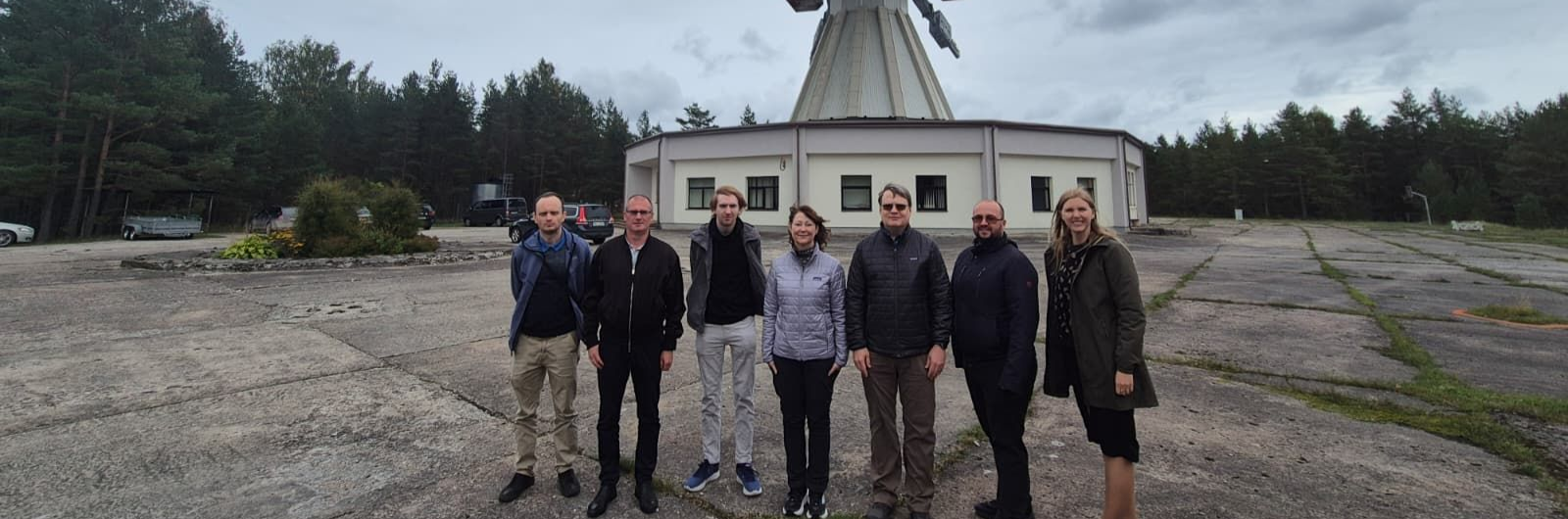
Modern radio astronomy relies not only on advanced technologies and international research infrastructure, but also on knowledge exchange and training the next generation of researchers. One of the most prominent examples of this collaboration is LOFAR (LOw Frequency ARray). This Europe-wide radio astronomy network enables scientists to explore the Universe at low radio frequencies and opens up new opportunities in various fields of astronomy. To introduce early-career researchers from different countries to this unique infrastructure, its latest technological developments, and the research opportunities it offers, ASTRON, the Netherlands Institute for Radio Astronomy, regularly organises LOFAR schools. Jesus Alberto Cazares Montes, a visiting leading researcher at the Ventspils International Radio Astronomy Centre (VIRAC), Engineering Research Institute “Ventspils International Radio Astronomy Centre” (ERI VIRAC), Ventspils University of Applied Sciences, also took part in one of these training programmes.


The Netherlands Institute for Radio Astronomy (ASTRON), founded in 1949, plays an important role in developing radio astronomy infrastructure and research. One of its major initiatives is LOFAR (LOw Frequency ARray), a European network of radio telescope stations designed to explore the Universe at low radio frequencies. The network is currently upgrading to LOFAR 2.0, which will improve its observational capabilities and the quality of astronomical images.


To support the next generation of radio astronomers, ASTRON organises a LOFAR school every two years. The latest edition, held this autumn, brought together participants to learn about the technical and scientific aspects of radio astronomy using LOFAR. The programme covered collecting and processing observational data, reconstructing images, and the technical challenges of operating the array. Researchers also presented LOFAR applications across diverse fields, including pulsars and transient energetic phenomena, solar physics, cosmic rays, lightning, stars, and exoplanets.


The school also offered participants practical research experience. During the final three days, they worked in teams on challenges proposed by ASTRON researchers, addressing questions related to the researchers’ ongoing scientific work. On the final day, each team presented its results, giving participants an opportunity to apply their knowledge to research problems resembling those encountered in professional radio astronomy.


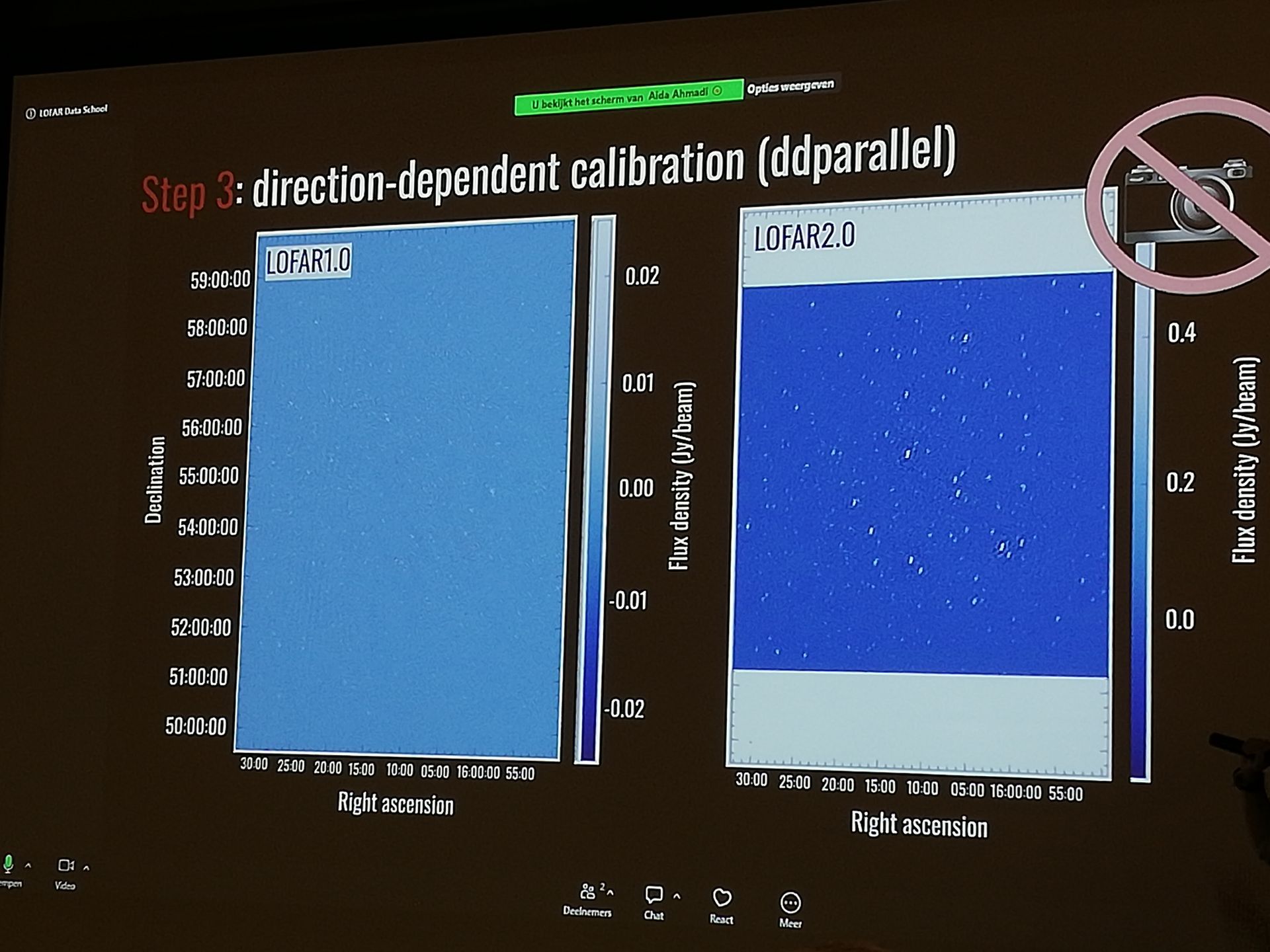
An important topic throughout the school was the ongoing transition from LOFAR 1.0 to LOFAR 2.0. The upgrade involves improvements to the software and data-processing systems, as well as advances in the calibration and operation of the array. LOFAR 2.0's improved data-processing capabilities can produce significantly more detailed, higher-quality astronomical images.


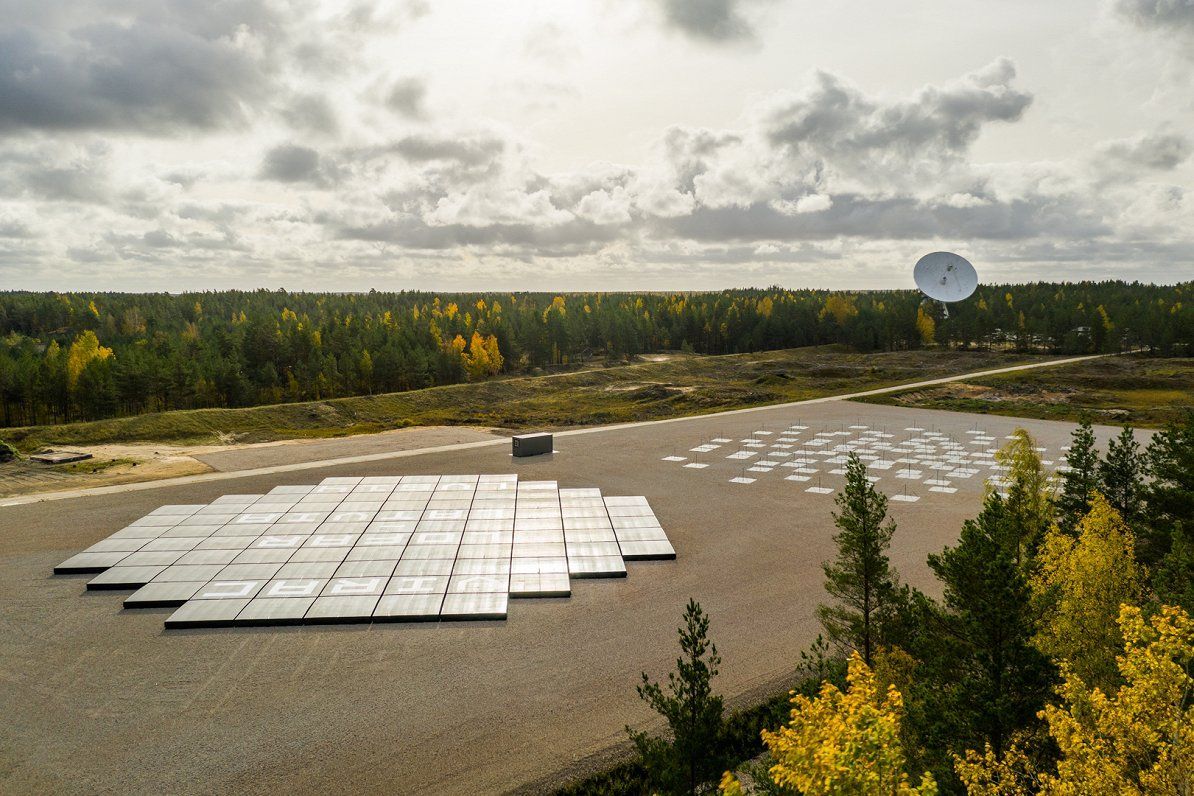
The LOFAR network comprises stations distributed across several European countries. Latvia hosts one of these stations, the northernmost and second-easternmost in Europe (after Bulgaria). Other countries are upgrading or expanding their participation in the network, including Sweden, which has already upgraded its station, and Czechia, which plans to establish a station.


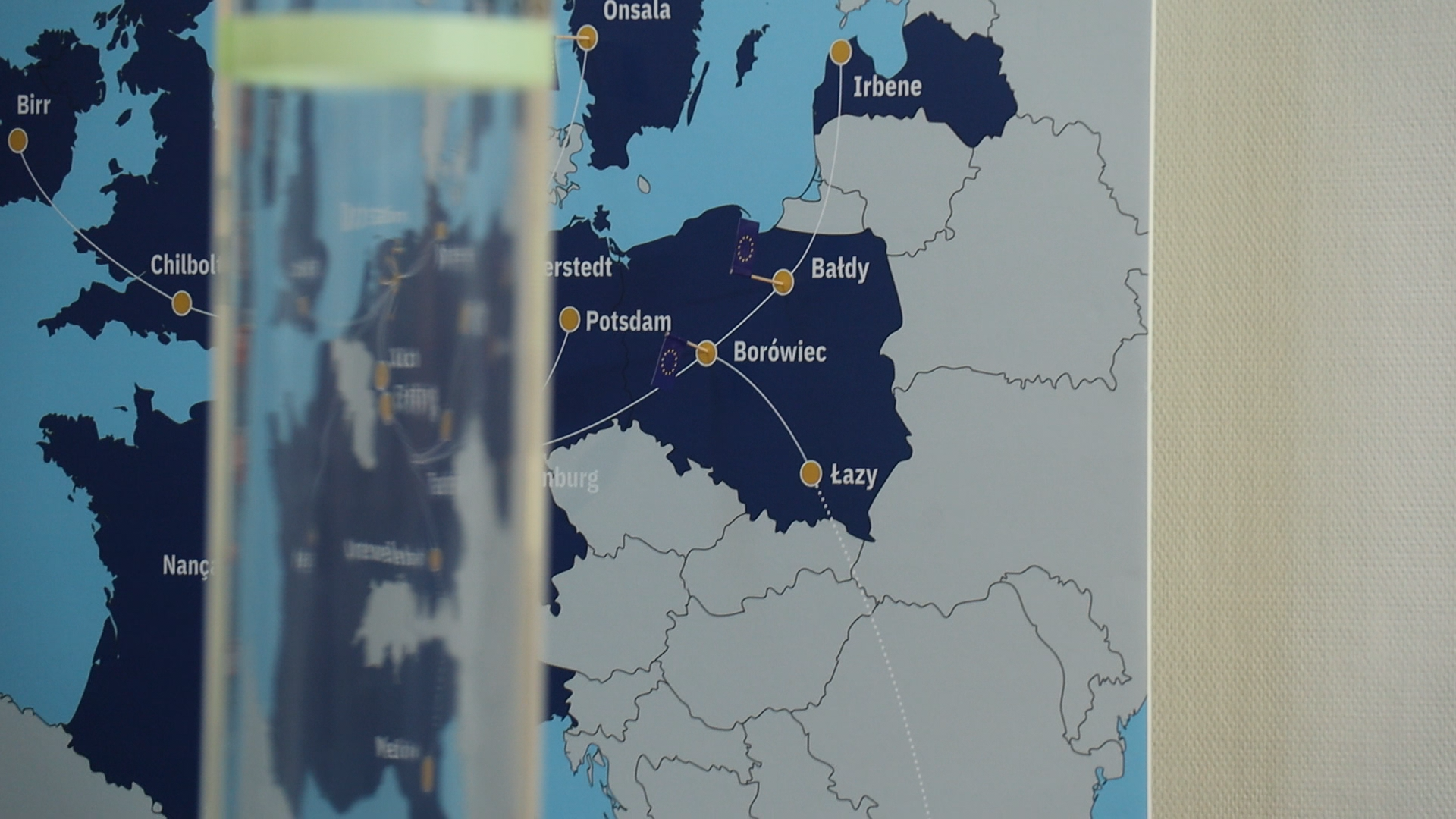
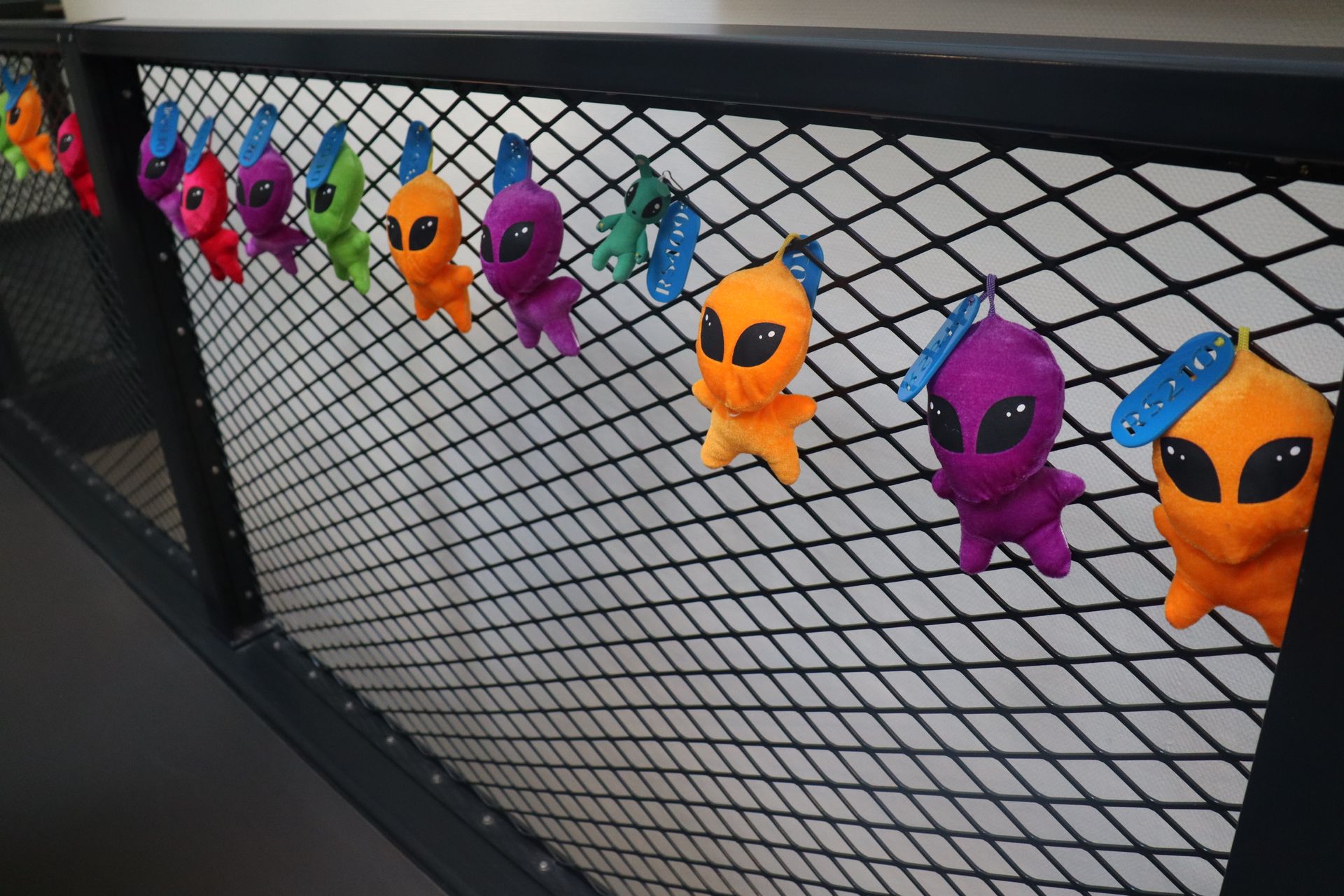
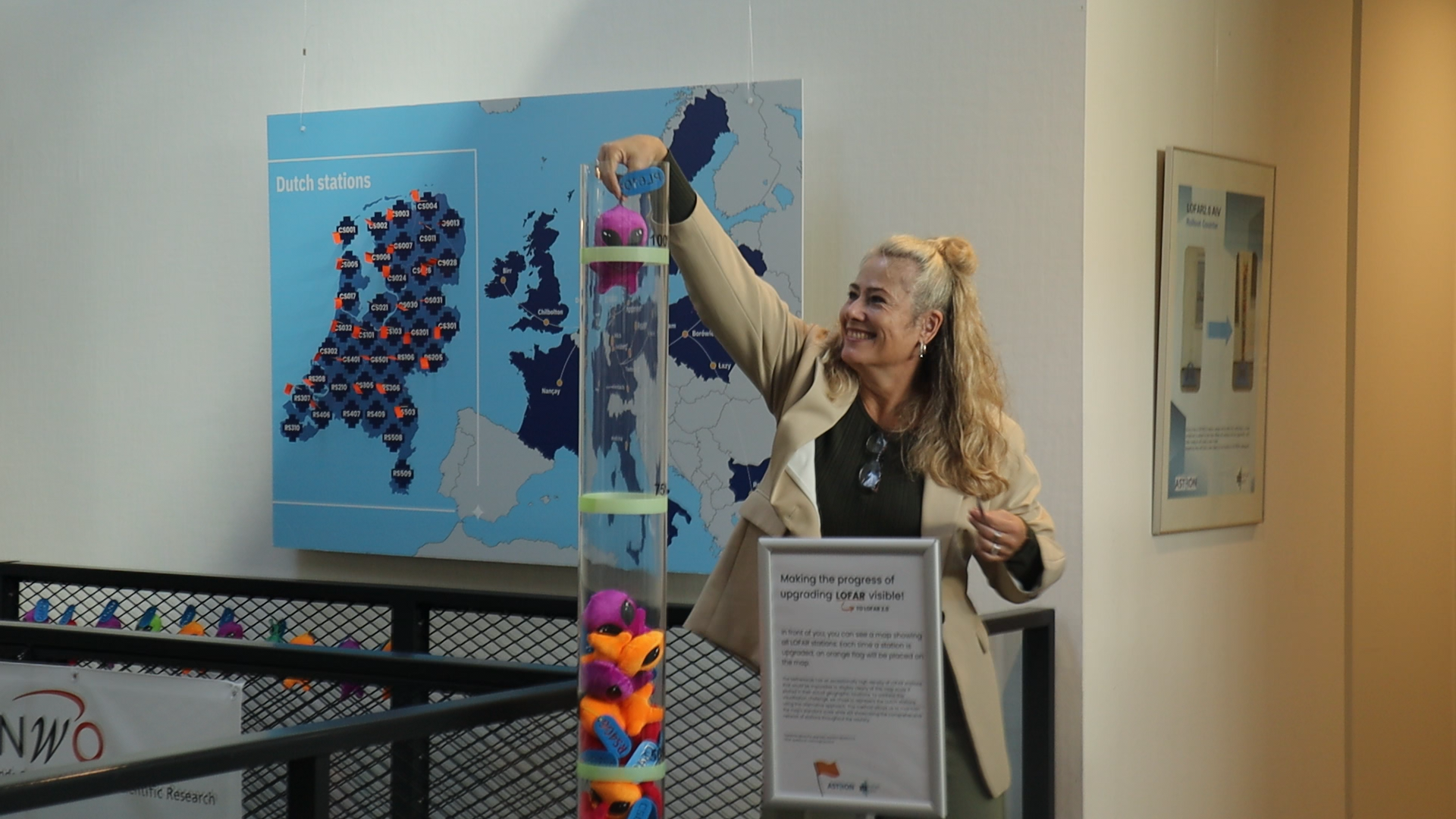
During the LOFAR school, participants also observed a symbolic tradition marking the network’s transition to LOFAR 2.0. Whenever a station completes its upgrade, ASTRON places a soft toy bearing the station’s name in a transparent tube representing the upgraded stations. A European Union flag is also added to a map of Europe when a station begins the upgrade process. During the school, the participants witnessed two additions to the tube, representing a Polish station and the newly completed Bulgarian station.


Latvia’s station has not yet been upgraded to LOFAR 2.0. Its modernisation would expand the country’s ability to contribute to international radio astronomy, allowing researchers to take advantage of the network’s improved capabilities. The station has the potential to support research at Latvian academic institutions and strengthen scientific collaboration across the Baltic region.


The transition to LOFAR 2.0 would therefore represent more than a technical improvement. It would be an important step in maintaining and developing Latvia’s role in European radio astronomy, ensuring Latvian researchers can fully participate in the scientific opportunities offered by this evolving international infrastructure. Achieving this goal will require continued institutional support and investment in research infrastructure.


This information has been prepared within the framework of the project “Ventspils University of Applied Sciences` International Cooperation and Innovation for the Development of Latvia’s Smart Specialisation” (Project No. 1.1.1.5/3/25/I/012).
Share on other platforms

Other news
By Rota Žagare • November 10, 2026
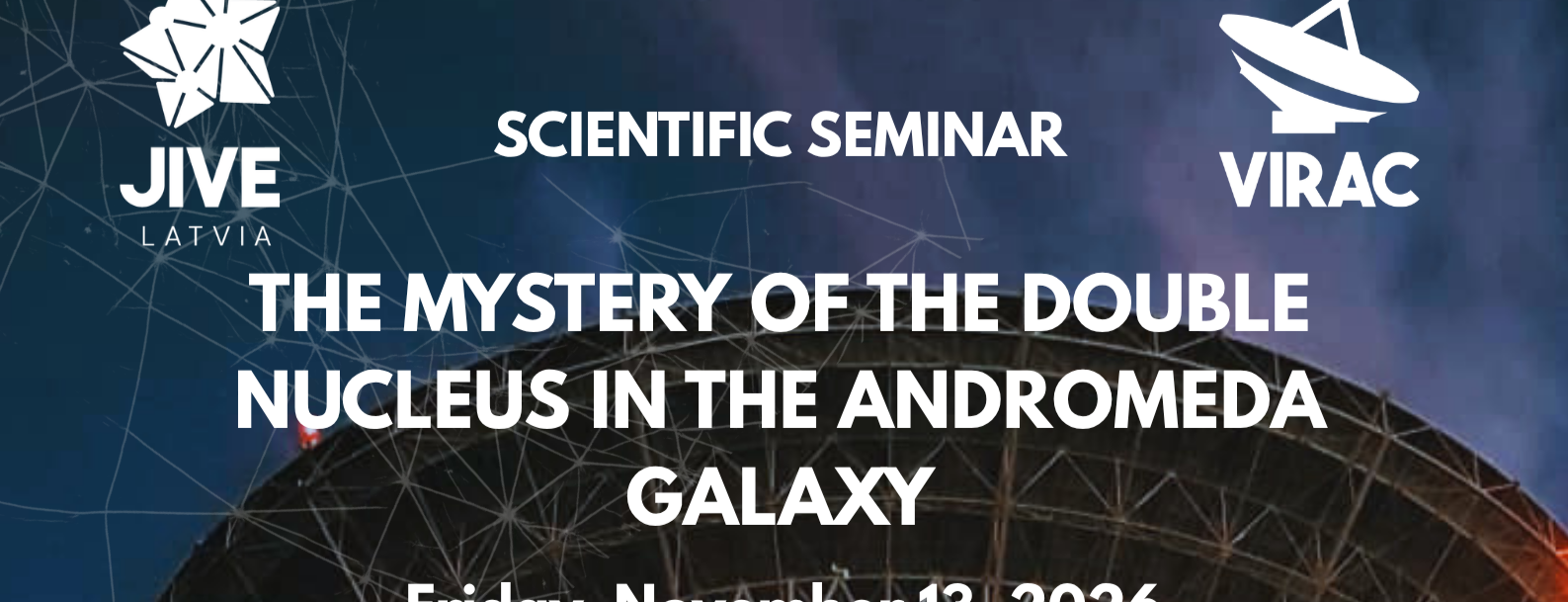
On November 13, 2026, the Ventspils International Radio Astronomy Centre (VIRAC) at Ventspils University of Applied Sciences (VUAS) will host a scientific seminar entitled “The Mystery of the Double Nucleus in the Andromeda Galaxy”, led by researcher prof.Elena Bannikova. The seminar is organised as part of the JIVE Latvia consortium activities, fostering international scientific collaboration and knowledge exchange in radio astronomy and astrophysics. The Andromeda Galaxy is one of the closest major galaxies to our Milky Way, yet its centre remains a fascinating astronomical mystery. Observations have revealed an unusual double-nucleus structure, raising intriguing questions about the physical processes taking place at the heart of the galaxy and their possible origins. What exactly lies behind this peculiar structure, and what can it tell us about the formation and evolution of galaxies? During the seminar, prof. Elena Bannikova will explore the central region of the Andromeda Galaxy, discussing scientific hypotheses and research findings that contribute to our understanding of this remarkable astronomical phenomenon. The agenda: 09:30-10:00 Registration and morning coffee 10:00-12:00 Scientific seminar at Ventspils University of Applied Sciences, Room D407 12:00-18:00 Visit to the Irbene Radio Telescope Complex and discussions Join the seminar online by clicking here: meet.google.com/joc-ywsi-kmn The seminar will provide an opportunity to gain insights into current astrophysical research, engage in scientific discussions, exchange expertise, and explore potential avenues for future collaboration. The visit to the Irbene Radio Telescope Complex will offer participants a closer look at VIRAC’s research infrastructure and its role in international radio astronomy. Researchers, students, and everyone interested in astronomy and scientific discovery are warmly invited to join us and explore one of the most fascinating mysteries of the Andromeda Galaxy! The event is organised within the framework of Project No. 1.1.1.5/3/25/I/012, “International Cooperation and Innovation of Ventspils University of Applied Sciences for the Development of Latvia’s Smart Specialization.” *Scientific publication (Astronomy & Astrophysics): https://www.aanda.org/component/article?access=doi&doi=10.1051/0004-6361/202660388
By Rota Žagare • November 6, 2026
With support from the Baltic-American Freedom Foundation (BAFF), from the 21st of September to the 1st of October 2026, two leading scientists from the U.S. National Radio Astronomy Observatory (NRAO) – Dr. Todd R. Hunter and Dr. Crystal L. Brogan – visited the Engineering Research Institute “Ventspils International Radio Astronomy Centre” (VIRAC) at Ventspils University of Applied Sciences (VUAS). During their visit to Ventspils, the guests familiarized themselves with the Irbene radio astronomy complex and the receiver technologies developed in-house by VIRAC, and held seminars on mitigating radio-frequency interference and improving radio astronomy data processing. Together with VIRAC specialists, the researchers identified complementary research directions in the study of massive star formation, in which observations from the Irbene radio telescopes can provide substantial support for data obtained with leading U.S. radio astronomy instruments (ALMA, VLA/ngVLA). The visit served as an important step toward establishing a long-term partnership between Latvian and U.S. radio astronomy institutions. The foundations were laid for joint international research projects and scientific publications. Alongside the strategic discussions, the U.S. experts provided individual consultations for VIRAC researchers, delivered a public lecture for a wider audience in Ventspils, and offered valuable feedback and introduced international career opportunities to students in the exact sciences, both in Ventspils and subsequently in Riga at the University of Latvia (UL).
By Rota Žagare • November 5, 2026
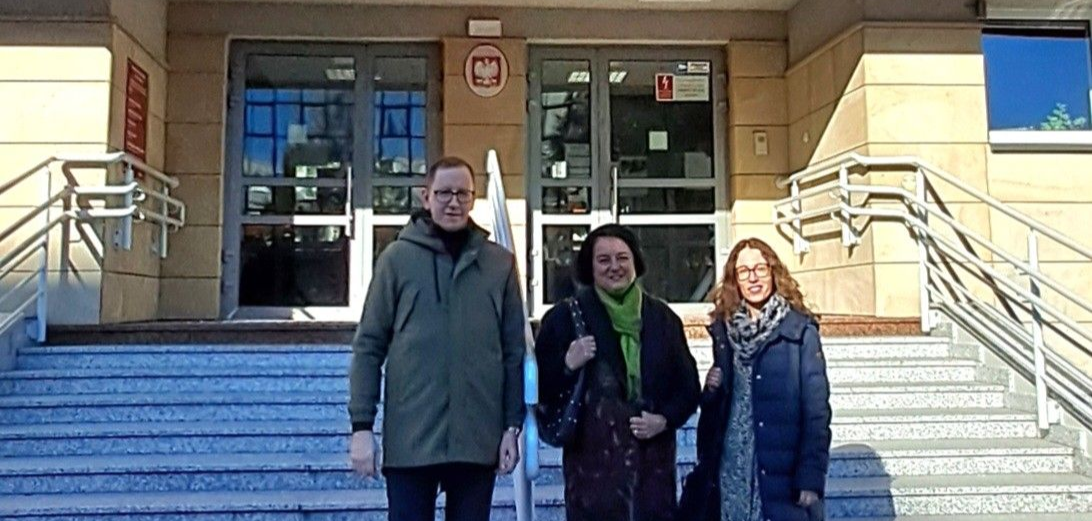
From 26 to 30 October, Assistant Professor Egita Proveja, Associate Professor Jānis Veckrācis and Lecturer Aiga Bādere of the Faculty of Translation Studies (FoTS) at Ventspils University of Applied Sciences (VUAS) visited the Faculty of Humanities of Jan Długosz University in Częstochowa ( Uniwersytet Jana Długosza w Częstochowie , JDU, Poland). The visit took place within the framework of both the COLOURS European University Alliance and Erasmus+ cooperation. The main aim of the visit was to launch a joint practice-oriented project for translation students of VUAS FoTS and JDU. Latvian and Polish students are expected to work with professional texts and specialised vocabulary in various formats of cooperation. Working meetings were held with the management and staff of the Faculty of Humanities. The VUAS representatives Jānis Veckrācis and Aiga Bādere discussed specific plans for cooperation with the Dean of the JDU Faculty of Humanities, Aiga Bādere met the Polish students involved in the project, and Egita Proveja observed German-language classes. The VUAS representatives also met the JDU Vice-Rector. The visit provided an opportunity to discuss the cooperation in detail, including a joint challenge-based project, its implementation timeline, the allocation of tasks and the expected results. Plans for a summer school were also discussed. The programme also included a study visit to the Jasna Góra Monastery, where a JDU graduate, now a professional guide, showed how education in the humanities and professional competence help to preserve and promote the region’s cultural heritage. The visit strengthened cooperation between the two universities and opened up opportunities to involve students at all levels of study in future joint projects.
By Rota Žagare • October 22, 2026
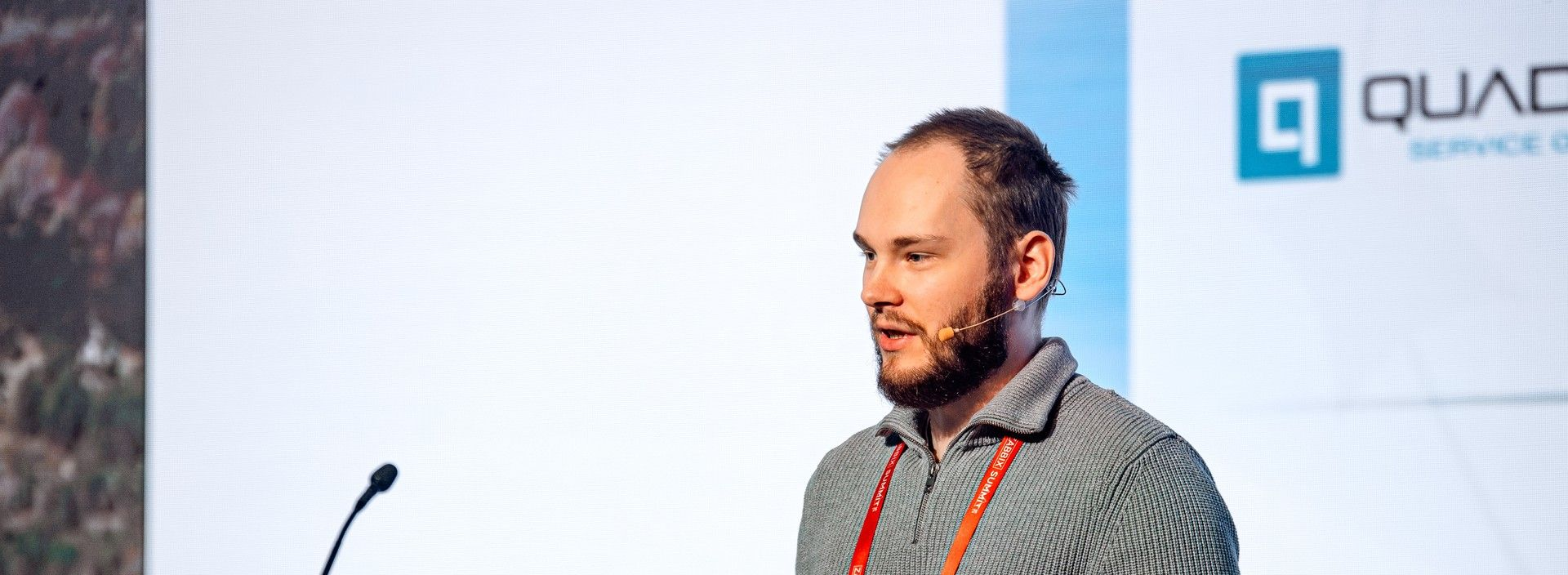
From 7 to 9 October, the international Zabbix Summit 2026 conference took place in Riga, bringing together representatives from various countries to share experience on the capabilities of the Zabbix monitoring platform and its use across different industries. Kristaps Blumbergs, a Research Assistant at the Ventspils International Radio Astronomy Centre (VIRAC), also attended the conference. 
By Rota Žagare • October 20, 2026
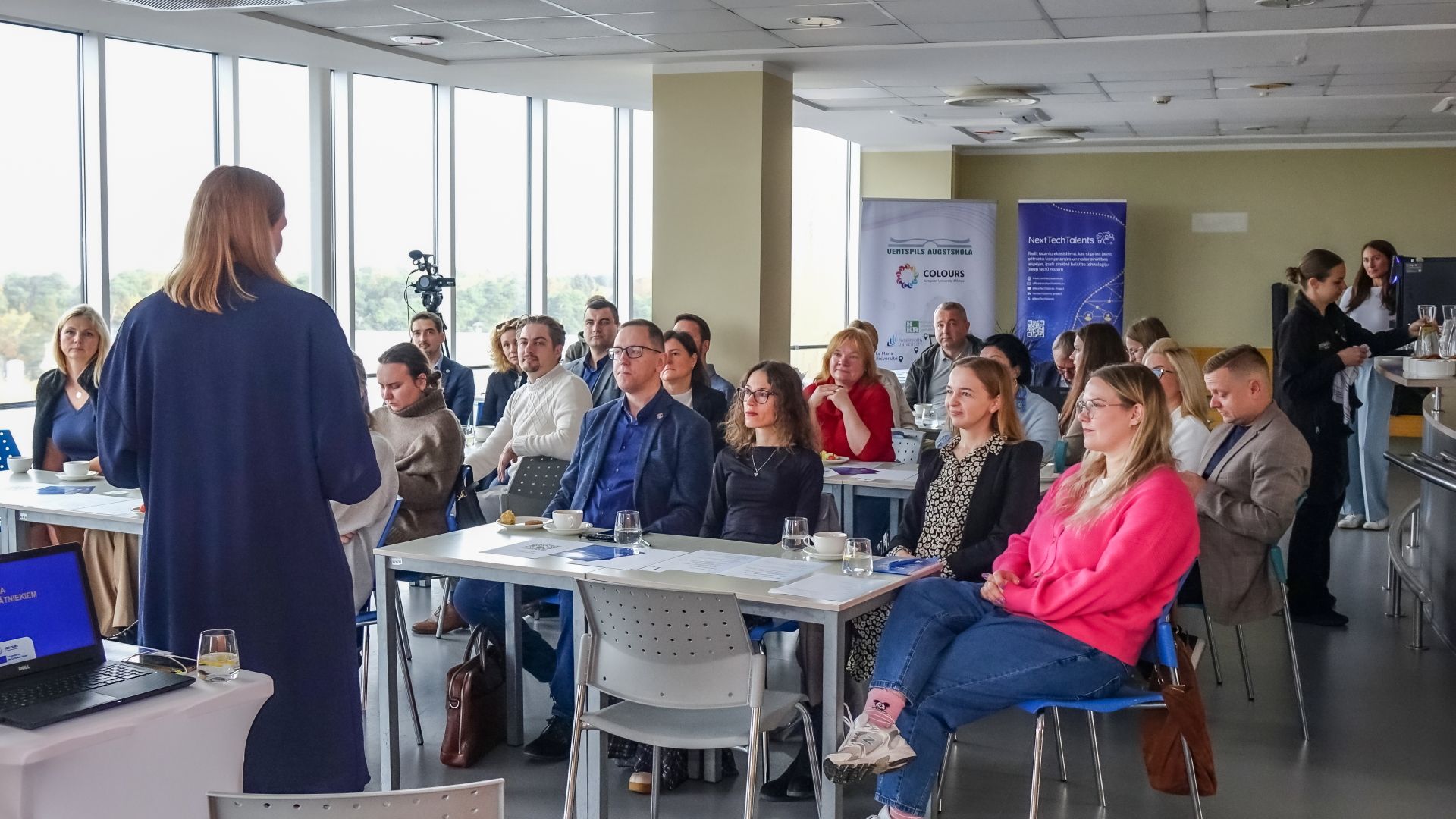
On 16 October, Ventspils University of Applied Sciences hosted a Career Day for Early-Career Researchers, during which doctoral students and early-career researchers explored various professional development opportunities both within and beyond academia. The event highlighted the importance of international cooperation in research, featured personal experiences of scientific career development, and fostered collaboration among representatives of different scientific disciplines. The Career Day was organised as part of the international NextTechTalents project, introducing participants to opportunities to advance their research careers, develop professional skills, and engage in international initiatives. Special attention was also given to the opportunities offered to doctoral students and early-career researchers by the COLOURS European University Alliance. Gvido Grīnbergs from Ventspils High Technology Park shared his professional experience, describing his journey from research to entrepreneurship. He emphasised that the knowledge and skills acquired through research can be successfully applied beyond academia, including in entrepreneurship and technology development. Drawing on his personal experience, Gvido Grīnbergs highlighted the need to strengthen collaboration between researchers, entrepreneurs, and technology developers to transform scientific expertise into practical and innovative solutions. Oskars Teikmanis, Chairman of the Board of the Latvian Association of Young Researchers (LJZA), presented the diverse career paths and opportunities available to early-career researchers. He emphasised that a career in science is not limited to conducting research but can also develop in areas such as scientific publishing, research integrity, science policy, research funding, administration, innovation, and science communication. A doctoral degree demonstrates not only scientific qualifications but also a broad range of competencies that can be applied across various professional fields. The Career Day also featured a networking session, providing participants with an opportunity to engage in discussions, exchange ideas, and establish collaborations with fellow early-career researchers, doctoral students, doctoral supervisors, project representatives, and industry professionals.  In addition to presentations and discussions, participants explored the research infrastructure of Ventspils University of Applied Sciences by visiting the laboratories of the Faculty of Information Technologies. The event concluded with a visit to Irbene, where participants took a guided tour of the Ventspils International Radio Astronomy Centre, learning about its research infrastructure and how it is used in scientific research.
By Rota Žagare • October 14, 2026
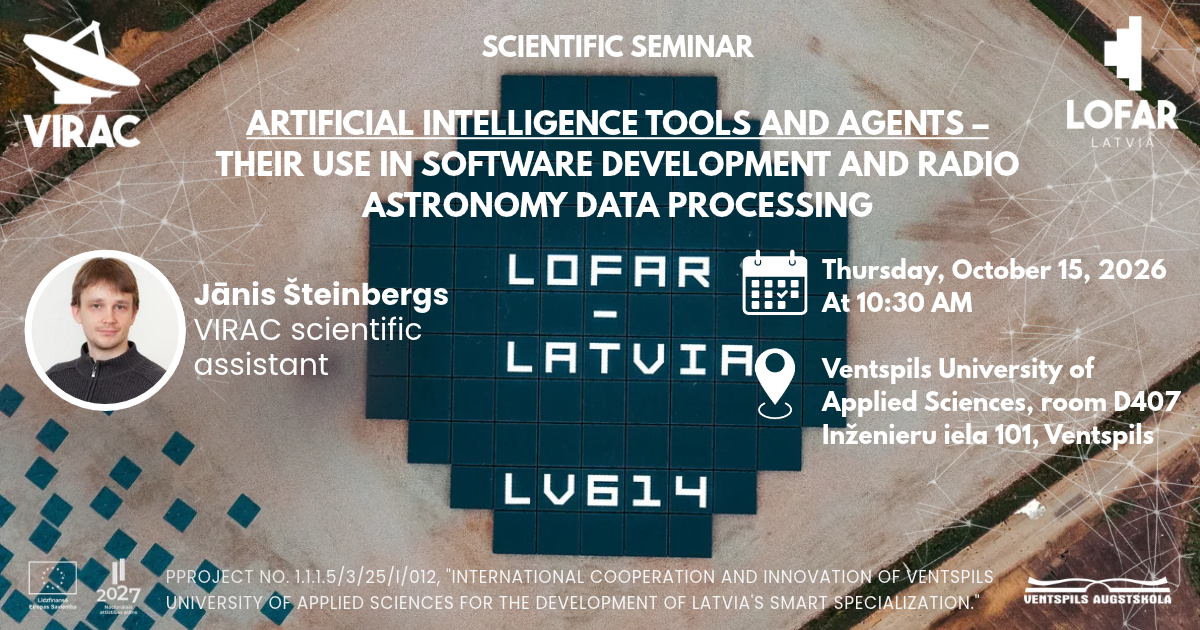
The Engineering Research Institute “Ventspils International Radio Astronomy Centre” (VIRAC) of Ventspils University of Applied Sciences is organising the seminar “Artificial Intelligence Tools and Agents: Their Use in Software Development and Radio Astronomy Data Processing” to introduce the capabilities of artificial intelligence (AI) agents and their practical applications in the development of smart technologies and scientific research. The seminar will take place on 15 October at 10:30 and will be led by Jānis Šteinbergs, Scientific Assistant at VIRAC.
Other news