Ventspils University of Applied Sciences will mark the beginning of the new study year with various events!
August 24, 2023
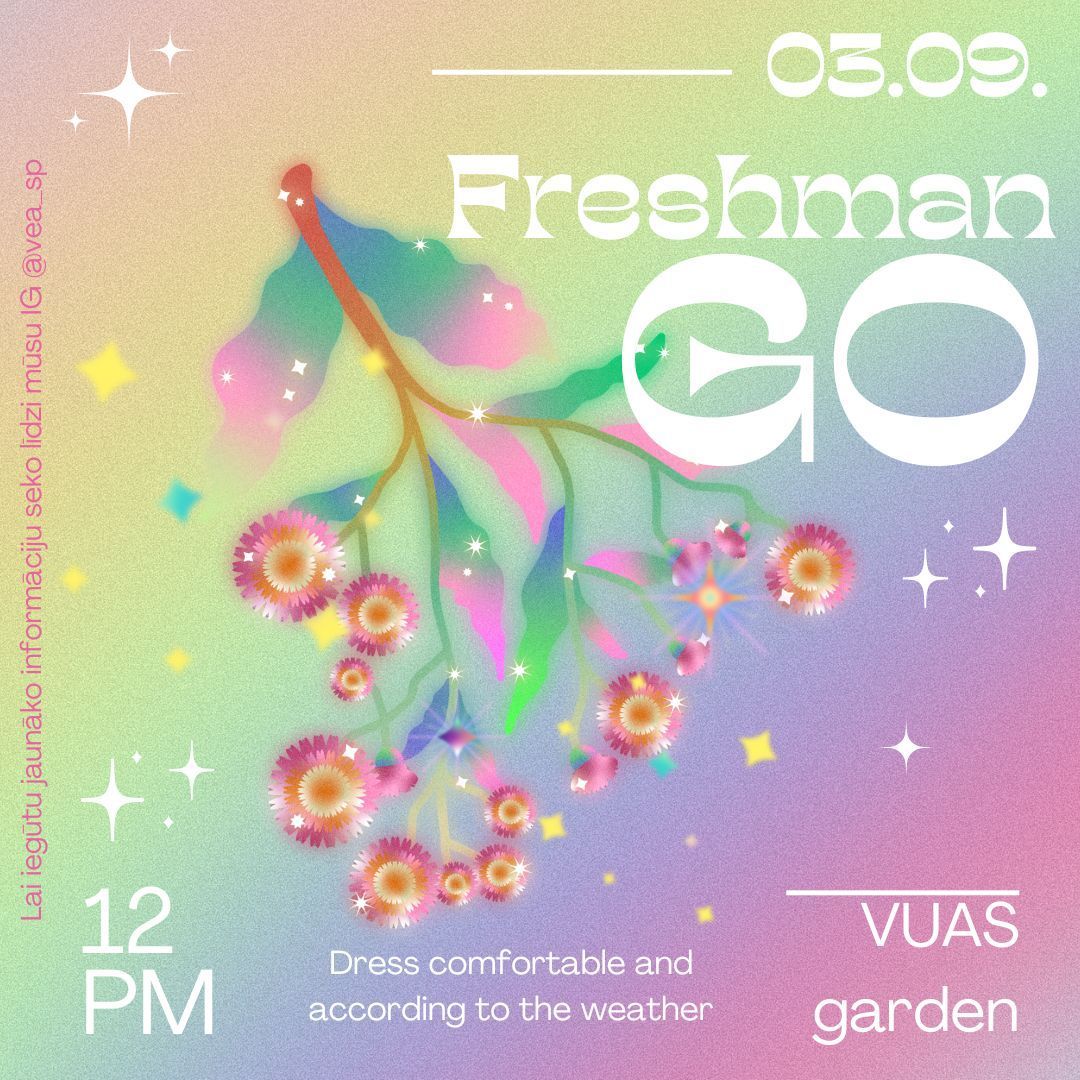
- On September 3rd at 12.00 Freshman Go will take place in the VUAS garden, in which all students who will start their studies this year are invited to participate. Freshman Go is an orientation game in which new students are randomly divided into teams in order to get to know each other by performing various tasks together.
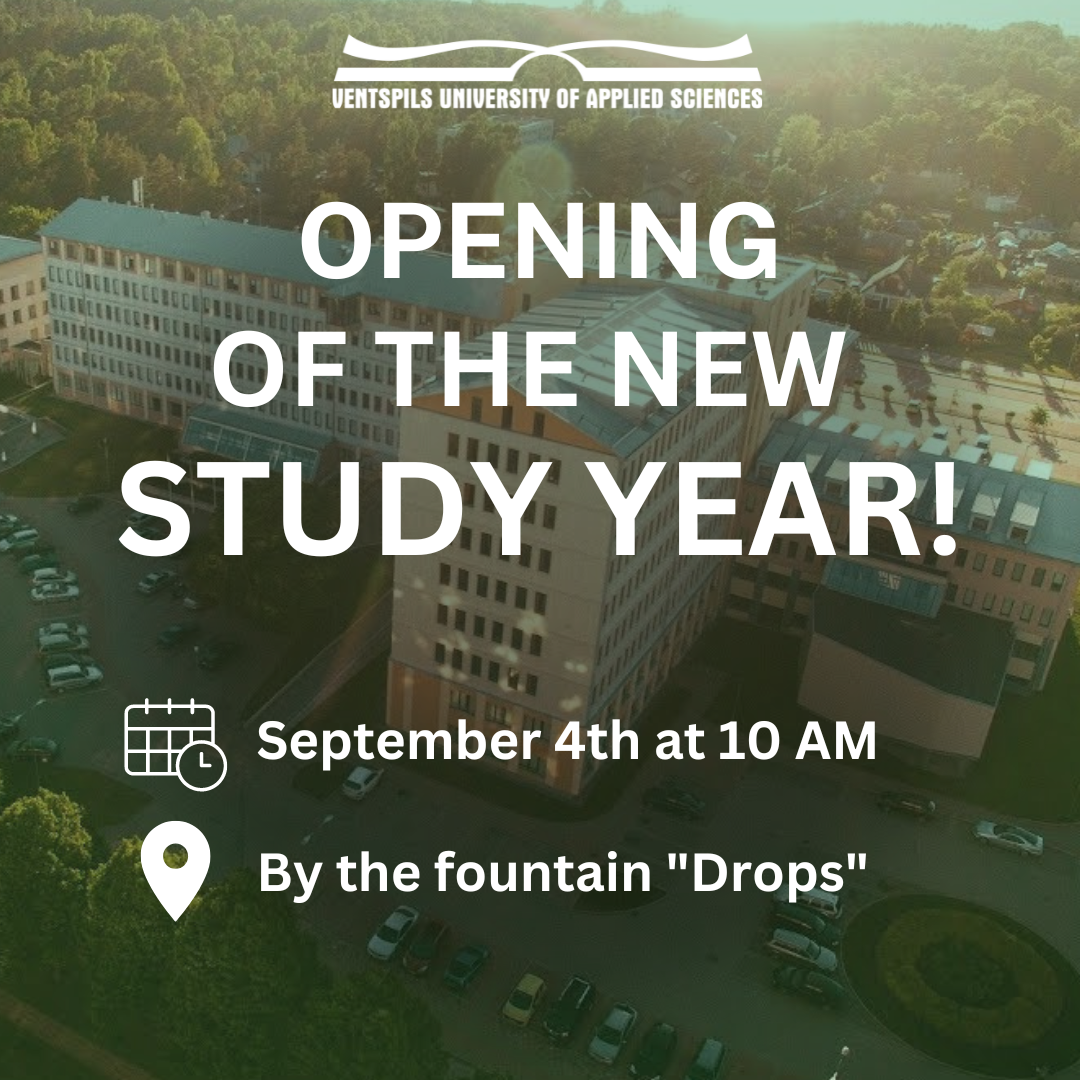
- Join us as we kick off the beginning of the upcoming academic year! We extend a warm invitation to all students to join us on September 4th at 10:00 EEST, as we gather by the enchanting "Drops" fountain to celebrate the beginning of a new chapter in our educational journey.
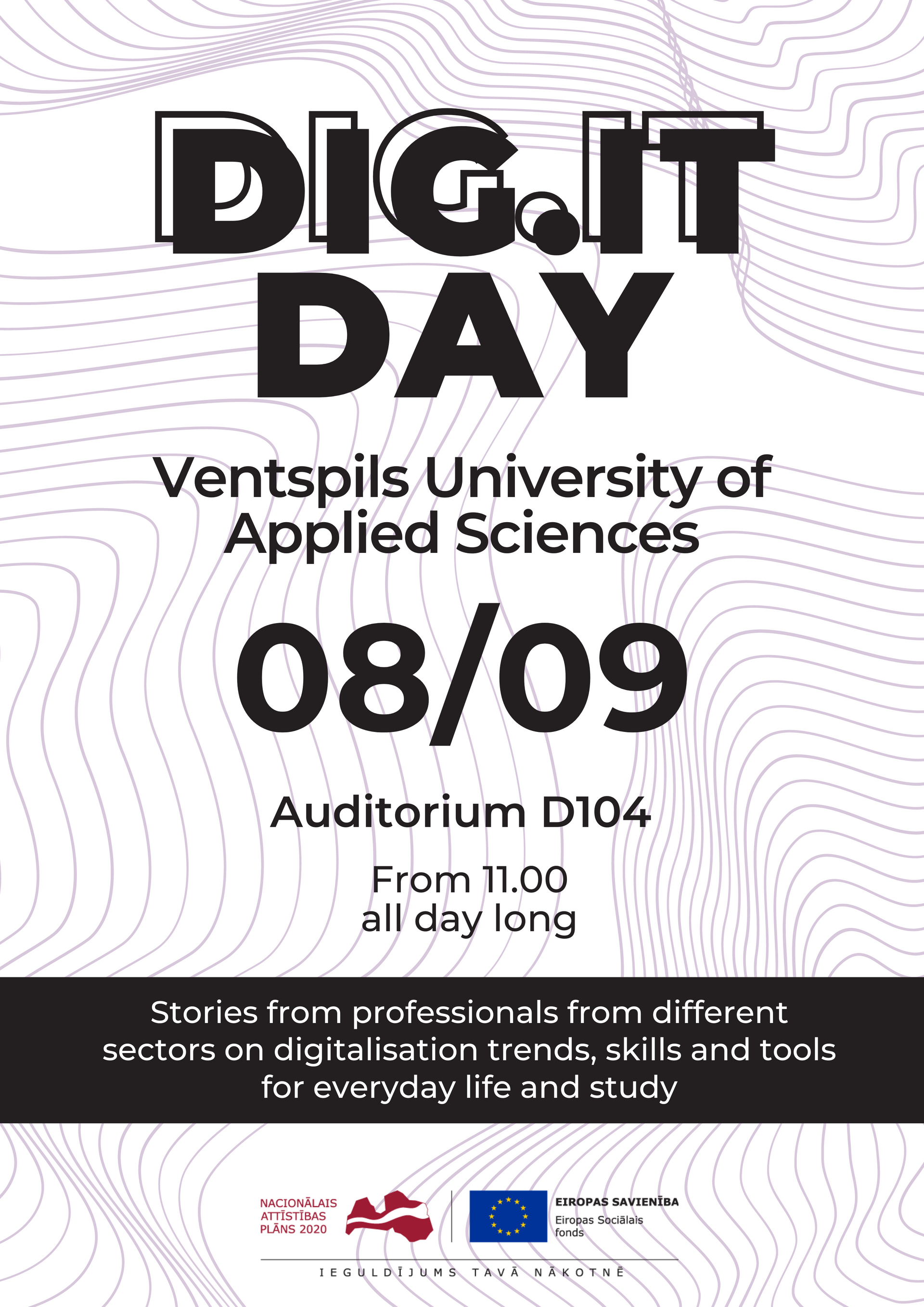
- On September 8th, starting at 11 AM we will welcome every interested individual to Dig.IT Day, where well-known lecturers in Latvia will present engaging and relevant guest lectures, providing knowledge and inspiration to students and university professors.
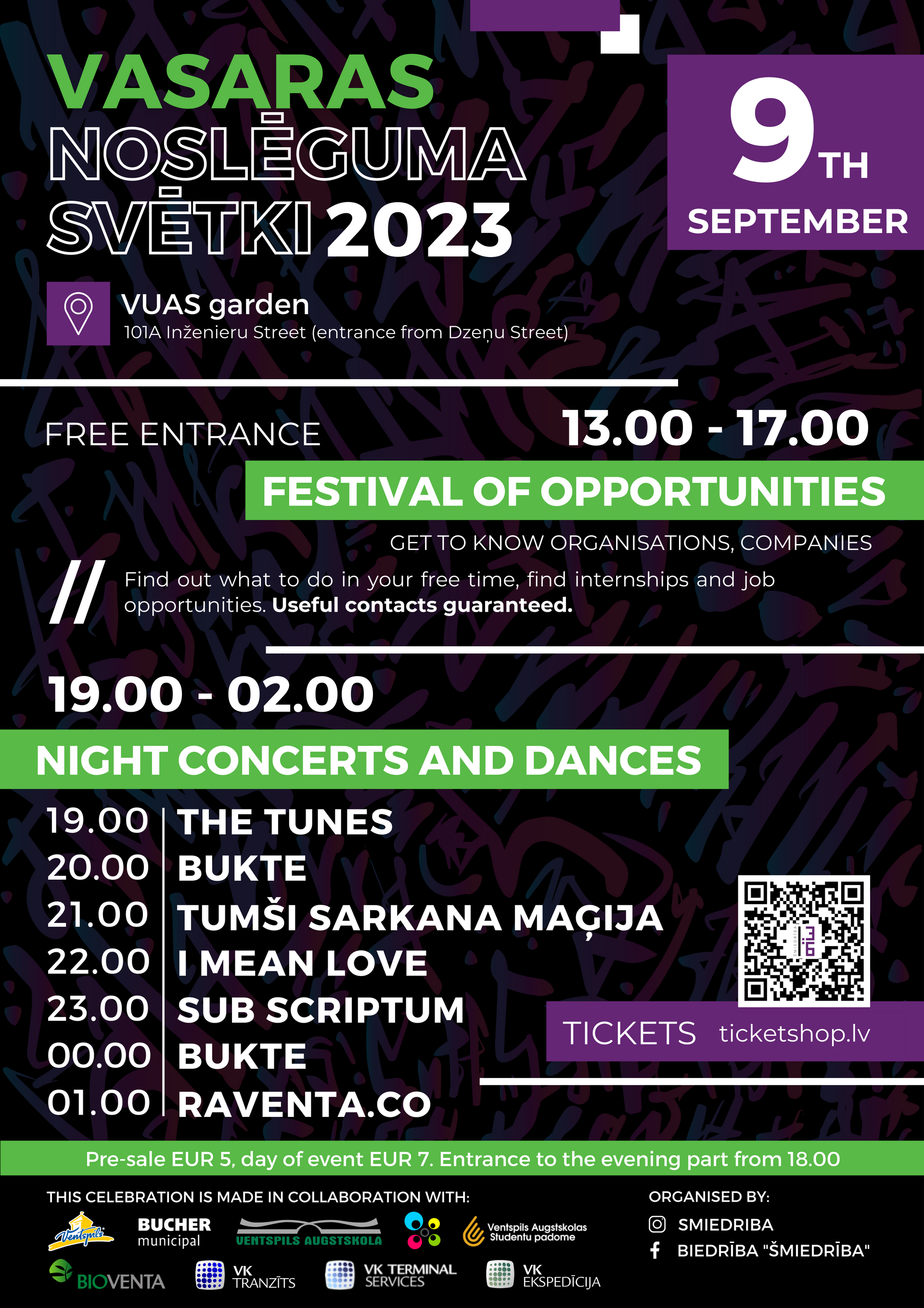
- On September 9th, everyone is invited to Summer Farewell Celebration (Vasaras noslēguma svētki)!
From 1PM to 5 PM, there will be an “Festival of Opportunities” in the VUAS Garden, where throughout the day, you will have the chance to get to know the work of various companies, institutions and associations and perhaps meet your future employer!
Starting at 7PM the evening event will begin, featuring
night concerts and dances. Groups like The Tunes, Bukte, Tumši Sarakana Maģija, I mean Love, Sub Scriptum, Raventa.co will perform. Admission to the event is 5 EUR when purchasing tickets in advance, 7 EUR when purchasing tickets on the day of the event.
Seize the opportunity, gather knowledge, inspiration, and make new friends and acquaintances during the exciting Opening Week of the study year!"
Share on other platforms
Other news
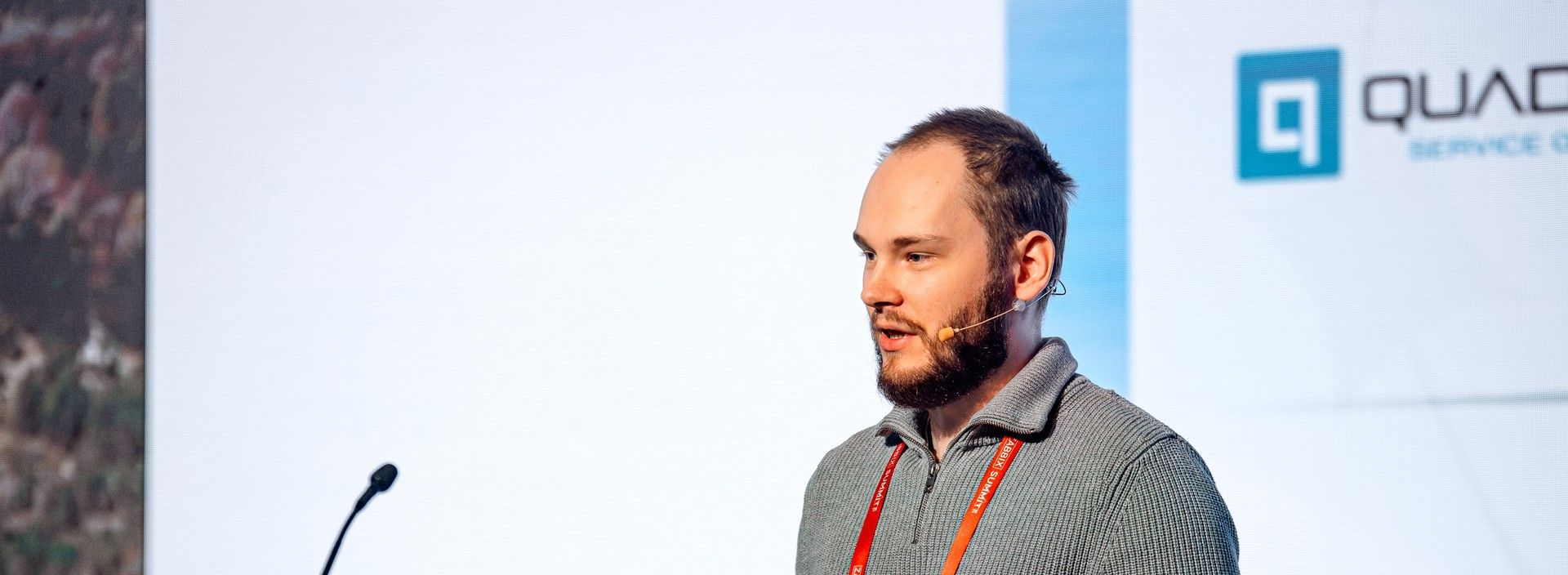
How to Monitor a 32-Metre Radio Telescope – VIRAC Experience at the International Zabbix Summit 2026
From 7 to 9 October, the international Zabbix Summit 2026 conference took place in Riga, bringing together representatives from various countries to share experience on the capabilities of the Zabbix monitoring platform and its use across different industries. Kristaps Blumbergs, a Research Assistant at the Ventspils International Radio Astronomy Centre (VIRAC), also attended the conference.
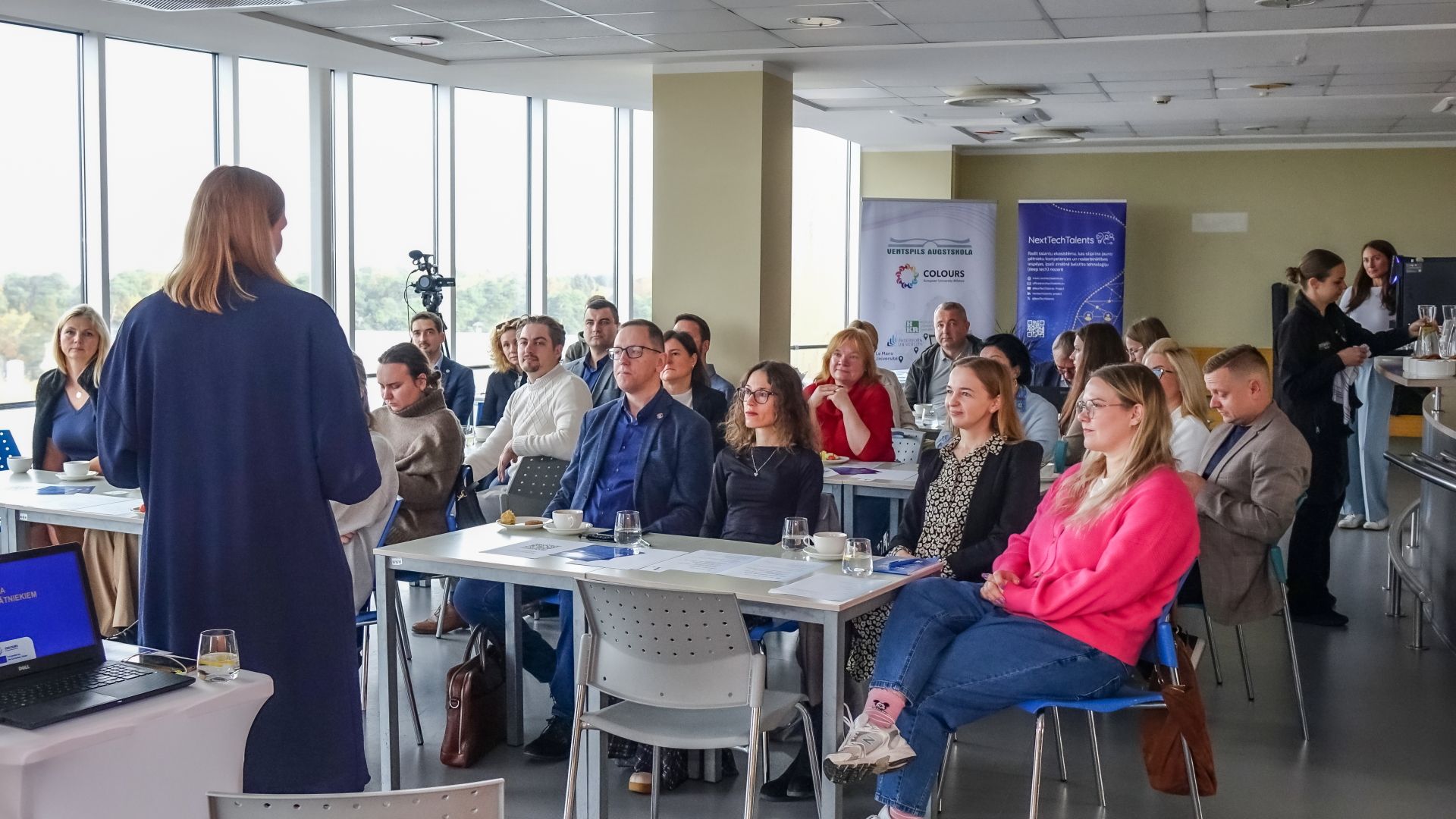
On 16 October, Ventspils University of Applied Sciences hosted a Career Day for Early-Career Researchers, during which doctoral students and early-career researchers explored various professional development opportunities both within and beyond academia. The event highlighted the importance of international cooperation in research, featured personal experiences of scientific career development, and fostered collaboration among representatives of different scientific disciplines. The Career Day was organised as part of the international NextTechTalents project, introducing participants to opportunities to advance their research careers, develop professional skills, and engage in international initiatives. Special attention was also given to the opportunities offered to doctoral students and early-career researchers by the COLOURS European University Alliance. Gvido Grīnbergs from Ventspils High Technology Park shared his professional experience, describing his journey from research to entrepreneurship. He emphasised that the knowledge and skills acquired through research can be successfully applied beyond academia, including in entrepreneurship and technology development. Drawing on his personal experience, Gvido Grīnbergs highlighted the need to strengthen collaboration between researchers, entrepreneurs, and technology developers to transform scientific expertise into practical and innovative solutions. Oskars Teikmanis, Chairman of the Board of the Latvian Association of Young Researchers (LJZA), presented the diverse career paths and opportunities available to early-career researchers. He emphasised that a career in science is not limited to conducting research but can also develop in areas such as scientific publishing, research integrity, science policy, research funding, administration, innovation, and science communication. A doctoral degree demonstrates not only scientific qualifications but also a broad range of competencies that can be applied across various professional fields. The Career Day also featured a networking session, providing participants with an opportunity to engage in discussions, exchange ideas, and establish collaborations with fellow early-career researchers, doctoral students, doctoral supervisors, project representatives, and industry professionals. In addition to presentations and discussions, participants explored the research infrastructure of Ventspils University of Applied Sciences by visiting the laboratories of the Faculty of Information Technologies. The event concluded with a visit to Irbene, where participants took a guided tour of the Ventspils International Radio Astronomy Centre, learning about its research infrastructure and how it is used in scientific research.
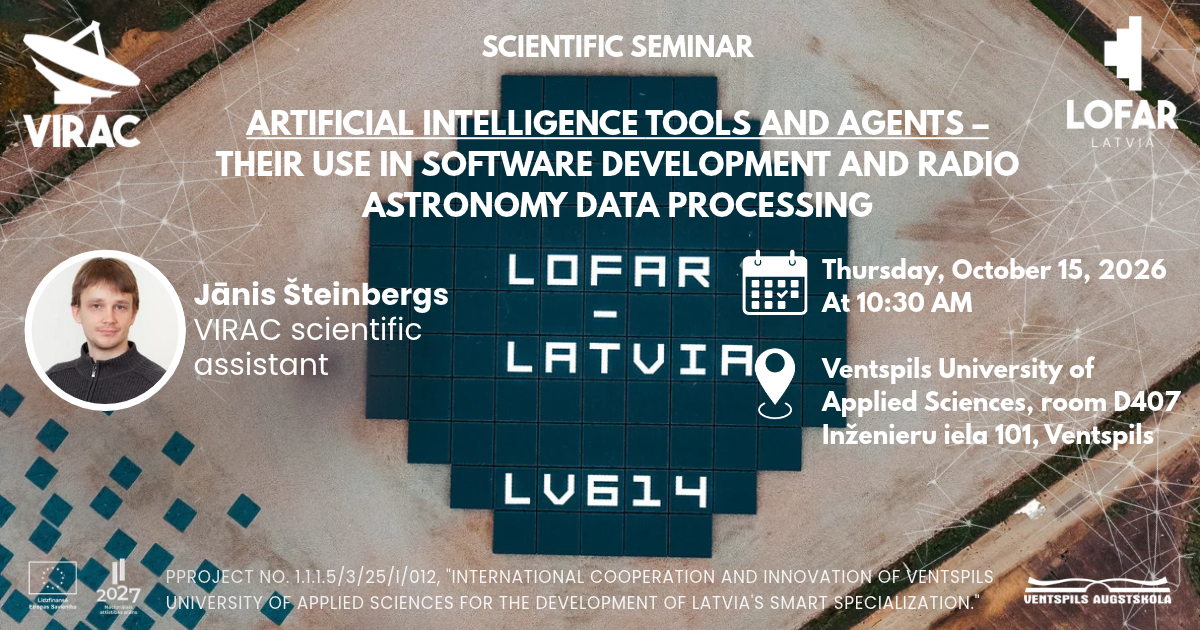
The Engineering Research Institute “Ventspils International Radio Astronomy Centre” (VIRAC) of Ventspils University of Applied Sciences is organising the seminar “Artificial Intelligence Tools and Agents: Their Use in Software Development and Radio Astronomy Data Processing” to introduce the capabilities of artificial intelligence (AI) agents and their practical applications in the development of smart technologies and scientific research. The seminar will take place on 15 October at 10:30 and will be led by Jānis Šteinbergs, Scientific Assistant at VIRAC.
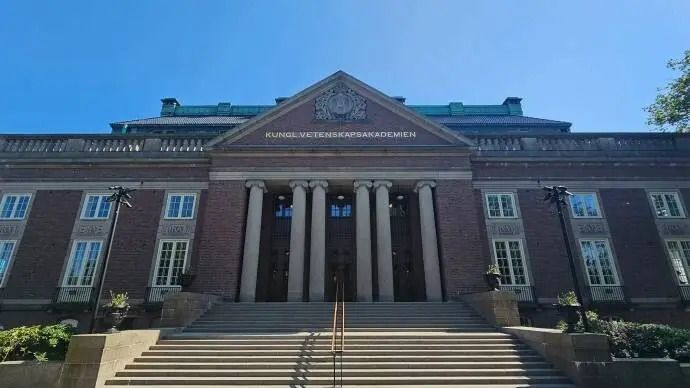
Andris Vaivads, Rector of Ventspils University of Applied Sciences, has been elected as a new foreign member of the Royal Swedish Academy of Sciences' Class for Astronomy and Space Science. Andris Vaivads studies what is commonly known as the magnetosphere around the Earth, other planets and the SunClass for astronomy and space science. He performs his research as a professor in Experimental Space Physics at KTH Royal Institute of Technology in Stockholm. Earlier, he spent 20 years as a researcher at the Swedish Institute of Space Physics in Uppsala. He studies the magnetosphere around Earth, other planets, and the Sun. Much of space is filled with plasma, a gas consisting of electrically charged particles that are influenced, among other things, by magnetic fields. When magnetic fields pointing in different directions reconnect – a process known as magnetic reconnection – large amounts of magnetic energy can rapidly be converted into other forms of energy, including kinetic energy. Andris Vaivads’s research focuses on these processes, where large amounts of energy are converted within small regions of space. Plasma processes can, among other things, produce the Northern lights (Auroras), affect satellites, and heat plasma to tens and hundreds of millions of degrees. The research group at KTH, in which Andris Vaivads spends 20 per cent of his working time, develops instruments to measure electric fields on satellites. The group also designs small measurement probes that can be launched from Esrange Space Centre in Kiruna on rockets. More recently, Andris Vaivads has also studied processes in the solar wind, a kind of plasma wind that plays a major role in space weather. This research uses observations from spacecraft launched by ESA (Solar Orbiter) in Europe and NASA (Parker Solar Probe) in the US. Members of the Royal Swedish Academy of Sciences serve on committees and participate in classes that initiate investigations, respond to consultations, and organise conferences and seminars. Based on the information published on the official website of the Royal Swedish Academy of Sciences.
On 24 September, Ventspils University of Applied Sciences will host the international scientific seminar “Massive Star Formation – Latest Research and Developments”, organised by the Ventspils International Radio Astronomy Centre (VIRAC). The seminar will bring together researchers and those interested in research with visiting scientists from the United States. The seminar will feature scientist Dr Todd R. Hunter and Lead Astronomer Dr Crystal L. Brogan from the U.S. National Radio Astronomy Observatory (NRAO). The guests will present current research in radio astronomy, state-of-the-art observational infrastructure, and the opportunities it provides for studying the Universe and the processes of star formation. Dr Todd R. Hunter will give a presentation entitled “Exploring the Universe at Centimeter Wavelengths: The Next Generation Very Large Array”, while Dr Crystal L. Brogan will present “Searching for Our Cosmic Origins Using the Atacama Large Millimeter/submillimeter Array”. The seminar will provide researchers with an opportunity to discuss the latest research findings and methods with internationally recognised experts in radio astronomy, as well as to explore opportunities for future scientific collaboration. Such international knowledge-exchange activities strengthen the research capacity of Ventspils University of Applied Sciences and promote the involvement of Latvian researchers in the international radio astronomy research community. This information has been prepared within the framework of the project “Ventspils University of Applied Sciences` International Cooperation and Innovation for the Development of Latvia’s Smart Specialisation” (Project No. 1.1.1.5/3/25/I/012).
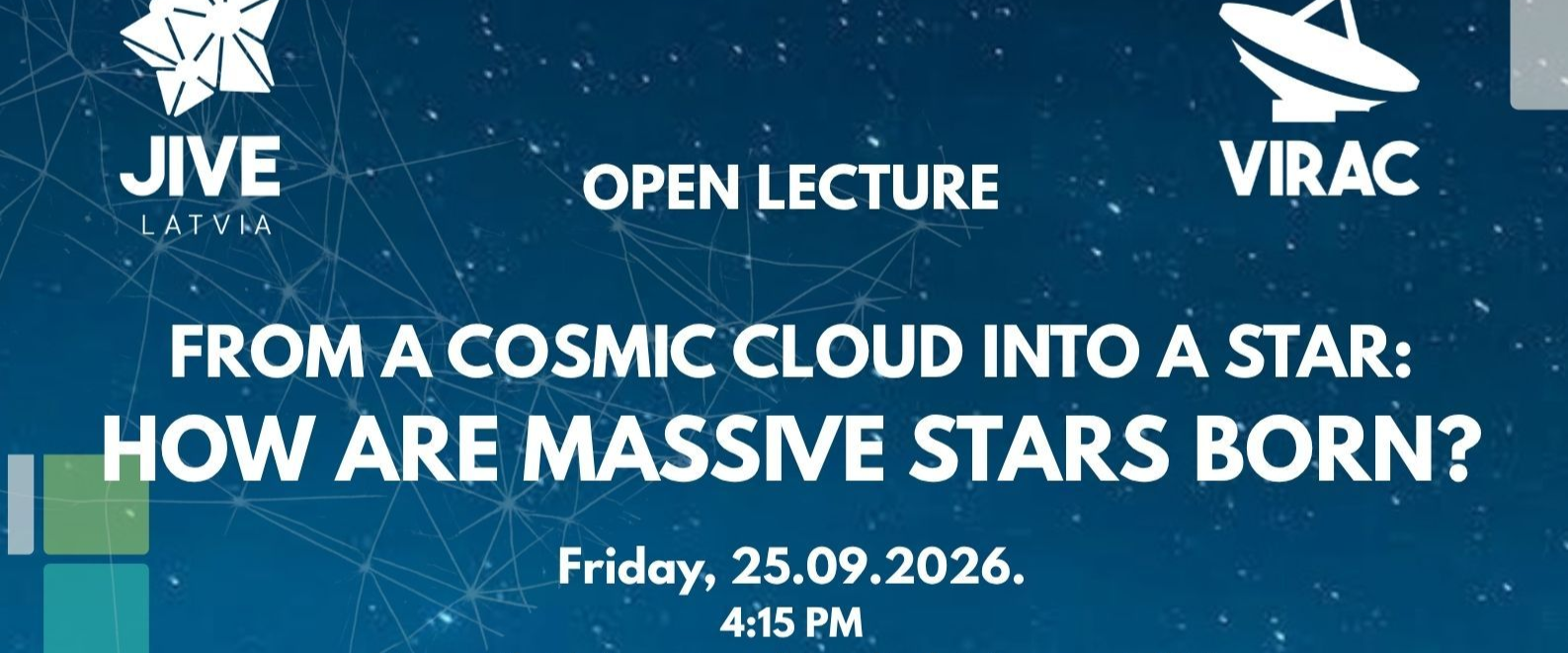
On Friday, 25 September, at 16:15, Ventspils University of Applied Sciences invites everyone interested to attend the popular science open lecture “From Cosmic Cloud to Star: How Massive Stars Are Born”. The lecture will offer an engaging and accessible introduction to how massive stars are born, how astronomers are able to observe their formation, and what these studies can reveal about the origins and evolution of our Universe. The lecture will be delivered by guests from the U.S. National Radio Astronomy Observatory (NRAO) – scientist Dr Todd R. Hunter and Lead Astronomer Dr Crystal L. Brogan. Both researchers use modern radio astronomy techniques to study star formation and processes taking place throughout the Universe. The lecture is particularly suitable for astronomy enthusiasts as well as anyone interested in space and the methods scientists use to explore the Universe. No prior knowledge of astronomy is required. The lecture will be held in English, and participation is free of charge. The open lecture will complement the European Researchers’ Night programme in Ventspils. After the lecture, participants will have the opportunity to continue exploring science at the VIZIUM Science Centre, where European Researchers’ Night activities will take place. The lecture is organized with the financial support of the Baltic-American Freedom Foundation (BAFF), in cooperation with the Ventspils International Radio Astronomy Centre (VIRAC).