VIRAC Representative Presents Research on Space Governance in the Baltic States at International Scientific Symposium
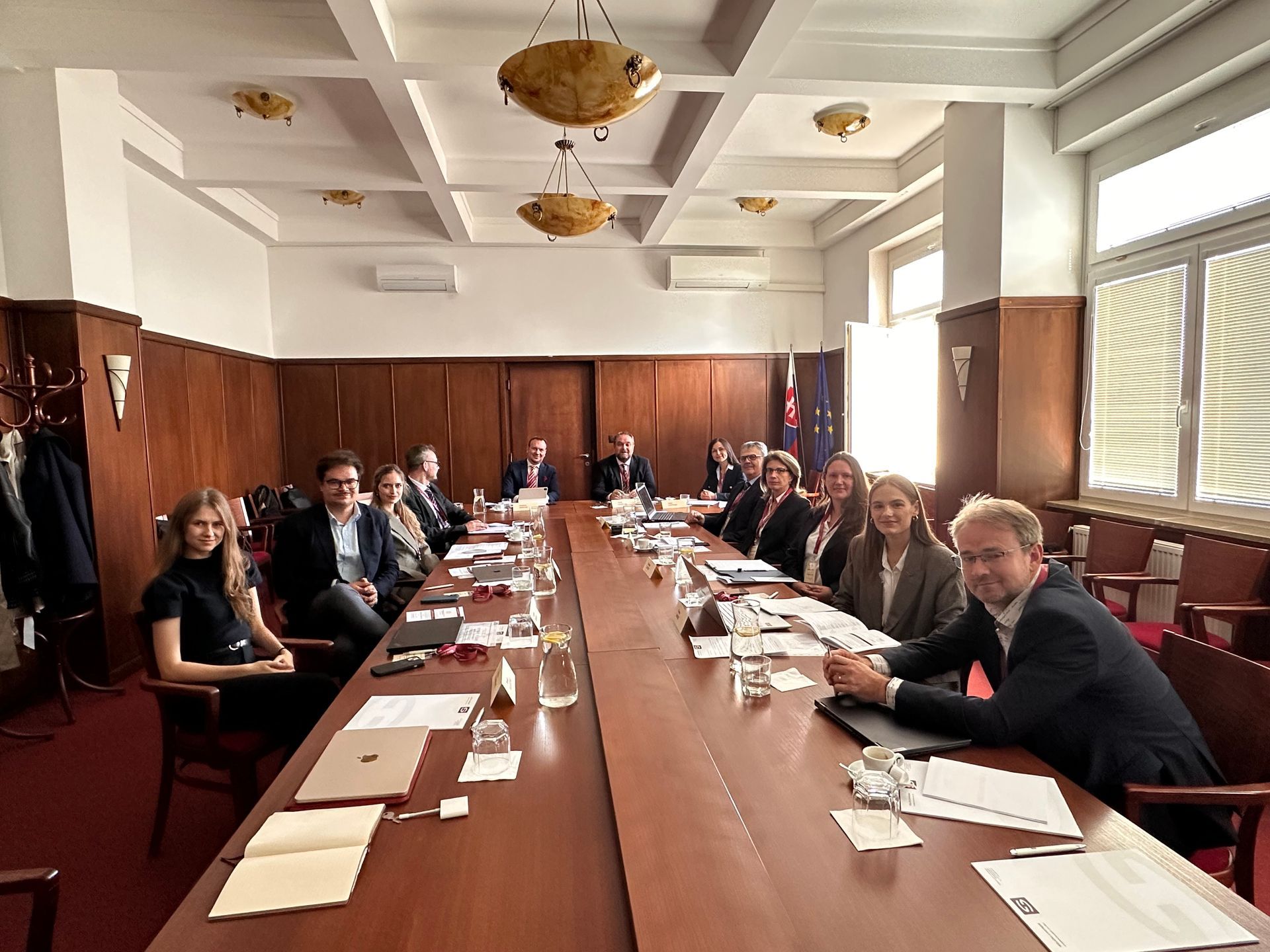
On 25 September, an international scientific symposium was held at the Faculty of Law of Trnava University, with the participation of Nansija Jotkus, a visiting research assistant and PhD student at the Ventspils International Radio Astronomy Centre (VSRC), Institute of Engineering Sciences at Ventspils University of Applied Sciences. During the symposium, she presented the study “Emerging National Space Governance in the Baltic States”, focusing on the development of national space governance and legal frameworks in Estonia, Latvia, and Lithuania.
Using the comparative legal method, the study analyses the differing approaches of the three Baltic States to the governance of space activities, their participation in international space law instruments, cooperation with the European Space Agency, as well as the interaction between national regulatory frameworks and emerging regulation at the European Union level.
Particular attention was paid to significant developments in recent years. The study emphasises that participation in international space law treaties alone does not ensure the full implementation of these obligations at the national level. As private and commercial space activities continue to develop, national mechanisms for the authorisation and continuous supervision of space activities, registration of space objects, liability, cybersecurity, and the sustainability of space activities are becoming increasingly important.
The presentation also examined the potential impact of the EU Space Act proposal, published by the European Commission on 25 June 2025, on national space governance in the Baltic States. The emerging European Union regulatory framework may become an important factor in harmonising requirements for space activities, while Member States will still need to ensure the effective implementation of their international obligations at the national level.
A comparison of the Baltic States shows that, despite their shared integration into the European space ecosystem, the countries have chosen different paths in developing their national space governance frameworks.
Participation in the symposium provided an opportunity to present research conducted in Latvia to an international academic audience, discuss the role of the Baltic States in the development of European space law, and exchange knowledge and experience with space law researchers from other countries.
The research is related to Nansija Jotkus’ doctoral thesis on the effectiveness of international space law instruments and their role in ensuring a sustainable space environment. Participation in the international symposium provides an opportunity to increase the visibility of Latvia’s research experience and expertise in the space sector within the international academic community, while also promoting interdisciplinary cooperation between the fields of law, science, and technology.
Such international cooperation is also important for Latvia’s involvement in European research infrastructure networks. By developing cooperation with the JIV-ERIC and LOFAR ERIC consortia, Ventspils University of Applied Sciences has the opportunity to strengthen Latvia’s research capacity and international visibility in radio astronomy, astrophysics, information technologies, and data processing, as well as to foster the development of new technologies and research methods. At the same time, an interdisciplinary approach to the space sector helps build a broader understanding of its legal, scientific, and technological dimensions, which are becoming increasingly important as Latvia takes a more active role in international space and research initiatives.
This information has been prepared within the framework of the project “Ventspils University of Applied Sciences` International Cooperation and Innovation for the Development of Latvia’s Smart Specialisation” (Project No. 1.1.1.5/3/25/I/012).
Share on other platforms
Other news