VIRAC researcher organises a scientific seminar, “Experience in ALMA Data Processing and Its Application in Comet Research”
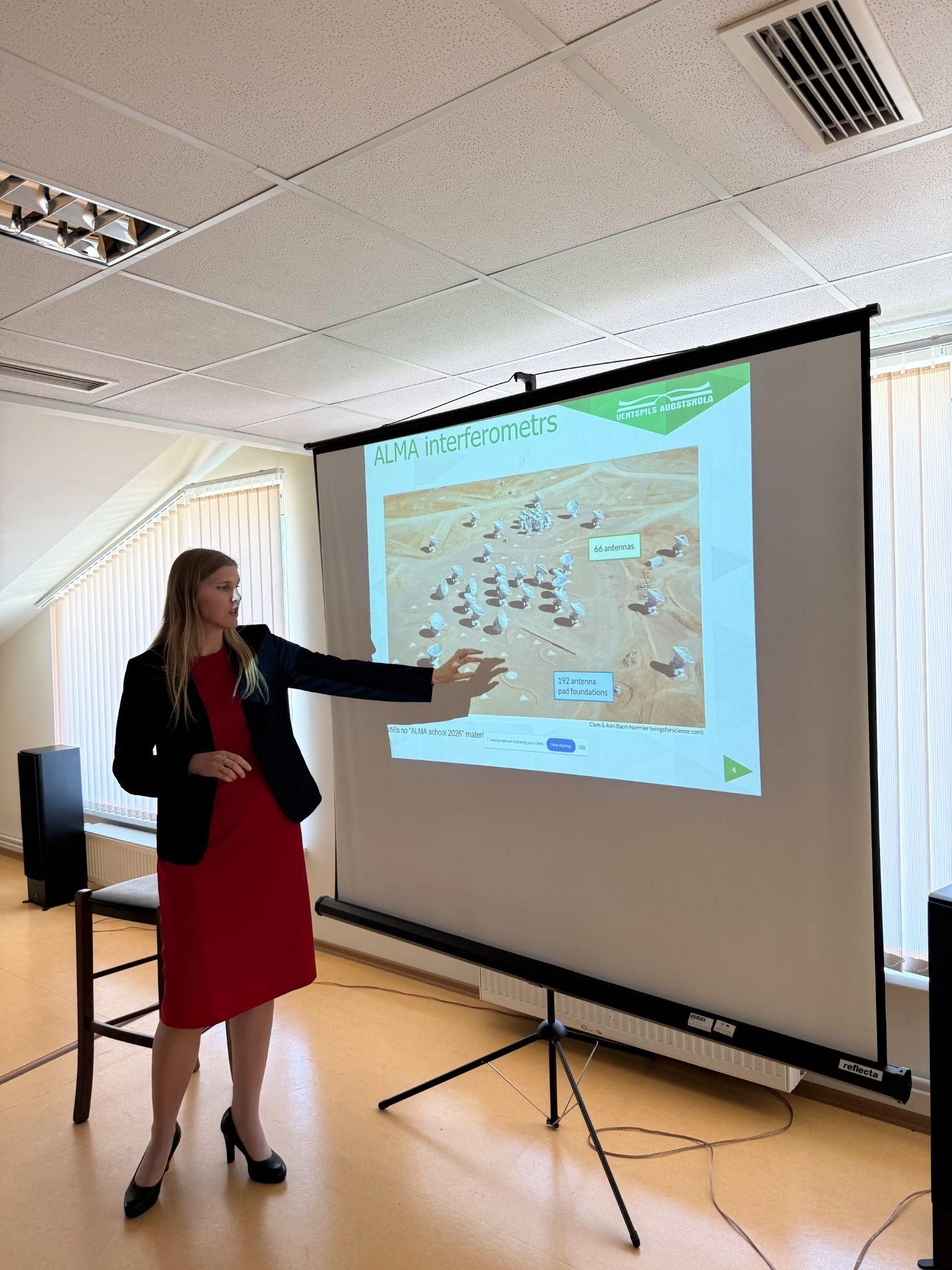
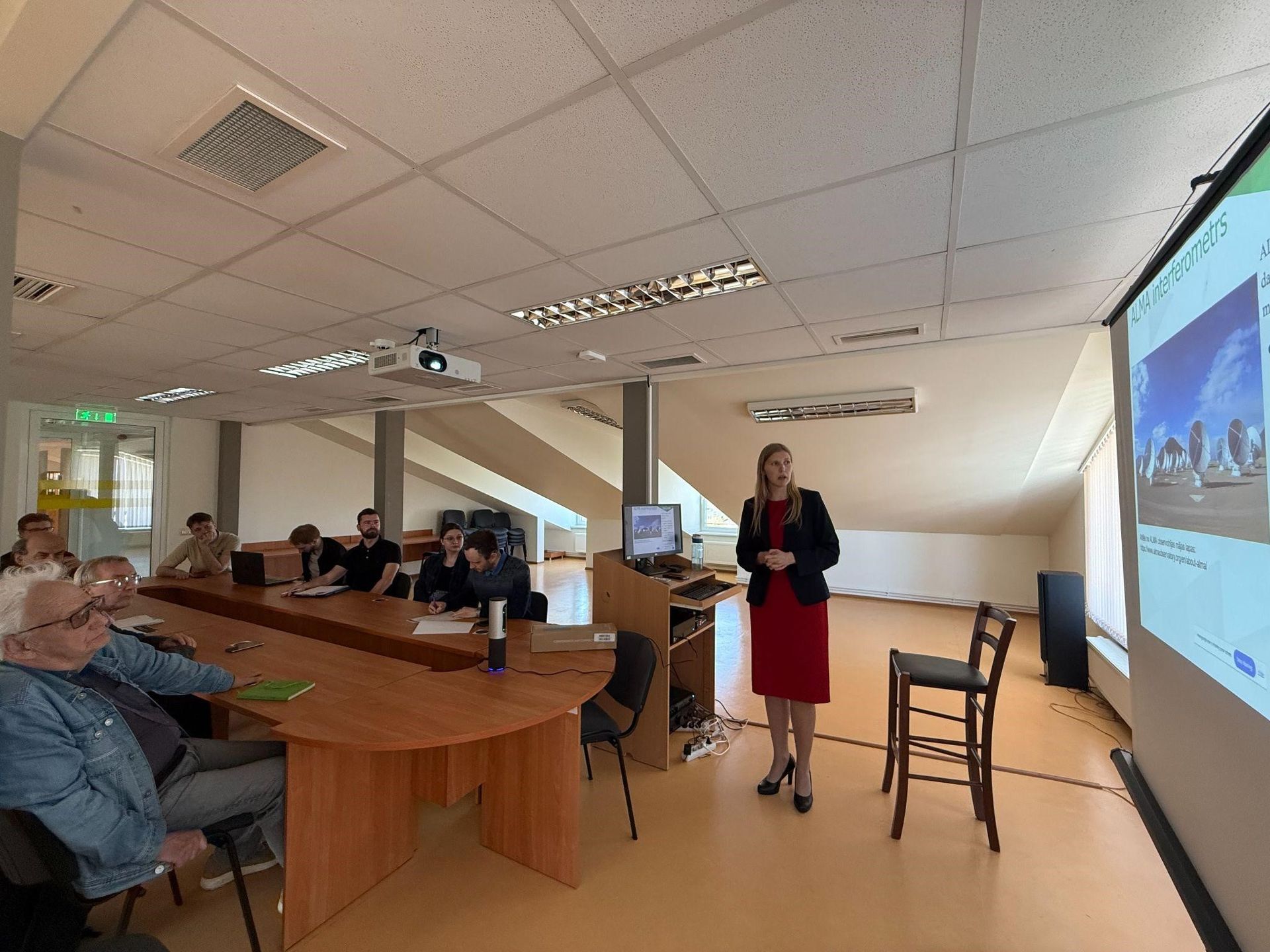
On May 21rd, researcher and doctoral student Karina Šķirmante from the Ventspils International Radio Astronomy Centre (VIRAC) led a scientific seminar, “Experience in ALMA Data Processing and Its Application in Comet Research”, sharing practical experience on the methodology of processing ALMA (Atacama Large Millimeter/submillimeter Array) data and the use of these data in comet research. The seminar consolidated the knowledge and practical skills the researcher acquired through training organised by the European ALMA School. The ALMA Regional Centre in Europe “Allegro” and Leiden Observatory organised these training sessions, where participants studied advanced methods of ALMA data processing and analysis in depth.
At the beginning of the seminar, the ALMA interferometer was introduced. ALMA operates at millimetre and submillimetre wavelengths and consists of several antenna arrays, including the 12-metre main array, the 7-metre Atacama Compact Array, and the total power antennas. The researcher explained ALMA’s high sensitivity and angular resolution, which enable detailed studies of cold molecular gas, dust, star-forming regions, distant galaxies, and objects within the Solar System, including comets.
The seminar then provided an overview of the methodology used for ALMA data processing. It was noted that ALMA does not directly create an image of the sky, but measures visibility data, or samples in the Fourier plane. Since these data are incomplete, as it is not possible to cover the entire visibility plane, image reconstruction is an inverse problem. The seminar outlined image-reconstruction methodology and its main parameters, including data gridding, weighting, and iterative image reconstruction. Special attention was given to the CLEAN algorithm, which is a computational algorithm used in radio astronomy to perform deconvolution of images obtained from radio interferometric observations.
CASA is the main tool for ALMA data reduction; therefore, part of the seminar focused on reviewing the software, its input parameters, and the resulting images. Using CASA tools, you can inspect MeasurementSet data, select spectral windows, determine molecular line frequencies, and create images or spectral cubes using the tclean function. The seminar also covered various tclean outputs – the primary beam, mask, model, residual image, cleaned image, and primary beam‑corrected image. In addition, the seminar presented the CARTA tool for FITS data visualisation, spectrum extraction, and moment map creation.
The second part of the seminar provided an overview of the researcher’s results in comet activity modelling and the use of ALMA data to validate the model. Comets are remnants from the time of the formation of the Solar System, containing ice, dust, rocks, and various volatile molecules. As a comet approaches the Sun, its nucleus heats up, the ice sublimates, and a coma and tail are formed. Radioastronomical observations, including ALMA observations, are important for determining the molecular composition of comets, for example, identifying molecules such as HCN, HNC, H₂CO, CH₃OH, and others. The thermal model of comet 2P/Encke, the identification of the spatial distribution of the HCN molecule in the cometary coma, and the validation of the model using ALMA archive data were examined in detail. ALMA data were particularly valuable in the researcher’s work, as they made it possible not only to determine the presence of molecules but also to map their spatial distribution within the comet’s coma.
Overall, the seminar provided a practical insight into how ALMA observation data are transformed into scientifically usable images and data products. The seminar was highly valuable, as it ensured the transfer of knowledge and experience by drawing on the expertise of one of the world’s leading radio astronomy observatories in the planning of radio astronomical observations, data analysis and processing, thereby strengthening VIRAC’s competence in the use of ALMA data in research and contributing to the long-term development of Latvia’s radio astronomy sector and its integration into the international research environment.
The seminar was organised within the framework of the European Regional Development Fund project No. 1.1.1.5/3/25/I/012 “International Cooperation and Innovation of Ventspils University of Applied Sciences for the Development of Latvia’s Smart Specialisation”.
Share on other platforms
Other news
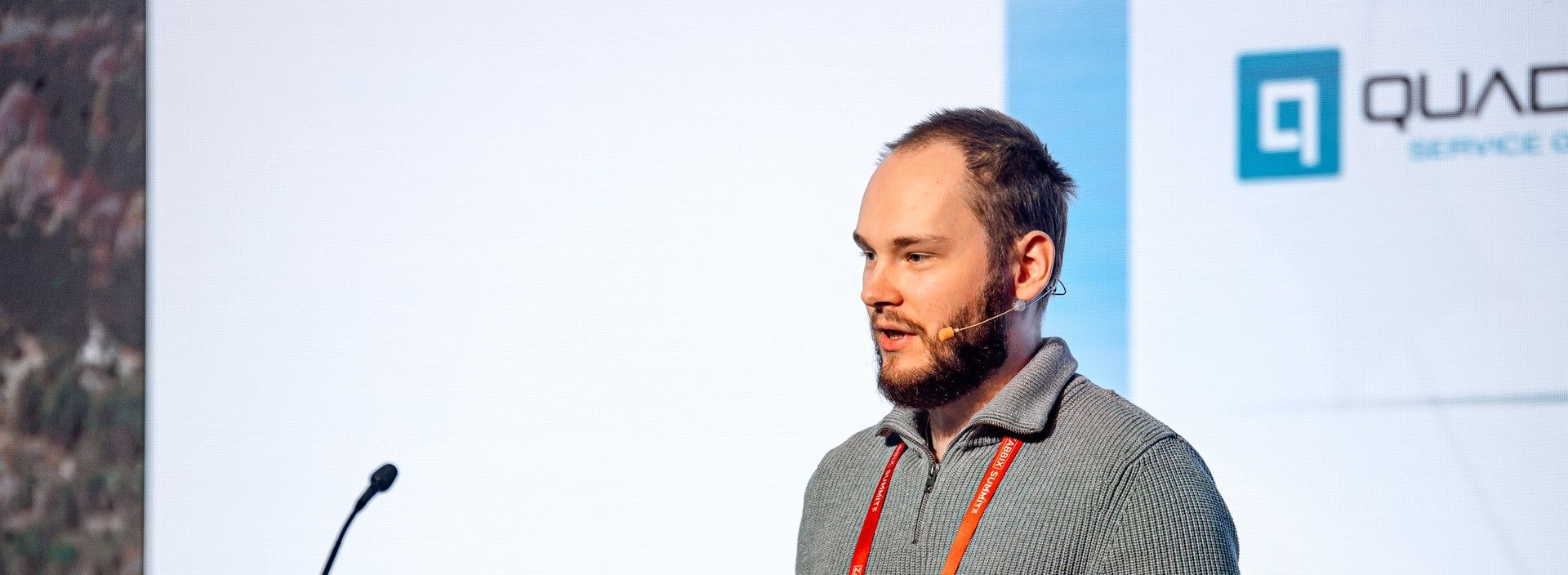
How to Monitor a 32-Metre Radio Telescope – VIRAC Experience at the International Zabbix Summit 2026